

- Updated: February 27, 2026
- 5 min read
Samsung Galaxy S26 Satellite Communication Now Available on US Carriers – Full Details
The Samsung Galaxy S26 can transmit satellite messages in the United States via a limited set of carriers, allowing users to stay connected even when they are out of traditional cellular range.
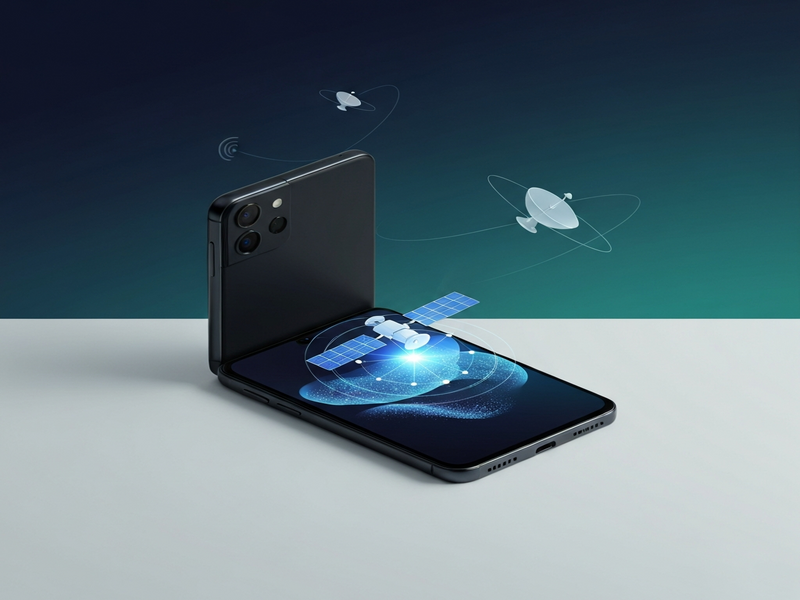
What’s new with the Galaxy S26’s satellite feature?
Samsung’s flagship Galaxy S26 introduces a satellite‑messaging capability that works on a handful of U.S. carriers. The feature is designed for emergency alerts and brief text exchanges when you’re beyond the reach of 4G/5G towers. For a full technical breakdown, see the original report on Android Police.
Unlike previous satellite phones, the S26 leverages a low‑power, narrow‑band protocol that integrates directly into the device’s existing antenna system. This means you don’t need a separate handset or bulky external antenna – the phone itself becomes a “satellite‑ready” device.
How the Galaxy S26 satellite communication works
The S26’s satellite module operates on the L‑band (1.5‑2.0 GHz) used by many low‑Earth‑orbit (LEO) constellations. When a cellular signal drops below a predefined threshold, the phone automatically switches to satellite mode. The process can be broken down into three MECE‑compliant steps:
- Signal detection: The device continuously monitors signal strength. Once it falls below –85 dBm, the firmware initiates a satellite handshake.
- Handshake & authentication: The phone contacts the nearest satellite, authenticates via a secure token provided by the carrier, and establishes a short‑burst data link.
- Message transmission: Users can compose a text (up to 140 characters) that is compressed, error‑corrected, and sent to the satellite, which then routes it to the carrier’s ground station and finally to the recipient’s SMS gateway.
Because the bandwidth is limited, the feature is intentionally restricted to short, high‑priority messages—think SOS alerts, location updates, or quick “I’m okay” notes.
Developers can tap into the OpenAI ChatGPT integration on UBOS to build custom voice‑to‑text assistants that automatically trigger satellite messages when certain keywords (e.g., “help”, “emergency”) are detected.
U.S. carriers that support Galaxy S26 satellite messaging
As of early 2026, only three major carriers have signed agreements with Samsung to enable satellite messaging on the S26. The table below summarizes each carrier’s coverage, pricing, and special requirements.
| Carrier | Coverage Area | Monthly Satellite Fee | Special Notes |
|---|---|---|---|
| Verizon Wireless | Continental U.S., Alaska, Hawaii, and select offshore islands | $5 per month (incl. 10 messages) | Requires a “Satellite Messaging” add‑on in the My Verizon app. |
| AT&T | All 50 states, Puerto Rico, and U.S. territories | $4.99 per month (incl. 8 messages) | Messages are billed as “AT&T Satellite SMS” and appear on the regular bill. |
| T‑Mobile | Nationwide coverage plus select rural areas not served by 5G | $6 per month (incl. 12 messages) | Integrates with the “T‑Mobile Home” app for quick activation. |
All three carriers use the same underlying satellite network, but they differ in pricing models and user‑experience integrations. If you already have a plan with one of these carriers, you can enable the feature directly from the carrier’s mobile app without contacting support.
For businesses that need to monitor employee safety in remote locations, the Enterprise AI platform by UBOS can ingest satellite‑message logs and trigger automated alerts in a central dashboard.
Why satellite messaging matters for Galaxy S26 owners
- Reliability in remote areas: Hikers, sailors, and off‑grid workers can send SOS texts without a separate satellite phone.
- Low cost entry point: At under $6 per month, the service is cheaper than most dedicated satellite devices.
- Seamless integration: The feature lives inside the native Messaging app, so there’s no learning curve.
- Enhanced safety compliance: Companies can meet OSHA remote‑work safety standards by leveraging satellite alerts.
- Future‑proofing: As LEO constellations expand, bandwidth and latency will improve, potentially enabling richer data (e.g., short voice clips).
Developers can also build custom workflows that react to satellite messages. For example, using the Workflow automation studio, a logistics firm could automatically dispatch a rescue team when a driver’s satellite SOS is received.
Related UBOS resources you might find useful
If you’re interested in extending the Galaxy S26’s satellite capabilities with AI, UBOS offers a suite of tools that can be combined with the device’s native features.
AI marketing agents
Automate outreach campaigns that trigger when a satellite alert is logged, ensuring rapid follow‑up with customers.
UBOS templates for quick start
Jump‑start a satellite‑aware chatbot using the “AI Chatbot template” or “Customer Support with ChatGPT API”.
UBOS portfolio examples
Explore case studies where companies integrated satellite data into real‑time dashboards.
UBOS pricing plans
Find a plan that matches your startup’s budget while leveraging satellite‑enabled AI workflows.
Conclusion
The Samsung Galaxy S26’s satellite messaging feature marks a significant step toward ubiquitous connectivity. By partnering with Verizon, AT&T, and T‑Mobile, Samsung ensures that users across the United States can stay in touch during emergencies, even in the most isolated locations.
For tech‑savvy consumers and businesses alike, the real power lies in combining this hardware capability with AI‑driven platforms like UBOS. Whether you’re building a safety‑first logistics solution or a consumer‑facing emergency app, the integration possibilities are vast.
Ready to explore AI‑enhanced satellite workflows? Visit the UBOS homepage and start building today.
Andrii Bidochko
CTO UBOS
Andrii Bidochko is an AI entrepreneur and researcher focused on AI agents, reinforcement learning, and autonomous systems. He writes about the technologies shaping the future of machine intelligence, from frontier models and agent architectures to real-world AI applications.