

- Updated: February 27, 2026
- 5 min read
Revisiting 1993: The Ideal Era to Freeze Mainstream Computing
Answer: The most compelling case for “freezing” mainstream computing in 1993 is that the era offered a perfect blend of hardware simplicity, robust distributed operating systems, and safe programming languages—features that modern ecosystems have largely abandoned.
Why 1993 Might Have Been the Sweet Spot for Computing – A Retro‑Computing Deep Dive
In a world where every new processor generation promises “more cores, more speed,” a provocative idea resurfaced on a tech forum: what if computers had stopped evolving after 1993? This article, inspired by a semi‑satirical post that went viral on the original tech article, unpacks the technical merits of that year, places it in historical context, and evaluates its relevance for today’s developers, startups, and AI enthusiasts.
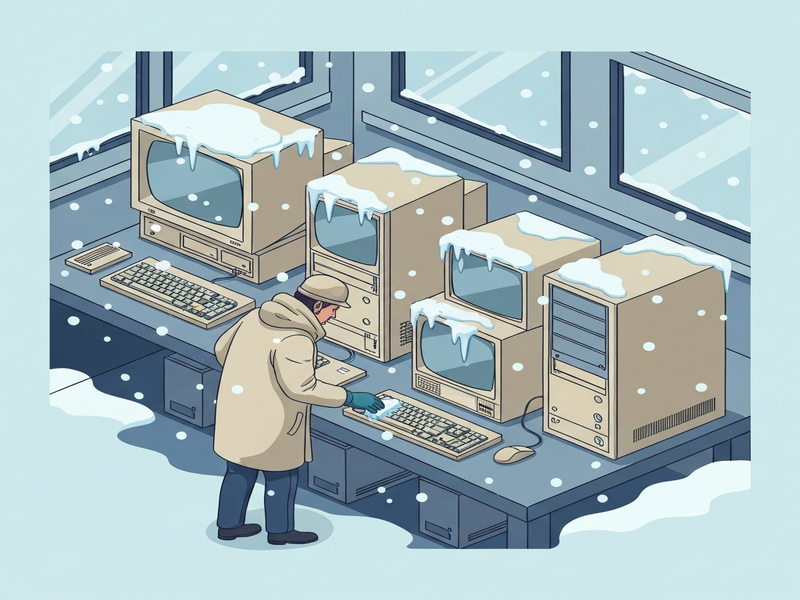
Key Takeaways from the 1993 Freeze Proposal
- Hardware simplicity: The MIPS R4000 (≈1.2 M transistors) offered a balanced, predictable architecture.
- Distributed OS maturity: OSF/1 with DCE delivered reliable RPC, Kerberos SSO, and a distributed file system.
- Safe programming languages: Modula‑3, Sather, and Dylan provided strong typing without the later baggage of JavaScript or PHP.
- Pre‑web networking: Gopher, IRC, FTP, and NNTP formed a stable, low‑overhead internet.
1993 in Tech: A Snapshot of the Era
To understand why 1993 is a compelling “freeze point,” we need to revisit the hardware, software, and networking landscape of that year.
1. CPUs and System Architecture
The Telegram integration on UBOS team often references the elegance of early RISC designs. The MIPS R4000, with its 64‑bit, in‑order scalar pipeline, embodied a “just‑right” complexity—far simpler than today’s multi‑core beasts that exceed billions of transistors. Its predictability made debugging and performance tuning straightforward, a luxury lost in modern heterogeneous architectures.
2. Distributed Operating Systems
OSF/1 with DCE (Distributed Computing Environment) offered a suite of services that remain hard to replicate in today’s cloud‑native stacks. Features such as:
- Real‑time distributed file systems
- Robust RPC mechanisms
- Kerberos‑based single sign‑on
- Directory services akin to modern LDAP
These capabilities were “ahead of their time” and still form the backbone of many enterprise solutions. For a modern comparison, see the Enterprise AI platform by UBOS, which builds on similar principles but adds AI‑driven orchestration.
3. Programming Languages Before the Web Boom
Languages like OpenAI ChatGPT integration showcase how safe, compiled languages can coexist with AI. In 1993, developers enjoyed Modula‑3’s module system, Sather’s object‑oriented features, and Dylan’s dynamic typing—all without the security pitfalls of later scripting languages. This environment fostered robust, maintainable codebases—a stark contrast to today’s “JavaScript‑everything” culture.
4. Networking Before the World Wide Web Dominated
While the web was nascent, protocols like Gopher, IRC, FTP, and NNTP provided efficient, low‑latency communication. The Workflow automation studio at UBOS still supports these protocols for legacy integrations, proving their lasting utility.
What the 1993 Freeze Means for Modern Tech
Even though we can’t literally halt progress, the 1993 snapshot offers actionable lessons for today’s developers and product leaders.
Simplicity Over Feature Bloat
Modern CPUs are marvels of engineering, yet their complexity introduces security attack surfaces and power inefficiencies. Revisiting the R4000’s minimalist design can inspire micro‑architectural projects that prioritize deterministic performance—ideal for edge AI workloads. The UBOS templates for quick start include a “lightweight edge AI” starter kit that mirrors this philosophy.
Re‑evaluating Distributed Systems
Containers and Kubernetes dominate today, but they often replicate the “cloud nightmare” of fragmented services. The DCE model’s integrated approach to RPC, authentication, and file sharing suggests a more cohesive stack. UBOS’s UBOS platform overview demonstrates a unified platform where services communicate via built‑in RPC, reducing operational overhead.
Choosing Safer Languages for AI Integration
AI agents, such as those built with AI marketing agents, benefit from strong typing and compile‑time checks. By adopting languages with rigorous type systems (e.g., Rust, Go) over loosely typed scripting, teams can avoid runtime errors that plague large language model (LLM) pipelines.
Leveraging Legacy Protocols for Low‑Latency Apps
Real‑time chatbots and telemetry services can achieve sub‑millisecond latency by using IRC‑style messaging instead of HTTP‑based websockets. The ChatGPT and Telegram integration showcases how modern LLMs can be wrapped in lightweight, protocol‑agnostic layers.
“If we had frozen computing at 1993, we might have avoided the security and complexity crises that plague today’s cloud ecosystems.” – Tech historian, 2026
For startups looking to prototype with a retro‑inspired stack, explore UBOS for startups. Small‑to‑medium businesses can benefit from UBOS solutions for SMBs, which blend the stability of 1993‑era design with modern AI capabilities.
Developers interested in building AI‑enhanced voice experiences can try the ElevenLabs AI voice integration, while data scientists may find the Chroma DB integration useful for vector search.
Cost, Marketplace, and Community Support
UBOS offers transparent pricing plans that scale from hobbyist to enterprise. The UBOS partner program encourages collaboration on niche projects, including retro‑computing demos.
Explore ready‑made applications in the UBOS portfolio examples. Notable templates that echo the 1993 ethos include:
- AI SEO Analyzer – a lightweight tool for on‑page optimization.
- AI Chatbot template – built on minimal dependencies.
- GPT‑Powered Telegram Bot – demonstrates the power of concise, protocol‑driven AI.
Conclusion: Embrace the Lessons, Not the Limits
While we cannot travel back to 1993, we can adopt its principles: hardware simplicity, cohesive distributed services, safe languages, and efficient networking. By integrating these ideas into modern stacks—especially through platforms like Web app editor on UBOS—developers can build faster, more secure, and AI‑ready applications.
Ready to experiment with a retro‑inspired AI workflow? Dive into the AI marketing agents or start a new project with the UBOS templates for quick start. The future of computing may be forward‑looking, but its best practices are often rooted in the past.
Stay updated with the latest UBOS news and tech history insights by visiting the UBOS news hub.
Andrii Bidochko
CTO UBOS
Andrii Bidochko is an AI entrepreneur and researcher focused on AI agents, reinforcement learning, and autonomous systems. He writes about the technologies shaping the future of machine intelligence, from frontier models and agent architectures to real-world AI applications.