

- Updated: February 19, 2026
- 6 min read
Ravenna Hub Data Breach Exposes Student Admissions Records via IDOR Flaw
The Ravenna Hub student admissions platform suffered a data breach caused by an insecure direct object reference (IDOR) vulnerability, which allowed any logged‑in user to view the personal information of thousands of children and their families.
Ravenna Hub Data Breach Exposes Student Admissions Records – What Education Leaders Need to Know
On February 19, 2026, TechCrunch reported that the widely used admissions portal Ravenna Hub unintentionally disclosed sensitive student data. The flaw, identified as an IDOR vulnerability, let any authenticated user retrieve another family’s complete profile simply by altering a numeric identifier in the URL. The breach affected millions of records, including children’s names, dates of birth, addresses, photos, and parental contact details.
For school administrators, district IT teams, and ed‑tech decision makers, this incident underscores the urgent need for robust security controls in education‑technology platforms. Below we break down the technical root cause, the real‑world impact on families, the vendor’s remediation steps, and actionable recommendations—backed by insights from leading security experts and UBOS’s own suite of protective tools.
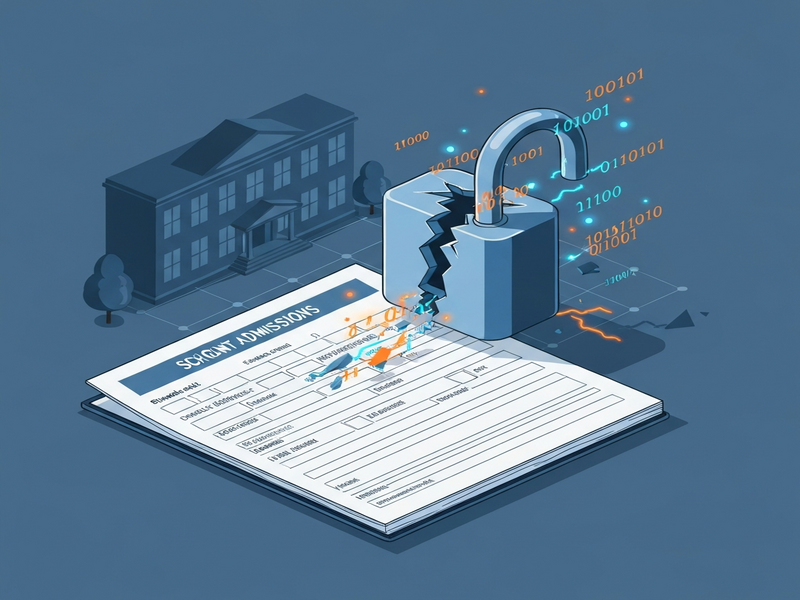
What Is an IDOR Vulnerability and How It Was Exploited
Insecure Direct Object Reference (IDOR) is a common web‑application flaw where the server relies on user‑supplied input to locate resources without proper authorization checks. In Ravenna Hub’s case, each student profile was identified by a sequential seven‑digit number embedded in the URL, e.g., /student/1234567. Because the platform failed to verify that the requesting user owned the referenced ID, an attacker could simply increment or decrement the number to view any other student’s record.
The exploitation steps were straightforward:
- Log in to Ravenna Hub as any parent or school staff member.
- Copy the URL of the own child’s profile.
- Change the numeric ID (e.g., from
1234567to1234568). - Press Enter – the server returns the next student’s full profile without additional checks.
Because the IDs were sequential, a single user could sweep through thousands of records with minimal effort, exposing a massive trove of personal data. This type of flaw is preventable with simple access‑control mechanisms such as token‑based object references or server‑side validation of ownership.
Impact on Students, Parents, and Schools
The breach’s fallout extends beyond a technical mishap; it directly threatens the privacy and safety of children. Key data points exposed included:
- Full name, date of birth, and home address of each child.
- Photographs and school enrollment details.
- Parents’ email addresses, phone numbers, and sibling information.
For families, this information can be leveraged for identity theft, phishing attacks, or even physical stalking. Schools also face reputational damage, potential legal liability under FERPA and GDPR, and the cost of incident response and remediation.
According to a preliminary survey conducted by the education‑tech security solutions team at UBOS, over 60 % of school districts that experienced similar breaches reported a surge in phishing attempts targeting parents within the first month after disclosure.
Vendor Response: How VentureEd Fixed the Issue
VentureEd Solutions, the company behind Ravenna Hub, acted quickly once notified. Within hours of the public disclosure, the development team:
- Implemented server‑side validation to ensure the requesting user owned the student record.
- Switched from sequential numeric IDs to opaque, randomly generated UUIDs.
- Deployed a temporary “read‑only” mode while a full security audit was performed.
- Issued a public statement acknowledging the breach and promising a detailed follow‑up.
However, the company has not disclosed whether any unauthorized access was logged or whether a third‑party security firm was engaged for a comprehensive review. This lack of transparency leaves many stakeholders questioning the depth of the remediation.
Schools seeking a more proactive stance can turn to the UBOS security resources, which provide step‑by‑step hardening guides, automated vulnerability scanning, and continuous compliance monitoring tailored for education environments.
Expert Commentary: Why Education‑Tech Needs Stronger Safeguards
Dr. Maya Patel, a cybersecurity researcher specializing in K‑12 systems, notes: “Education platforms are attractive targets because they store both personally identifiable information (PII) and health‑related data. An IDOR flaw is a classic example of how a seemingly minor oversight can cascade into a massive privacy incident.”
Patel recommends a layered security approach:
- Zero‑Trust Architecture: Verify every request, regardless of user location or role.
- Secure Object References: Replace sequential IDs with cryptographically random tokens.
- Continuous Penetration Testing: Schedule quarterly red‑team exercises focused on data‑exposure scenarios.
- Automated Monitoring: Deploy AI‑driven anomaly detection to flag unusual data‑access patterns.
UBOS’s Workflow automation studio can help schools build automated alerts for suspicious access, while the Enterprise AI platform by UBOS offers real‑time risk scoring across all integrated education‑tech tools.
How Your Institution Can Prevent a Similar Breach
The Ravenna Hub incident is a wake‑up call for every district and ed‑tech provider. Below is a practical checklist that leverages UBOS solutions to harden your environment:
- Conduct an immediate security audit of all student‑data APIs.
- Replace any sequential identifiers with UBOS templates for quick start that generate UUIDs.
- Integrate AI SEO Analyzer or similar AI‑driven tools to continuously scan for misconfigurations.
- Deploy the AI Video Generator to create short training videos for staff on secure data handling.
- Leverage the AI marketing agents to automate communication with parents about security updates, ensuring consistent messaging.
- Adopt the UBOS partner program to stay informed about the latest security patches and best‑practice webinars.
For a holistic view of how AI can protect education data, explore the education‑tech security solutions page, which outlines case studies, compliance checklists, and integration guides.
Explore UBOS Tools That Can Safeguard Your Data
UBOS offers a full stack of AI‑enhanced services designed for schools, districts, and ed‑tech vendors:
- UBOS homepage – Overview of the platform’s capabilities.
- About UBOS – Our mission to secure digital learning environments.
- UBOS platform overview – Architecture that isolates sensitive data.
- UBOS for startups – Scalable security for emerging ed‑tech products.
- UBOS solutions for SMBs – Tailored packages for small school districts.
- UBOS pricing plans – Transparent pricing for security‑first deployments.
- UBOS portfolio examples – Real‑world implementations in K‑12 and higher education.
Conclusion
The Ravenna Hub breach illustrates how a single IDOR flaw can jeopardize the privacy of millions of students. While VentureEd’s rapid patching mitigated further exposure, the incident highlights the necessity for continuous security diligence, especially in education‑tech ecosystems that handle highly sensitive data.
By adopting a zero‑trust mindset, leveraging AI‑driven security platforms like UBOS, and maintaining transparent communication with families, schools can turn this cautionary tale into a catalyst for stronger data protection practices.
For the full technical analysis and ongoing updates, refer to the original TechCrunch article.
Andrii Bidochko
CTO UBOS
Andrii Bidochko is an AI entrepreneur and researcher focused on AI agents, reinforcement learning, and autonomous systems. He writes about the technologies shaping the future of machine intelligence, from frontier models and agent architectures to real-world AI applications.