

- Updated: March 28, 2026
- 6 min read
Private Equity Turns UK Care Homes into Cash Machines, Leaving Elderly Vulnerable
Private‑equity firms have turned many UK care homes into high‑profit, debt‑laden enterprises, often sacrificing the quality of care for elderly residents.
Why the Guardian’s Investigation Matters
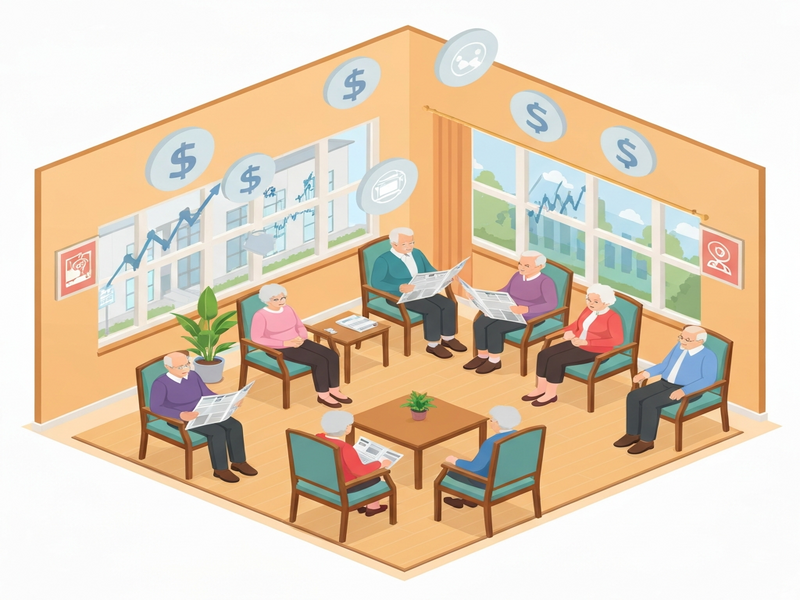
The Guardian’s recent expose “The great care home cash grab” reveals how private‑equity investors have transformed vulnerable elderly people into “human ATMs”. The story is a stark reminder that financial engineering can have life‑changing consequences for the most vulnerable in society.
In this article we break down the rise of private‑equity ownership in UK care homes, examine the case of Four Seasons Health Care, and explore the broader impact on residents, staff, and the public purse. We also highlight how technology platforms like UBOS platform overview can help bring transparency to a sector that has long operated behind closed doors.
The Private‑Equity Surge in UK Care Homes
Since the late 1990s, private‑equity firms have increasingly targeted the social‑care market for three main reasons:
- Steady cash flow from local‑authority contracts.
- An ageing population that guarantees demand.
- The ability to extract value through leveraged buyouts (LBOs) and sale‑and‑lease‑back structures.
The model works like this: a fund purchases a care‑home operator with a small equity stake, borrows the remainder, and then transfers the debt onto the operating company. The operator must service the debt from its cash‑flow, leaving less money for staffing, equipment, and resident care.
Key financial mechanisms
| Mechanism | Purpose | Typical Impact |
|---|---|---|
| Leveraged Buyout | Minimise equity outlay | High debt service costs |
| Sale‑and‑Lease‑Back | Free up cash tied in property | Ongoing rent obligations |
| Dividend Recapitalisation | Return cash to investors | Reduces operating capital |
Case Study: Four Seasons Health Care
Four Seasons, founded in 1989 by Robert Kilgour, grew from a single converted hotel to a chain of over 200 homes. Its rapid expansion was fueled by private‑equity backing:
- 1999 – Sold to Alchemy Partners (a UK buy‑out fund).
- 2004 – Acquired by Allianz Capital Partners.
- 2006 – Purchased by a Qatari sovereign‑wealth fund.
Each change of ownership added layers of debt. By 2008, Four Seasons carried roughly £1.5 bn of liabilities. When the global financial crisis hit, the company could not refinance, and the debt was passed onto the operating business, forcing severe cost‑cutting.
“They were playing financial pass‑the‑parcel with elderly people’s lives.” – Ros Altmann, former UK Treasury minister
In 2012 Terra Firma, led by Guy Hands, bought Four Seasons for £825 m, injecting £325 m of equity and borrowing the rest. The firm promised to modernise care, but the debt burden meant annual interest payments of £50 m, a figure that dwarfed the £550 m per‑year revenue from local‑authority contracts.
The result? By 2019 Four Seasons entered administration, leaving thousands of residents in limbo and staff facing unpaid wages.
How Financial Exploitation Affects the Elderly and Their Carers
When profit margins are squeezed, the most visible casualties are the people who rely on care:
Resident outcomes
- Higher rates of pressure ulcers and falls.
- Increased use of antipsychotic medication as a cost‑saving “behavior‑management” tool.
- Longer waiting times for essential services such as physiotherapy.
Staff experience
- Staff‑to‑resident ratios fall below regulatory minimums.
- Wages stagnate while overtime becomes the norm.
- Burnout leads to high turnover, further destabilising care quality.
A 2022 anonymous survey of care‑home employees (sourced by the University of Manchester) found that 78 % felt “cost‑cutting directly compromised resident safety”. The same study highlighted that homes owned by private‑equity funds were twice as likely to receive “requires improvement” ratings from the Care Quality Commission (CQC).
Financial and Regulatory Details
Understanding the financial flow is essential for policymakers and investors alike.
Debt structure
Typical private‑equity‑owned care homes operate through a “dual‑company” model:
- OpCo – runs day‑to‑day care, staff payroll, and resident services.
- PropCo – owns the building and leases it back to OpCo at market rates.
This separation allows investors to sell the property (often at a premium) while the OpCo remains burdened with rent and interest payments.
Regulatory gaps
The CQC’s inspection regime has been weakened by budget cuts, with in‑person inspections dropping by two‑thirds between 2016 and 2024. Moreover, the regulator’s data‑sharing rules allow owners to withhold complaint records under “commercial confidentiality”, a loophole exploited by many private‑equity groups.
Calls for a About UBOS‑style transparency platform have grown louder. By aggregating contract data, debt levels, and resident outcomes in a single dashboard, such tools could empower local councils and families to make informed choices.
What This Means for the UK Care‑Home Market
Private‑equity involvement is not limited to Four Seasons. A 2023 report by the Office for National Statistics identified that 38 % of all registered care homes were owned, wholly or partially, by investment funds.
Key implications include:
- Pricing pressure: Residents with private means face fees exceeding £1,700 per week, effectively pricing out anyone without substantial property equity.
- Consolidation risk: Larger funds can acquire smaller operators, creating oligopolies that reduce competition and bargaining power for staff.
- Innovation slowdown: Capital is often directed toward debt servicing rather than technology upgrades, despite the sector’s need for digital health solutions.
Technology platforms such as AI marketing agents and the Workflow automation studio can help operators streamline non‑clinical processes, freeing up resources for frontline care. However, without transparent ownership structures, these efficiencies may simply increase profit margins rather than improve resident outcomes.
Future Outlook: Toward a More Accountable Care Sector
Reforming the private‑equity model will require coordinated action:
- Introduce mandatory public reporting of debt levels for all care‑home operators.
- Strengthen CQC inspection funding and enforce data‑sharing rules that prevent “commercial confidentiality” from shielding abuse.
- Encourage the adoption of transparent SaaS solutions—such as the UBOS pricing plans that include audit‑ready dashboards—to give families real‑time insight into a home’s financial health.
Only by shining a light on the financial mechanics can we ensure that care homes serve their original purpose: providing safe, dignified care for the elderly, not serving as cash‑generating ATMs for distant investors.
Take action today: demand greater transparency from your local council and support organisations that champion elder‑care rights.
Meta‑Description Options
- Private‑equity firms are turning UK care homes into profit machines, endangering elderly residents. Learn the full story and how transparency tools can help.
- Explore how leveraged buyouts and sale‑and‑lease‑back deals have reshaped UK care homes, with a focus on Four Seasons Health Care and the impact on staff and residents.
- Discover the hidden financial structures behind private‑equity‑owned care homes and what policymakers can do to protect the elderly.
Andrii Bidochko
CTO UBOS
Andrii Bidochko is an AI entrepreneur and researcher focused on AI agents, reinforcement learning, and autonomous systems. He writes about the technologies shaping the future of machine intelligence, from frontier models and agent architectures to real-world AI applications.