

- Updated: March 30, 2026
- 6 min read
Philadelphia Courts Ban AI‑Powered Smart Glasses in Courtrooms
Philadelphia Courts Ban AI‑Powered Smart Glasses in Courtrooms
Effective next Monday, the First Judicial District of Pennsylvania will prohibit any smart or AI‑integrated eyewear—including recording‑capable glasses—from all court buildings to protect witnesses, jurors, and the integrity of proceedings.
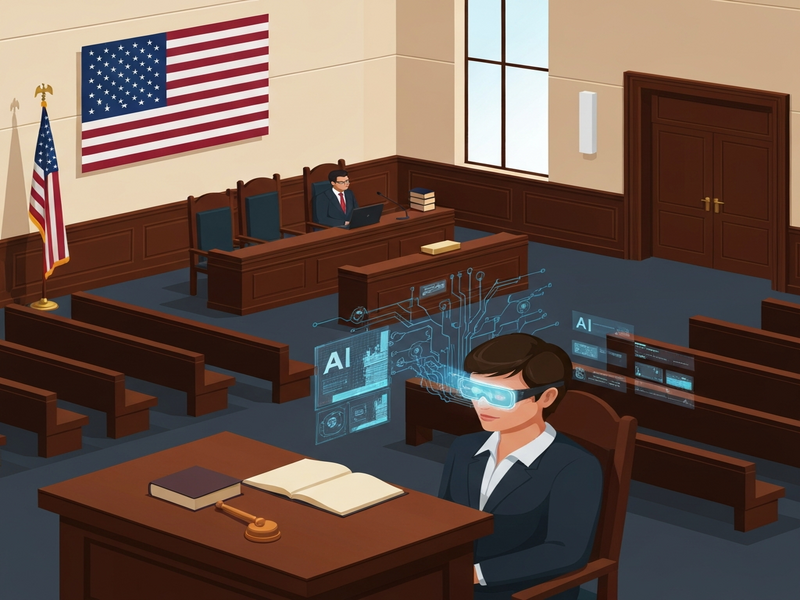
What Are Smart Glasses and Why Are They Controversial?
Smart glasses are wearable computers that blend traditional eyewear with embedded sensors, microphones, and displays. Modern models—such as the Meta Ray‑Ban Display, Oakley’s AI‑enhanced frames, and upcoming Apple Vision—can stream live video, transcribe speech, and overlay contextual data powered by large language models like OpenAI ChatGPT integration. These capabilities enable real‑time translation, on‑the‑fly note‑taking, and even AI‑driven legal research directly in the user’s line of sight.
While the convenience is undeniable for professionals, the covert nature of these devices raises privacy and security concerns. Unlike a smartphone, smart glasses can be worn discreetly, making it difficult for security staff to detect unauthorized recording. This “invisible recorder” risk is the primary driver behind recent judicial bans.
In the broader tech ecosystem, UBOS offers a UBOS platform overview that helps enterprises build compliant AI applications, including secure data pipelines that respect courtroom confidentiality.
Key Provisions of the Philadelphia Ban
- All smart eyewear with video or audio capture capabilities is prohibited inside any First Judicial District building, including courthouses, clerk offices, and law libraries.
- The ban applies regardless of prescription status; even medically necessary lenses must be free of recording hardware.
- Standard electronic devices (phones, laptops) remain allowed but must be powered off and stored out of sight during proceedings.
- Violations may result in immediate removal, denial of entry, or criminal contempt charges.
- Exceptions are limited to cases where a judge issues a written waiver—typically for accessibility accommodations.
According to court spokesperson Martin O’Rourke, “These glasses are difficult to detect in courtrooms, and the potential for intimidation or unauthorized evidence gathering is too high.” The ruling aligns Philadelphia with a growing list of jurisdictions—including Hawaii, Wisconsin, and North Carolina—that have enacted explicit smart‑glass bans.
For legal tech developers, the decision underscores the importance of building Workflow automation studio solutions that can enforce device policies without infringing on legitimate accessibility needs.
How the Ban Shapes the Future of Legal Technology
The prohibition of AI‑enabled eyewear creates both challenges and opportunities for legal‑tech vendors:
- Compliance‑first design. Companies must embed compliance checks into their products. UBOS’s Enterprise AI platform by UBOS includes policy‑engine modules that can flag prohibited hardware before a case file is uploaded.
- Shift to alternative interfaces. Developers may prioritize voice‑only assistants (e.g., ElevenLabs AI voice integration) or desktop‑based AI tools that are easier to monitor.
- New market for secure courtroom apps. Solutions like the UBOS templates for quick start can accelerate the creation of “court‑approved” AI assistants that run on vetted hardware.
- Increased demand for AI‑driven evidence analysis. While recording is banned, AI can still process existing digital evidence. Tools such as the AI SEO Analyzer demonstrate how AI can extract insights without live capture.
- Enhanced training for legal staff. Law firms will need to educate attorneys on permissible AI usage. UBOS’s UBOS partner program offers certification tracks that include courtroom‑technology compliance.
These trends suggest a pivot from hardware‑centric AI to software‑centric, policy‑aware platforms—an evolution that aligns with the broader “AI‑first” strategy championed by many SaaS providers.
Stakeholder Perspectives
Judiciary
Judges praised the ban as a proactive safeguard. “Our duty is to ensure a fair, intimidation‑free environment,” said a senior judge who declined to be named. The court plans to install additional metal detectors capable of detecting hidden lenses.
Law Firms
Large firms expressed mixed feelings. While they recognize the privacy benefits, some partners worry about reduced efficiency for attorneys who rely on AI‑assisted note‑taking. “We’ll need to re‑evaluate our tech stack,” said a partner at a Philadelphia boutique, noting that their practice already uses the AI Article Copywriter for drafting briefs.
Tech Vendors
Manufacturers of smart glasses argue that the ban could stifle innovation. A spokesperson for Ray‑Ban’s AI division highlighted the potential for “hands‑free legal research” and urged courts to consider “controlled‑access” solutions instead of outright bans.
Civil Liberties Groups
Organizations such as the ACLU welcomed the move, emphasizing that “unregulated surveillance in public institutions erodes trust.” They called for broader legislation that addresses AI‑enabled devices beyond the courtroom.
Read the Original Report
For a full account of the ruling and its immediate impact, see the original news story on Philadelphia’s court system ban.
UBOS Resources That Help Navigate AI Regulations
UBOS provides a suite of tools and templates designed to keep legal tech compliant while still leveraging AI’s power:
- AI legal tech solutions – A deep dive into building courtroom‑ready AI applications.
- AI Chatbot template – Deploy conversational assistants that run on secure servers, not on personal wearables.
- GPT‑Powered Telegram Bot – An example of a secure, text‑only AI interface that complies with the new ban.
- AI Video Generator – Create briefing videos offline, eliminating the need for live recording.
- AI marketing agents – Promote your compliant legal‑tech services without violating courtroom policies.
Conclusion: A New Era of Controlled AI in the Courtroom
The Philadelphia ban marks a decisive step toward safeguarding the sanctity of judicial proceedings in an age where AI can be both a tool and a threat. By prohibiting smart glasses, the courts aim to eliminate covert recording while still encouraging the responsible use of AI through vetted software platforms.
Legal professionals, tech innovators, and policymakers must now collaborate to design AI solutions that respect privacy, comply with emerging regulations, and still deliver the efficiency gains that modern law practice demands. Leveraging UBOS’s AI marketing agents, Web app editor on UBOS, and the extensive UBOS portfolio examples can help firms stay ahead of the curve while remaining courtroom‑compliant.
As AI continues to evolve, the balance between innovation and regulation will define the next chapter of legal technology—one where transparency, security, and ethical use are non‑negotiable.
Andrii Bidochko
CTO UBOS
Andrii Bidochko is an AI entrepreneur and researcher focused on AI agents, reinforcement learning, and autonomous systems. He writes about the technologies shaping the future of machine intelligence, from frontier models and agent architectures to real-world AI applications.