

- Updated: February 27, 2026
- 6 min read
Pentagon’s AI Demand Triggers Industry Backlash – UBOS Analysis
Answer: The Pentagon is pressuring Anthropic to grant the U.S. military unrestricted access to its Claude models—including for lethal autonomous weapons and mass‑surveillance use—while Anthropic’s staff are staging a rare public backlash, sparking a wider ethical debate about AI in defense.
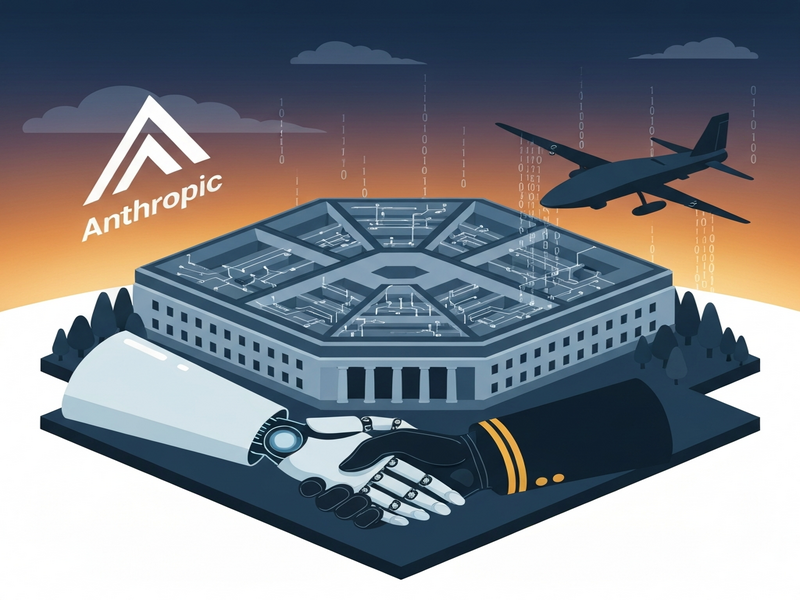
Pentagon’s ultimatum to Anthropic ignites internal revolt and ethical firestorm
The Department of Defense has issued an unprecedented demand: allow the U.S. military unfettered use of Anthropic’s Claude AI, even for fully autonomous lethal weapons and nationwide surveillance. Failure to comply could see Anthropic labeled a “supply‑chain risk,” jeopardizing billions in defense contracts. In response, dozens of Anthropic engineers and researchers have publicly protested, joining a growing chorus of tech workers questioning the moral direction of AI‑powered warfare.
1. Why the Pentagon wants unrestricted AI access
The DoD’s push stems from three strategic goals:
- Speed: Integrate generative AI into command‑and‑control systems faster than adversaries.
- Scale: Deploy AI‑driven analytics for real‑time intelligence across all theaters.
- Autonomy: Enable “kill‑without‑human‑in‑the‑loop” capabilities for next‑generation weapons.
According to The Verge, the Pentagon has already threatened to invoke the Defense Production Act, a tool rarely used against private tech firms, to force compliance.
2. Anthropic’s stance and the employee uprising
CEO Dario Amodei issued a firm statement: “We cannot in good conscience accede to unrestricted military use.” While he left the door open for future collaboration on “reliable” autonomous systems, he rejected the current demand outright.
Anthropic’s engineers have taken to internal forums, Slack channels, and public blogs, echoing sentiments such as:
“When I joined the tech industry, I thought we were building tools to improve lives, not to surveil, deport, or kill people.” – Anonymous Anthropic researcher
More than 200 staff signed an open letter demanding that Anthropic maintain its safety guardrails. The protest mirrors the 2018 Google “Project Maven” walk‑out, but this time the stakes involve a potential national‑security classification that could cripple the company’s revenue stream.
3. Ethical red lines: lethal autonomous weapons and mass surveillance
Two core ethical dilemmas dominate the debate:
3.1 Lethal autonomous weapons (LAWs)
LAWs would allow AI to select and engage targets without human confirmation. Critics argue this violates International Humanitarian Law, removes accountability, and raises the risk of accidental escalation.
3.2 Mass surveillance
Unrestricted AI could be used to analyze petabytes of video, audio, and metadata in real time, effectively creating a nationwide “Big Brother” system. Civil‑rights groups warn that such capabilities could be weaponized against dissenters, minorities, and journalists.
4. How other AI firms and experts are responding
While Anthropic holds firm, competitors are taking varied approaches:
- OpenAI has already removed its “military‑only” ban, signing contracts with Anduril and the DoD, but claims to retain “human‑in‑the‑loop” safeguards.
- xAI reportedly agreed to similar terms, though internal sources say they are pushing back on fully autonomous weapon clauses.
- Microsoft continues to supply Azure AI services to the Pentagon while publicly emphasizing its “Responsible AI” commitments.
Industry analysts, such as those at the Center for AI & Defense, argue that the market is shifting toward a “dual‑use” model where commercial AI is repurposed for military applications, blurring the line between civilian innovation and warfare.
5. Policy fallout and the future of defense AI contracts
The Pentagon’s hardline stance could set a precedent that forces all AI vendors to choose between lucrative defense contracts and ethical guardrails. Potential outcomes include:
- Regulatory intervention: Congress may introduce legislation requiring “human‑in‑the‑loop” clauses for any AI used in lethal contexts.
- Industry self‑regulation: A coalition of AI firms could draft a “Red‑Line Charter” to collectively refuse unrestricted military use.
- Market fragmentation: Companies that refuse the Pentagon’s terms may lose market share to those willing to comply, reshaping the AI ecosystem.
6. What you can do – and where to find practical AI tools
For tech‑savvy professionals, AI enthusiasts, and defense analysts, staying informed is the first step. Below are curated UBOS resources that help you explore responsible AI development, build ethical workflows, and understand the broader impact of AI in enterprise and defense.
- UBOS homepage – Overview of the platform’s mission and ethical stance.
- About UBOS – Learn how the company integrates responsible AI principles.
- UBOS platform overview – A deep dive into the architecture that supports secure AI deployments.
- AI marketing agents – See how autonomous agents can be used for ethical marketing, not warfare.
- UBOS pricing plans – Transparent pricing that avoids hidden government contracts.
- UBOS for startups – Tools for early‑stage companies to build AI responsibly.
- UBOS solutions for SMBs – Scalable AI that respects privacy and security.
- Enterprise AI platform by UBOS – Enterprise‑grade governance features for regulated industries.
- Web app editor on UBOS – Build no‑code AI apps with built‑in ethical checks.
- Workflow automation studio – Automate processes while maintaining human oversight.
- UBOS portfolio examples – Real‑world case studies of responsible AI deployments.
- UBOS templates for quick start – Jump‑start projects with pre‑vetted, ethical templates.
- Telegram integration on UBOS – Secure messaging bots with audit logs.
- ChatGPT and Telegram integration – Example of a conversational AI that respects user consent.
- OpenAI ChatGPT integration – Learn how to embed third‑party models safely.
- Chroma DB integration – Vector database for secure, privacy‑first embeddings.
- ElevenLabs AI voice integration – Voice AI with explicit opt‑in controls.
- AI SEO Analyzer – Optimize content without compromising data ethics.
- AI Article Copywriter – Generate copy while tracking provenance.
- AI Video Generator – Create media responsibly with watermarking.
- AI Chatbot template – Deploy chatbots that enforce human‑in‑the‑loop policies.
- GPT-Powered Telegram Bot – Example of a bot that logs every request for auditability.
- AI Image Generator – Use generative art with content‑source verification.
- AI Email Marketing – Personalize outreach while respecting consent.
By leveraging these tools, professionals can build AI solutions that prioritize transparency, accountability, and human oversight—directly countering the unchecked military use the Pentagon is demanding.
Conclusion: The crossroads of AI, defense, and conscience
The Pentagon’s push for unrestricted AI access has forced the industry to confront a stark choice: profit from defense contracts at the cost of ethical compromise, or stand firm on safety guardrails and risk market marginalization. Anthropic’s employee revolt signals a growing willingness among AI talent to demand accountability, echoing past victories like Google’s Project Maven protest.
For policymakers, the lesson is clear—without clear legal frameworks, the “red line” between responsible AI and lethal autonomy will remain a moving target. For developers and businesses, the path forward lies in adopting platforms that embed ethical safeguards from the ground up—exactly what UBOS aims to provide.
Stay informed, engage with the community, and choose tools that align with a humane future for AI.
Andrii Bidochko
CTO UBOS
Andrii Bidochko is an AI entrepreneur and researcher focused on AI agents, reinforcement learning, and autonomous systems. He writes about the technologies shaping the future of machine intelligence, from frontier models and agent architectures to real-world AI applications.