

- Updated: February 25, 2026
- 7 min read
Peace Corps Launches “Tech Corps” to Promote American AI Abroad
The U.S. Peace Corps has launched the “Tech Corps” program, a new volunteer initiative that pairs American AI experts with developing‑nation partners to accelerate the adoption of U.S.‑made artificial‑intelligence solutions under the broader American AI Exports Program.
What Is the Peace Corps Tech Corps?
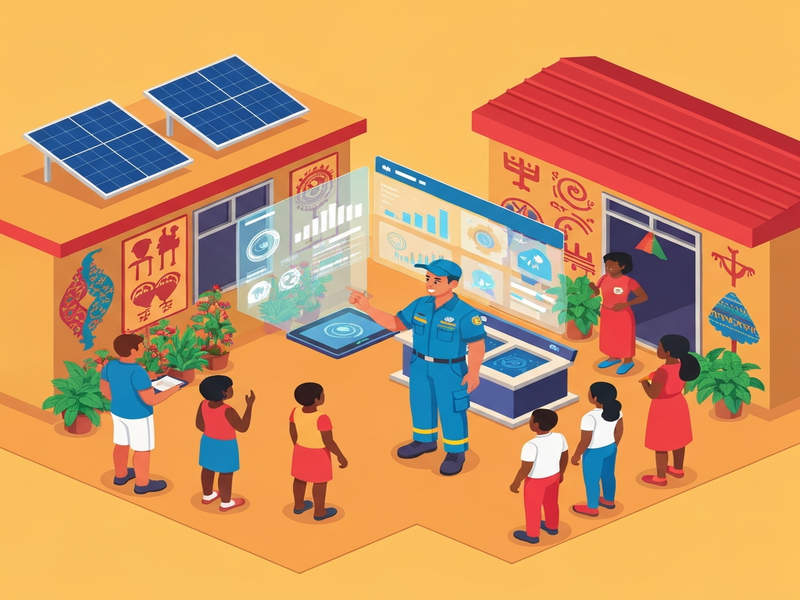
The Peace Corps, historically known for sending volunteers to teach, build infrastructure, and improve public health, is now expanding its portfolio to include high‑tech diplomacy. The Peace Corps Tech Corps recruits recent STEM graduates, mid‑career engineers, and AI specialists to “support last‑mile adoption of American AI.” Volunteers must hold at least an associate’s degree in a science‑technology‑engineering‑math (STEM) field or demonstrate comparable professional experience.
Assignments are matched to requests from the American AI Exports Program, a government‑led effort that encourages foreign governments and private firms to purchase or partner with U.S. AI vendors. Typical projects include:
- Integrating AI‑powered diagnostic tools into regional hospitals.
- Training teachers to use adaptive learning platforms in underserved schools.
- Designing privacy‑by‑design protocols for AI‑enabled public services.
By embedding volunteers on the ground, the program aims to reduce friction between technology providers and local stakeholders, ensuring that AI solutions are culturally appropriate, technically feasible, and compliant with local data‑protection laws.
American AI Export Program: A New Tool of U.S. Foreign Policy
The American AI Exports Program was announced in late 2025 as part of a broader strategy to counter China’s “Digital Silk Road.” The initiative bundles export‑control incentives, financing mechanisms, and diplomatic outreach to make U.S. AI products the default choice for emerging markets.
Key geopolitical drivers include:
- Strategic competition with China: Chinese AI platforms, such as those from DeepSeek and Huawei, have already secured footholds in Africa, Latin America, and parts of the Middle East because they are cheaper and can run on low‑power infrastructure.
- Supply‑chain resilience: By fostering AI adoption in partner nations, the U.S. hopes to create a network of allies that rely on American chips, cloud services, and data‑governance standards.
- Soft power projection: AI‑driven development projects—like precision agriculture or tele‑medicine—serve as tangible demonstrations of “American innovation for global prosperity.”
According to a Brookings Institution analysis, the program reflects a shift from “hearts‑and‑minds” Cold‑War tactics to “data‑and‑algorithms” diplomacy, where the United States leverages its leadership in generative AI to shape the digital future of low‑ and middle‑income countries.
Challenges, Criticisms, and the Risk of Backlash
While the Tech Corps is marketed as a win‑win for development and U.S. industry, several experts warn of structural and ethical pitfalls.
1. Commercial vs. Humanitarian Objectives
Kelsey Quinn, a tech‑sovereignty analyst at the New Lines Institute, notes that “the program deploys volunteers to support specific adoption of American AI products that countries have purchased, not just generally increase digital literacy.” This commercial focus could blur the line between aid and market expansion, potentially eroding the Peace Corps’ reputation as a neutral development partner.
2. Competition with China’s Digital Silk Road
China’s AI models are optimized for low‑resource environments, making them attractive to nations with limited data‑center capacity. As Meicen Sun, an assistant professor at the University of Illinois Urbana‑Champaign, explains, “These Tech Corps recruits will function as on‑the‑ground promoters for US tech in emerging markets where China has already maintained, if not widened, its lead in marketing and promotion.” If the U.S. cannot match the cost advantage, the Tech Corps may struggle to gain traction.
3. Institutional Weaknesses
The program’s success hinges on the newly created Bureau of Cyberspace and Digital Policy, which faces budget cuts and staffing shortages. Quinn warns that “drastic cuts to aid and reductions in the Bureau… put it on a weak institutional foundation,” raising the possibility that volunteers could be left without adequate support or clear policy guidance.
4. Ethical Concerns Around Data Sovereignty
Deploying AI tools that collect health, education, or financial data raises questions about who owns that data and how it is protected. Critics argue that without robust local data‑governance frameworks, the Tech Corps could inadvertently export surveillance‑grade technologies to regimes with weak privacy safeguards.
Key Quotes from The Verge’s Reporting
“These Tech Corps recruits will function as on‑the‑ground promoters for US tech in these emerging markets where China has already maintained, if not widened, its lead in marketing and promotion.” – Meicen Sun, University of Illinois Urbana‑Champaign.
“It’s not entirely unusual for the Peace Corps to wade into the field of technology, but it’s the commercial structure of the Tech Corps that’s different.” – Kelsey Quinn, New Lines Institute.
“Failure is entirely possible… this combination may very well make target countries suspicious of the Tech Corps and ironically promote more hedging behavior.” – Kelsey Quinn.
What This Means for Tech Professionals, Policymakers, and International Development Stakeholders
For tech‑savvy professionals, the Tech Corps opens a new pathway to apply AI expertise in real‑world, low‑resource settings. Volunteers can gain hands‑on experience with AI deployment, data‑privacy compliance, and cross‑cultural communication—skills that are increasingly valuable in the global AI talent market.
Policymakers should monitor the program’s alignment with existing foreign‑aid frameworks to avoid duplication of effort and ensure that AI exports do not undermine broader development goals. Integrating the Tech Corps with existing initiatives—such as the UBOS partner program—could provide a more cohesive ecosystem for AI‑driven development.
International development NGOs may view the Tech Corps as both a resource and a competitor. While the program can accelerate AI adoption, NGOs must safeguard against the risk that technology choices become driven by commercial interests rather than local needs.
UBOS Solutions That Complement the Tech Corps Vision
UBOS offers a suite of tools that can help both volunteers and host nations implement AI responsibly:
- UBOS platform overview – a low‑code environment for building AI‑enhanced web apps without deep programming expertise.
- Web app editor on UBOS – enables rapid prototyping of AI dashboards for health or education use cases.
- Workflow automation studio – automates data pipelines, a critical step for AI model training in low‑bandwidth regions.
- UBOS templates for quick start – includes pre‑built templates like AI SEO Analyzer and AI Article Copywriter that can be repurposed for local content creation.
- Enterprise AI platform by UBOS – scales AI solutions from pilot projects to national programs.
These resources align with the Tech Corps’ goal of “last‑mile adoption” by reducing the technical barrier for local teams and ensuring that AI tools remain maintainable after volunteers depart.
Explore More on AI Diplomacy and UBOS Offerings
UBOS for Startups
Learn how early‑stage companies can leverage AI to accelerate growth.
AI Marketing Agents
Discover autonomous agents that can run campaigns, analyze data, and generate copy.
ChatGPT and Telegram Integration
Build conversational bots that work on Telegram, ideal for outreach in remote areas.
AI Voice Assistant
Leverage ElevenLabs AI voice for multilingual support in health clinics.
Read the Original Reporting
For a full account of the Peace Corps Tech Corps launch, see The Verge’s investigative piece:
The Verge – “Peace Corps is recruiting volunteers to sell AI to developing nations”
Andrii Bidochko
CTO UBOS
Andrii Bidochko is an AI entrepreneur and researcher focused on AI agents, reinforcement learning, and autonomous systems. He writes about the technologies shaping the future of machine intelligence, from frontier models and agent architectures to real-world AI applications.