

- Updated: December 13, 2025
- 6 min read
OpenAI Launches Anthropic‑Style ‘Skills’ System for ChatGPT
OpenAI’s new “skills” system enables developers to package reusable AI capabilities as simple markdown folders, making them instantly usable in ChatGPT, the Codex CLI, and other LLM‑powered tools.
Why the “skills” breakthrough matters now
On December 12, 2025, Simon Willison revealed that OpenAI has quietly rolled out a new skills framework that mirrors Anthropic’s earlier approach. This development is more than a feature toggle—it reshapes how AI assistants, ChatGPT plugins, and developers interact with large language models (LLMs). By treating a skill as a lightweight folder containing a README.md and optional scripts, OpenAI lowers the barrier for anyone to extend AI functionality, from PDF generation to custom data‑visualisation pipelines.
OpenAI’s “skills” system explained
The core idea behind OpenAI skills is simplicity. Each skill lives in a dedicated directory (e.g., /home/oai/skills for ChatGPT or ~/.codex/skills for the Codex CLI) and follows a minimal specification:
- Markdown manifest –
SKILL.mddescribes the skill’s purpose, inputs, and outputs. - Optional resources – scripts, templates, or data files that the LLM can invoke.
- Filesystem accessibility – any LLM with file‑system read/write rights can discover and execute the skill.
This design aligns with the Anthropic style of “plug‑and‑play” AI extensions, but OpenAI has taken it further by integrating the system directly into the user‑facing ChatGPT interface and the developer‑centric Codex CLI.
Key examples: PDF generation and a Datasette plugin
1️⃣ PDF generation skill
OpenAI’s first public skill set includes utilities for handling spreadsheets, DOCX files, and PDFs. The PDF skill works by converting each page to a rendered PNG, preserving layout, graphics, and typography before feeding the images to a vision‑enabled GPT model. This approach avoids the information loss typical of plain text extraction.
In practice, a user can simply ask:
“Create a PDF summarising the current rimu‑tree situation and its impact on the kakapo breeding season.”
The model reads the skill.md guide, gathers the latest data, and produces a multi‑page PDF that even adjusts fonts to correctly display Māori macrons. The result is a polished, ready‑to‑share document generated entirely by the AI.
2️⃣ Datasette plugin skill (Codex CLI)
Developers can also author custom skills for the Codex CLI. Simon Willison demonstrated a skill that scaffolds a Datasette plugin which adds a /‑/cowsay endpoint. After cloning the skill repository into ~/.codex/skills/datasette-plugin and running:
codex --enable-skills -m gpt-5.2the CLI listed the new skill and, upon prompting, generated a fully functional Python plugin in seconds. This showcases how “skills” can accelerate development cycles, turning high‑level natural language requests into production‑ready code.
Why this matters for AI tooling and developers
The introduction of OpenAI skills has three immediate implications:
- Rapid prototyping – Developers no longer need to write boilerplate wrappers; a skill’s markdown manifest is enough to expose new capabilities.
- Cross‑platform consistency – The same skill can be consumed by ChatGPT, Codex CLI, or any future OpenAI‑powered service, ensuring a unified developer experience.
- Community‑driven ecosystem – Because skills are just files, open‑source contributors can publish reusable packages on GitHub, creating a marketplace of AI extensions similar to npm or PyPI.
For enterprises, this means faster integration of AI into existing workflows, while startups can leverage ready‑made skills to differentiate their products without heavy R&D investment.
Simon Willison on the future of skills
“Skills are a keeper. The fact that OpenAI has already embraced them in December shows that the lightweight specification I advocated for is finally gaining traction at scale.” – Simon Willison
Willison’s confidence stems from the observation that a minimal spec can still power sophisticated tasks—like generating PDFs with correct typography—while remaining accessible to non‑engineers. He envisions a future where a central “skill registry” fuels an open ecosystem of AI‑powered utilities.
OpenAI skills, AI assistants, and the next wave of AI development
From a SEO perspective, the emergence of OpenAI skills positions the platform at the forefront of AI tooling trends. Keywords such as OpenAI updates, ChatGPT plugins, and AI assistants are now tightly coupled with a concrete, developer‑friendly feature set. For tech‑savvy professionals, this means a new avenue to build AI assistants that can read, write, and manipulate files without leaving the chat interface. The synergy between OpenAI skills and existing integrations—like the OpenAI ChatGPT integration on UBOS—creates a seamless pipeline from ideation to deployment.
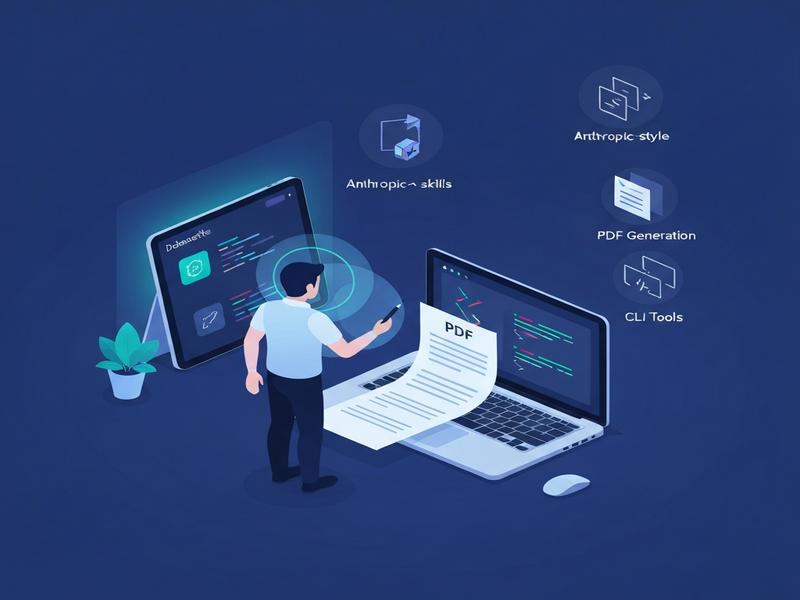
Figure 1: Architecture of OpenAI’s skills system – a folder‑based manifest that bridges LLMs with external resources.
How UBOS leverages OpenAI skills for real‑world solutions
UBOS has already begun integrating OpenAI’s skill framework across its product suite. The UBOS platform overview highlights a modular architecture that can ingest external skill folders, turning them into low‑code building blocks for business users.
For marketers, the AI marketing agents can now call a “content‑generation” skill to produce SEO‑optimized copy on the fly, reducing turnaround time from hours to minutes.
Startups looking for rapid AI adoption can explore the UBOS for startups page, where pre‑built skill templates—such as the AI Article Copywriter—are available for instant deployment.
SMBs benefit from the UBOS solutions for SMBs, which now include a “data‑export” skill that transforms spreadsheet data into clean PDFs, mirroring OpenAI’s native PDF skill.
Enterprises seeking a robust AI backbone can evaluate the Enterprise AI platform by UBOS. This platform supports custom skill creation, allowing large organisations to embed proprietary logic—like compliance checks—directly into the LLM workflow.
Developers who prefer a visual approach can use the Web app editor on UBOS to drag‑and‑drop skill components, while the Workflow automation studio orchestrates multi‑skill pipelines for end‑to‑end automation.
Pricing is transparent: see the UBOS pricing plans for tiered access to skill execution, ranging from free developer sandboxes to enterprise‑grade compute.
For inspiration, browse the UBOS portfolio examples, which showcase real‑world deployments of skill‑driven AI solutions across finance, healthcare, and e‑commerce.
Finally, the UBOS templates for quick start library includes a “ChatGPT‑Skill Bridge” template that pre‑configures the folder structure, manifest, and sample scripts, letting you launch a new skill in under five minutes.
What’s next and how you can get involved
OpenAI’s skills system is still in its early days, but its impact is already rippling through the AI community. Whether you are a developer eager to prototype new tools, a marketer looking to automate content creation, or an enterprise architect planning a scalable AI strategy, mastering skills will become a core competency.
Ready to experiment? Visit the UBOS homepage to spin up a sandbox, explore the UBOS partner program, and start building your own OpenAI‑compatible skills today.
Stay ahead of the curve—subscribe to our AI tools blog for the latest updates on OpenAI, Anthropic, and the evolving landscape of AI assistants.
Andrii Bidochko
CTO UBOS
Andrii Bidochko is an AI entrepreneur and researcher focused on AI agents, reinforcement learning, and autonomous systems. He writes about the technologies shaping the future of machine intelligence, from frontier models and agent architectures to real-world AI applications.