

- Updated: February 2, 2026
- 4 min read
OpenAI Codex App: The Next‑Generation AI Coding Assistant
The OpenAI Codex App is an AI‑powered coding assistant that instantly generates, explains, and refactors code, boosting developer productivity across all skill levels.
OpenAI Codex App: The Next‑Generation AI Coding Assistant Redefining Developer Workflows
OpenAI unveiled the Codex App in early 2026, positioning it as the most versatile generative AI for code creation. Built on the same model family that powers ChatGPT, Codex extends natural‑language understanding into the realm of software development, allowing developers to describe functionality in plain English and receive production‑ready code in seconds.
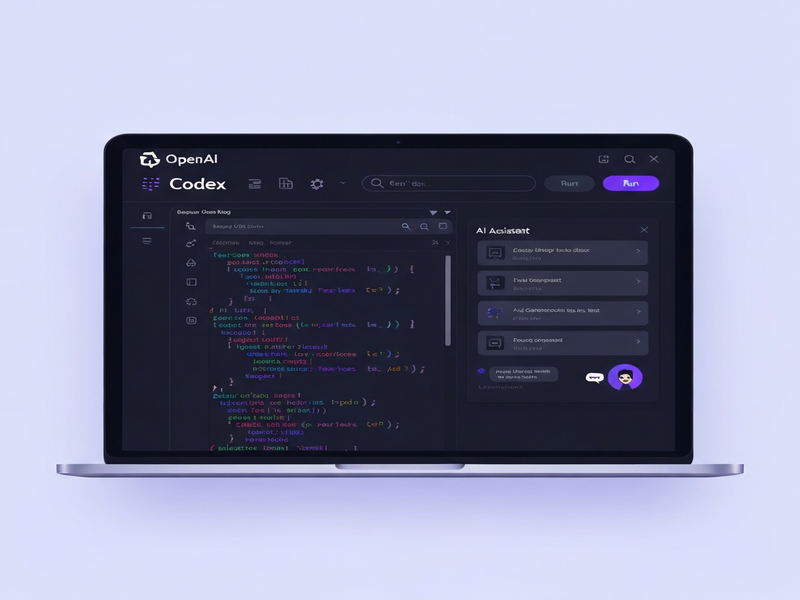
Key Features of the OpenAI Codex App
- Multilingual Code Generation: Supports over 20 programming languages, from Python and JavaScript to Rust and Go.
- Context‑Aware Autocompletion: Analyzes the entire project repository to suggest code that respects existing architecture and naming conventions.
- Instant Documentation & Explanations: Generates inline comments, docstrings, and natural‑language explanations for any snippet.
- One‑Click Refactoring: Detects anti‑patterns and offers optimized alternatives without breaking tests.
- Secure Code Review: Flags potential security vulnerabilities and suggests remediation based on OWASP guidelines.
- Integrated IDE Plugins: Available for VS Code, JetBrains, and the Web app editor on UBOS, enabling seamless workflow integration.
- Customizable Prompt Templates: Teams can create reusable prompts for common tasks, such as API client generation or unit‑test scaffolding.
Benefits and Real‑World Use‑Case Scenarios
Developers, product managers, and AI enthusiasts quickly discover that the Codex App does more than just write code—it reshapes the entire development lifecycle.
Accelerated Prototyping
By describing a feature in plain English, a junior developer can generate a functional prototype in minutes. For example, “Create a REST endpoint that accepts a JSON payload and stores it in a PostgreSQL table” yields a complete Express.js route with validation and error handling.
Enhanced Code Reviews
Senior engineers use Codex to automatically annotate pull requests with potential bugs or performance bottlenecks. The AI’s security checks complement manual reviews, reducing the time‑to‑merge by up to 30 %.
Learning & Upskilling
New hires can ask the assistant to explain legacy codebases, turning cryptic modules into readable, well‑documented sections. This shortens onboarding from weeks to days.
Cross‑Team Collaboration
Product managers without coding expertise can generate mock APIs or data models, fostering rapid alignment with engineering. The UBOS partner program even offers pre‑built templates that integrate Codex‑generated code directly into low‑code workflows.
OpenAI Codex App vs. Other AI Coding Assistants
| Feature | OpenAI Codex App | GitHub Copilot | Amazon CodeWhisperer |
|---|---|---|---|
| Language Coverage | 20+ (including niche languages) | 12+ | 10+ |
| Full‑Project Context | Yes – repository‑wide analysis | Limited to open files | Limited |
| Security Scanning | Integrated OWASP checks | Basic linting only | AWS‑specific best practices |
| Documentation Generation | Automatic docstrings & explanations | Manual via comments | None |
| Custom Prompt Templates | Yes – team‑wide libraries | No | No |
While Copilot and CodeWhisperer excel at inline suggestions, Codex’s broader context awareness, security focus, and documentation capabilities make it a more comprehensive AI coding assistant for enterprise‑grade projects.
Quick Takeaways
- Generates, explains, and refactors code across 20+ languages.
- Analyzes entire repositories for context‑aware suggestions.
- Built‑in security scanning aligns with OWASP standards.
- Creates documentation automatically, reducing knowledge‑transfer friction.
- Integrates with popular IDEs and the Workflow automation studio for end‑to‑end automation.
- Offers customizable prompt libraries for repeatable engineering patterns.
- Outperforms competing tools in language breadth and project‑level insight.
For a broader view of how AI tools are reshaping the tech landscape, explore our coverage of the latest AI tools and the rise of generative AI in modern enterprises.
Suggested Meta Descriptions
- Discover how the OpenAI Codex App transforms code generation, documentation, and security for developers with AI‑powered assistance.
- Learn the key features, benefits, and real‑world use cases of OpenAI’s newest AI coding assistant, the Codex App.
- Compare OpenAI Codex with GitHub Copilot and Amazon CodeWhisperer to find the best AI tool for your development workflow.
Conclusion: Why Developers Should Embrace the Codex App Today
The OpenAI Codex App is more than a code generator—it is a collaborative partner that accelerates prototyping, enforces security, and democratizes knowledge across development teams. As AI continues to embed itself in the software lifecycle, early adopters will gain a decisive productivity edge.
Ready to experiment with AI‑driven development? Visit the UBOS homepage to explore our platform overview and discover ready‑made templates like the AI Article Copywriter that can be combined with Codex‑generated code for end‑to‑end content automation.
Start building smarter, faster, and more securely—let the OpenAI Codex App be the engine that powers your next breakthrough.