

- Updated: March 27, 2026
- 6 min read
Netflix Announces 2026 Subscription Price Hikes Across All Tiers
Netflix has raised its 2026 subscription prices across all tiers: the ad‑supported plan now costs $8.99 / month, the Standard plan $19.99 / month, and the Premium plan $26.99 / month.
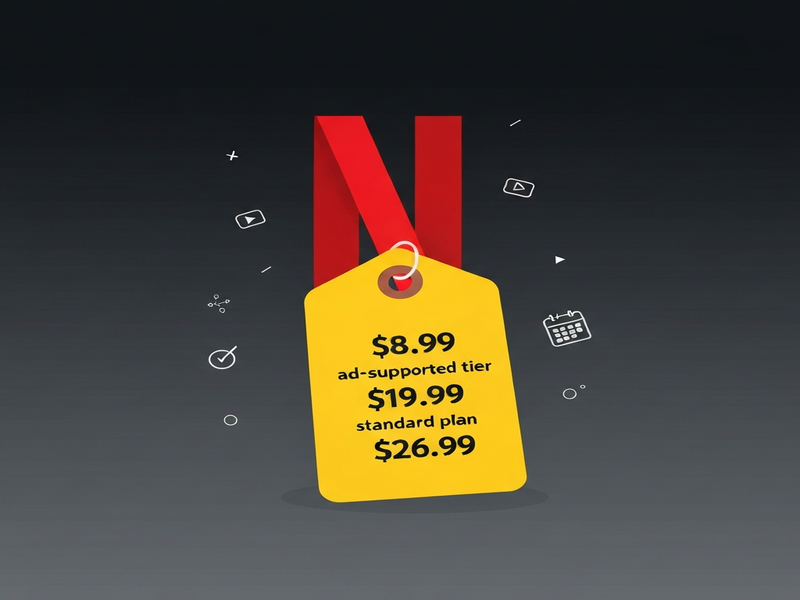
Effective July 1 2026, Netflix’s three main subscription tiers have been adjusted upward for the first time since January 2025. The company’s cheapest, ad‑supported tier climbs from $7.99 to $8.99 per month, the Standard tier jumps from $17.99 to $19.99, and the Premium tier rises from $24.99 to $26.99. The increase follows a year of product enhancements—including video podcasts, live‑event streaming, and a revamped UI—while the ad‑supported tier now generates $1.5 billion in annual advertising revenue.
Background on Netflix Pricing History
Netflix’s pricing strategy has evolved from a single‑plan model in the early 2010s to a multi‑tiered system designed to capture a broader audience. Below is a concise timeline:
- 2011: Introduction of the “Basic” plan ($7.99) and “Standard” plan ($9.99).
- 2013: Launch of the “Premium” tier ($11.99) with 4K streaming.
- 2019: First major price hike, adding $1–$2 across all tiers.
- 2022: Introduction of the ad‑supported tier at $5.99.
- 2025 (January): Increment of $2 on Standard and Premium plans.
These adjustments have historically been justified by rising content costs, inflation, and the need to fund original productions. The 2026 hike continues this pattern, but the context is markedly different because of intensified competition and a maturing streaming market.
Why the ad‑supported tier matters
The ad‑supported tier, originally a low‑cost entry point, now commands a price comparable to the legacy “Basic” plan of a few years ago. Its growth to $8.99 reflects both higher ad inventory prices and Netflix’s ambition to monetize its massive viewer base beyond subscription fees.
Details of the 2026 Price Changes
Ad‑Supported Plan – $8.99 / month
The ad‑supported tier offers up to 4 hours of ads per month, a 1080p video quality ceiling, and a limited library that excludes some premium titles. Despite the higher price, the tier remains attractive for price‑sensitive users who still want access to Netflix’s core catalog.
Standard Plan – $19.99 / month
The Standard plan now includes:
- Full HD (1080p) streaming on two simultaneous devices.
- Access to the entire content library, including new releases.
- Enhanced recommendation engine powered by OpenAI ChatGPT integration for personalized suggestions.
Premium Plan – $26.99 / month
The Premium tier now costs $2 more than its 2025 price and provides:
- 4K Ultra HD streaming with HDR.
- Four simultaneous streams.
- Early access to select originals.
- Integration with Chroma DB integration for faster content retrieval.
Market Context and Competitor Price Hikes
Netflix’s price increase does not occur in a vacuum. The streaming industry has seen a wave of hikes across major players:
| Service | Previous Price | New Price (2026) | Effective Date |
|---|---|---|---|
| Amazon Prime Video (ad‑free) | $12.99 | $14.99 | June 2026 |
| Disney+ (Premium) | $10.99 | $12.99 | May 2026 |
| HBO Max | $14.99 | $16.99 | April 2026 |
| Apple TV Plus | $6.99 | $7.99 | July 2026 |
These hikes are driven by rising licensing fees, increased production budgets for original content, and the need to fund emerging technologies such as AI‑driven recommendation engines. Netflix’s own Enterprise AI platform by UBOS is a testament to the industry’s shift toward AI‑enhanced user experiences.
Consumer Reaction and Potential Impact
Early social‑media chatter shows a mixed response. While many long‑time subscribers expressed frustration—especially those on the ad‑supported tier—others welcomed the price increase as a sign that Netflix will continue investing in high‑quality originals.
“If Netflix can keep delivering award‑winning series, a $2‑$3 bump feels justified,” wrote a Reddit user on r/Netflix.
From a financial perspective, analysts predict a short‑term churn of 2‑3 % but a long‑term revenue boost of roughly $1.2 billion annually, assuming a stable subscriber base. The price hike also aligns Netflix’s pricing with the “premium” segment of the market, potentially narrowing the gap with Disney+ and HBO Max.
How the increase could affect churn
- Price‑sensitive households: May downgrade to the ad‑supported tier or switch to cheaper competitors.
- Content‑driven users: Likely to stay, especially if new releases maintain high quality.
- International markets: Some regions may see localized pricing adjustments to mitigate churn.
Future Outlook: What’s Next for Netflix?
Looking ahead, Netflix is expected to double‑down on AI‑powered personalization, interactive storytelling, and live‑event streaming. The company’s recent partnership with ChatGPT and Telegram integration hints at future cross‑platform experiences that could justify higher subscription fees.
Moreover, the rollout of new tools such as the AI Video Generator and AI Image Generator within the UBOS ecosystem suggests that content creators will have cheaper, faster ways to produce high‑quality assets—potentially lowering production costs for Netflix originals.
For businesses looking to stay ahead of the streaming curve, the AI SEO Analyzer and AI Article Copywriter can help craft compelling marketing copy that resonates with the evolving viewer mindset.
Key takeaways for subscribers
- Expect a modest price increase across all tiers starting July 2026.
- Ad‑supported users will pay $1 more but gain a richer ad experience.
- Standard and Premium plans now include AI‑enhanced recommendation features.
- Industry‑wide price hikes suggest a new baseline for premium streaming.
- Future innovations (AI‑driven content, live events) may justify the higher cost.
Conclusion
Netflix’s 2026 subscription price increase reflects both internal strategic investments and external market pressures. While the short‑term reaction may include a modest churn, the long‑term outlook points to sustained revenue growth powered by AI‑enhanced personalization and a richer content slate. For tech‑savvy viewers, the new pricing structure offers a clearer value proposition: pay a little more for a more tailored, ad‑free (or ad‑light) experience that leverages cutting‑edge AI integrations.
Stay informed about streaming trends and AI‑driven business tools by exploring the UBOS homepage and checking out resources such as the UBOS platform overview, UBOS pricing plans, and the UBOS partner program. For a deeper dive into the original reporting, read the original Verge article.
Businesses interested in rapid AI deployment can leverage the Web app editor on UBOS to prototype new streaming‑related services, while the Workflow automation studio helps automate content ingestion pipelines.
Startups looking for a competitive edge may explore UBOS for startups, and SMBs can benefit from UBOS solutions for SMBs. Marketing teams can boost campaigns with AI marketing agents and the UBOS templates for quick start.
Creative developers may also experiment with voice capabilities via the ElevenLabs AI voice integration or generate dynamic visuals using the Telegram integration on UBOS.
Andrii Bidochko
CTO UBOS
Andrii Bidochko is an AI entrepreneur and researcher focused on AI agents, reinforcement learning, and autonomous systems. He writes about the technologies shaping the future of machine intelligence, from frontier models and agent architectures to real-world AI applications.