

- Updated: February 27, 2026
- 6 min read
MWC 2026 Unveils Futuristic Phone Concepts and Modular Innovations
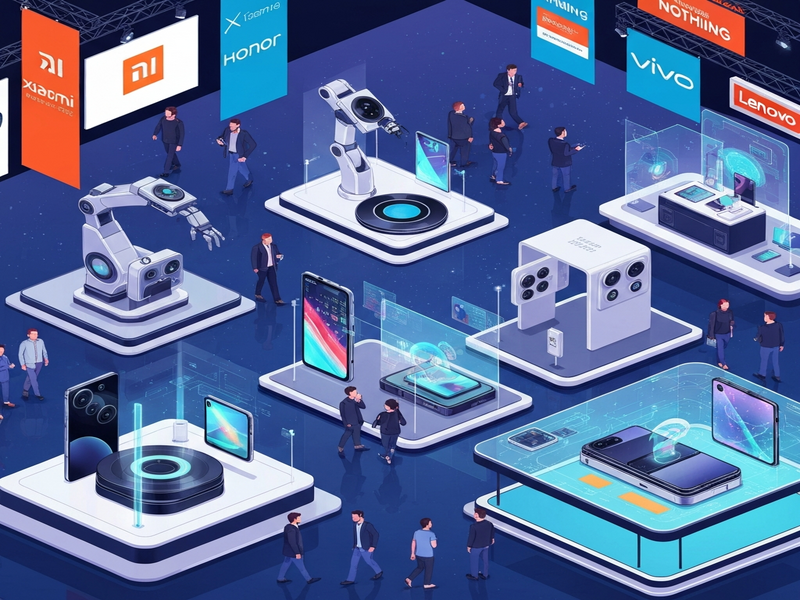
Answer: MWC 2026 unveiled a wave of experimental smartphones—including rotating camera rings, robot‑arm modules, magnetic‑snap‑on accessories, and fully modular devices from brands like Xiaomi, Honor, Tecno, Nothing, Vivo, and Lenovo—signaling that the future of mobile will be defined by AI‑driven, customizable hardware.
Why MWC 2026 Is the Most Unconventional Show Yet
When the original Verge story reported on the Barcelona spectacle, it highlighted a parade of “weird” phones that challenge the status quo. From rotating camera rings that physically scroll optical zoom to robot‑arm extensions that turn a handset into a handheld gimbal, the event proved that manufacturers are no longer content with incremental upgrades—they’re engineering experiences.
Key Hardware Innovations Unveiled at MWC 2026
1. Rotating Camera Rings – Xiaomi & Leica
Xiaomi’s partnership with Leica introduced a rotating camera ring on the back of the new Leitzphone. The ring mechanically adjusts the telephoto lens’s focal length, offering a tactile zoom experience that rivals traditional scroll wheels. While some may call it a gimmick, the physical control reduces latency compared to on‑screen sliders, a clear advantage for fast‑action photography.
2. Robot‑Arm Phones – Honor’s “Robot Phone”
Honor showcased a prototype where a gimbal‑stabilized robotic arm unfolds from the phone’s rear, turning the device into a pocket‑sized DJI Osmo Pocket. The arm is AI‑aware, automatically tracking subjects and adjusting angles based on scene analysis. This convergence of robotics and mobile hardware hints at a future where phones double as personal cinematography assistants.
3. Magnetic Modular Systems – Tecno & Nothing
Tecno’s concept leverages magnetic connectors to attach lenses, action‑camera modules, and power packs. Nothing, meanwhile, teased a magnetic ecosystem for its Phone 4A series, allowing users to snap on accessories without ports or cables. These systems promise a “build‑your‑own‑phone” model, extending device lifespan and reducing e‑waste.
4. Ultra‑Thin Foldables – Honor & Vivo
Honor’s MagicPad 4, billed as the thinnest fully‑fledged tablet, and Vivo’s X300 Ultra flagship both push the envelope on foldable form factors. By integrating AI‑enhanced display drivers, they deliver smoother transitions and adaptive refresh rates that respond to content type, from gaming to reading.
5. Modular Power Solutions – Xiaomi
Beyond cameras, Xiaomi introduced a magnetic power bank that slides into the phone’s chassis, effectively turning the device into a hybrid phone‑battery. This approach addresses the perennial “battery anxiety” while keeping the device’s silhouette sleek.
6. AI‑Centric Software Layers
Across the board, AI is the invisible glue. From real‑time scene detection that triggers the robot arm’s movement to predictive power management that learns user habits, AI is no longer an afterthought—it’s a core hardware partner.
What These Innovations Reveal About the Mobile Industry’s Trajectory
MWC 2026’s showcase underscores three converging trends:
- Hardware Customization: Manufacturers are embracing modularity to differentiate in a saturated market, allowing users to upgrade specific components without replacing the entire device.
- AI‑First Design: AI is being baked into the silicon and firmware, enabling features like autonomous camera arms, adaptive zoom rings, and intelligent power distribution.
- Cross‑Platform Integration: Phones are evolving into hubs that interact with other ecosystems—IoT, wearables, and even robotics—driven by APIs and cloud‑based AI services.
For enterprises, these trends translate into new opportunities for AI marketing agents that can leverage real‑time visual data from mobile devices, or for developers to build workflow automation studios that orchestrate device‑level actions based on AI predictions.
Moreover, the rise of modular phones aligns with sustainability goals. By swapping out a camera module or battery, users can extend device lifespans, reducing electronic waste—a narrative that resonates with both consumers and regulators.
How UBOS Is Empowering the Next Wave of Mobile Innovation
UBOS’s platform is uniquely positioned to help developers and enterprises capitalize on the hardware trends emerging from MWC 2026.
Rapid Prototyping with the Web App Editor
Using the Web app editor on UBOS, teams can quickly spin up companion apps that control robot‑arm phones or manage magnetic accessory ecosystems, all without deep native code expertise.
AI‑Powered Integrations
UBOS offers out‑of‑the‑box integrations such as the OpenAI ChatGPT integration and the Chroma DB integration, enabling developers to embed sophisticated language models directly into mobile workflows.
Voice Interaction via ElevenLabs
For hands‑free control of modular devices, the ElevenLabs AI voice integration provides natural‑sounding speech synthesis, perfect for voice‑activated camera adjustments or battery‑swap notifications.
Automation Across Channels
Combine the Telegram integration on UBOS with the ChatGPT and Telegram integration to deliver real‑time AI insights from a phone’s camera feed straight to a messaging channel, empowering field teams with instant analytics.
Templates for Quick Starts
UBOS’s UBOS templates for quick start include ready‑made solutions like the AI SEO Analyzer and the AI Article Copywriter, which can be repurposed to analyze visual data from new camera modules or generate content for device‑specific marketing campaigns.
Enterprise‑Scale AI Platform
Large organizations can leverage the Enterprise AI platform by UBOS to orchestrate thousands of modular devices, ensuring consistent policy enforcement, OTA updates, and AI model governance.
Partner Ecosystem
Developers interested in co‑creating new accessories can join the UBOS partner program, gaining access to SDKs, documentation, and joint‑marketing opportunities.
Pricing Transparency
Explore the UBOS pricing plans to find a tier that matches your project’s scale—from startup pilots to enterprise rollouts.
Showcase of Real‑World Deployments
Visit the UBOS portfolio examples to see how brands have already integrated modular hardware with AI workflows, delivering measurable ROI.
Conclusion: The Future Is Modular, AI‑First, and Unapologetically Weird
MWC 2026 proved that the next generation of smartphones will be defined by physical adaptability and intelligent automation. Rotating camera rings, robot‑arm extensions, and magnetic modules are not isolated curiosities—they are the hardware foundations for AI‑driven experiences that will reshape how we capture, communicate, and compute on the go.
For tech‑savvy enthusiasts and industry professionals, staying ahead means embracing platforms that can translate these hardware breakthroughs into scalable software solutions. UBOS offers the tools, integrations, and partner ecosystem needed to turn a modular phone concept into a market‑ready product, complete with AI‑enhanced voice, vision, and automation capabilities.
As 5G networks mature—see our coverage of the 5G future—the bandwidth to support real‑time AI processing will become ubiquitous, making today’s experimental devices the standard of tomorrow.
Keep an eye on the evolving AI marketing agents and the expanding UBOS platform overview for the next wave of innovations that will turn these “weird” phones into everyday tools.
Andrii Bidochko
CTO UBOS
Andrii Bidochko is an AI entrepreneur and researcher focused on AI agents, reinforcement learning, and autonomous systems. He writes about the technologies shaping the future of machine intelligence, from frontier models and agent architectures to real-world AI applications.