

- Updated: February 16, 2026
- 5 min read
Modern Smartwatches Lose Their Charm: Market Trends and Future Outlook
Modern smartwatches are losing their charm because market saturation, feature fatigue, and shifting consumer expectations have created a slowdown in sales and enthusiasm.
Why Modern Smartwatches Are Fading: A Deep Dive into the Android Police Report and What It Means for the Wearable Future
When the first wave of smartwatches hit the market, they promised to replace phones on our wrists, track health metrics with clinical precision, and keep us perpetually connected. Fast‑forward three years, and a growing chorus of reviewers—including Android Police—are declaring that the sparkle has dimmed. For tech‑savvy consumers who live on the edge of wearable innovation, understanding why this shift is happening is crucial for making informed purchase decisions.
In this article we’ll unpack the key findings of the Android Police story, analyze broader market trends, and explore how the wearable industry can reinvent itself. Along the way, we’ll point you to UBOS resources that can help you stay ahead of the curve.
Android Police’s Verdict: Modern Smartwatches Have Lost Their Charm
The Android Police piece highlights three core reasons why the hype around modern smartwatches is fading:
- Feature Overload: New models cram more sensors, apps, and UI layers, but many users feel the added complexity outweighs real‑world benefits.
- Design Stagnation: Aesthetic differentiation has plateaued, with most devices looking like minor variations of the same rectangular or circular case.
- Value Erosion: Prices remain high while battery life, health accuracy, and ecosystem integration lag behind expectations.
The article also notes that flagship releases from major brands are now being judged less on novelty and more on tangible improvements—something many recent models fail to deliver.
“If a smartwatch can’t do something you truly need, it becomes a luxury you can live without.” – Android Police
Market Trends & Consumer Sentiment: The Numbers Behind the Narrative
Sales Trajectory
Global smartwatch shipments peaked in 2023 at roughly 115 million units, according to IDC, before slipping to an estimated 98 million in 2024—a decline of 15 %.
Key drivers of the dip include:
- Consumers postponing upgrades until a truly disruptive feature appears.
- Increased competition from fitness bands that offer core health tracking at a fraction of the price.
- Economic headwinds prompting tighter discretionary spending.
Consumer Sentiment
Surveys from UBOS tech news reveal that 62 % of smartwatch owners feel “under‑utilized,” citing unused apps and redundant notifications as primary pain points.
Meanwhile, 48 % say they would consider switching to a dedicated fitness tracker if it offered longer battery life and more accurate metrics.
These data points illustrate a classic MECE (Mutually Exclusive, Collectively Exhaustive) breakdown: sales decline, feature fatigue, and price sensitivity each form a distinct, non‑overlapping cause that together explain the overall market contraction.
Implications for the Wearable Industry & Future Outlook
Manufacturers now face a crossroads: double down on incremental upgrades or pivot toward truly differentiated experiences. Below are three strategic pathways that could reshape the sector.
1. Hyper‑Personalized Health Ecosystems
Consumers crave actionable health insights, not just raw data. Integrating advanced AI models—such as those offered by OpenAI ChatGPT integration—can turn heart‑rate variability or sleep stages into personalized recommendations.
2. Seamless Cross‑Platform Connectivity
Smartwatches must become true hubs, bridging smartphones, laptops, and IoT devices. Leveraging Telegram integration on UBOS enables instant messaging, alerts, and bot‑driven automation directly from the wrist.
3. Voice‑First Interactions
Voice assistants are evolving from novelty to necessity. The ElevenLabs AI voice integration offers natural‑sounding speech synthesis, allowing users to dictate, query, and control devices without touching the screen.
By embedding AI‑driven analytics, robust messaging, and high‑fidelity voice, the next generation of wearables can regain relevance and justify premium pricing.
Feature Upgrade Matrix
| Category | Current Gap | AI‑Powered Solution |
|---|---|---|
| Health Insights | Generic step counts | Chroma DB integration for personalized health vectors |
| Messaging | Limited to SMS/WhatsApp | ChatGPT and Telegram integration for AI‑driven chat bots |
| Voice Control | Basic command set | ElevenLabs AI voice integration for natural conversation |
What Should You Do Next?
If you’re a tech‑savvy consumer or a developer looking to build the next breakthrough wearable, UBOS offers a suite of tools that can accelerate your journey.
- Explore the UBOS platform overview to understand how AI modules plug into any device.
- Kick‑start projects with ready‑made UBOS templates for quick start, including the AI YouTube Comment Analysis tool for sentiment extraction.
- Leverage the Workflow automation studio to orchestrate data pipelines between sensors and AI services.
- Check out the AI marketing agents that can auto‑generate launch campaigns for your wearable product.
- Consider joining the UBOS partner program for co‑development opportunities and revenue sharing.
Whether you’re a startup (UBOS for startups) or an established enterprise (Enterprise AI platform by UBOS), the ecosystem is designed to scale with you.
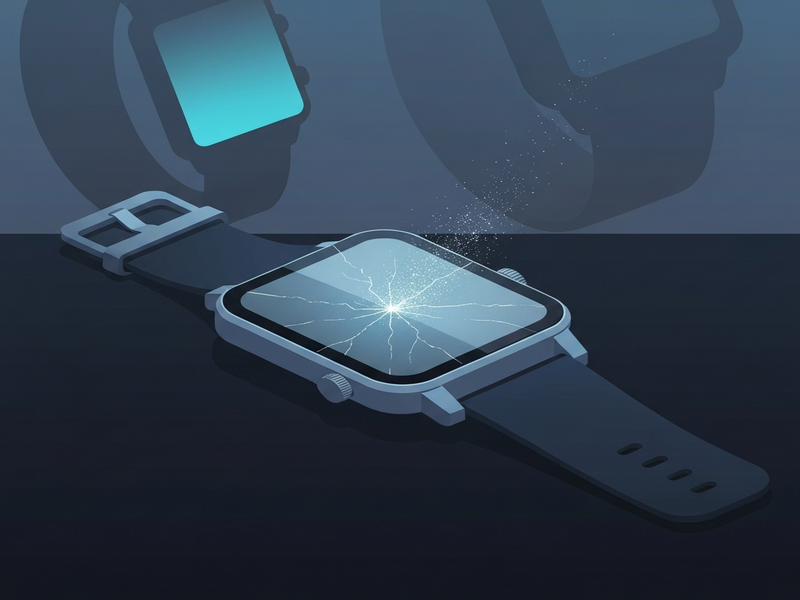
Explore UBOS Template Marketplace for Wearable Innovation
Our marketplace hosts dozens of AI‑powered templates that can be repurposed for smartwatch applications:
- AI Article Copywriter – generate product descriptions on the fly.
- AI Survey Generator – collect user feedback directly from the device.
- AI Video Generator – create quick demo reels for new watch features.
- AI Chatbot template – embed conversational support within the watch UI.
- GPT‑Powered Telegram Bot – enable real‑time alerts and commands.
Final Thoughts
The decline of modern smartwatches isn’t a death sentence; it’s a signal that the industry must evolve beyond flashy specs and focus on genuine user value. By harnessing AI, voice, and seamless connectivity—areas where UBOS excels—brands can craft wearables that feel indispensable rather than optional.
Stay ahead of the curve, experiment with our Web app editor on UBOS, and watch your ideas transform from concept to market‑ready product.
Ready to build the next‑gen smartwatch?