

- Updated: June 20, 2025
- 4 min read
Midjourney’s AI Video Tool: Legal Challenges and Innovation
Midjourney’s AI-Generated Video Tool: A Legal and Ethical Exploration
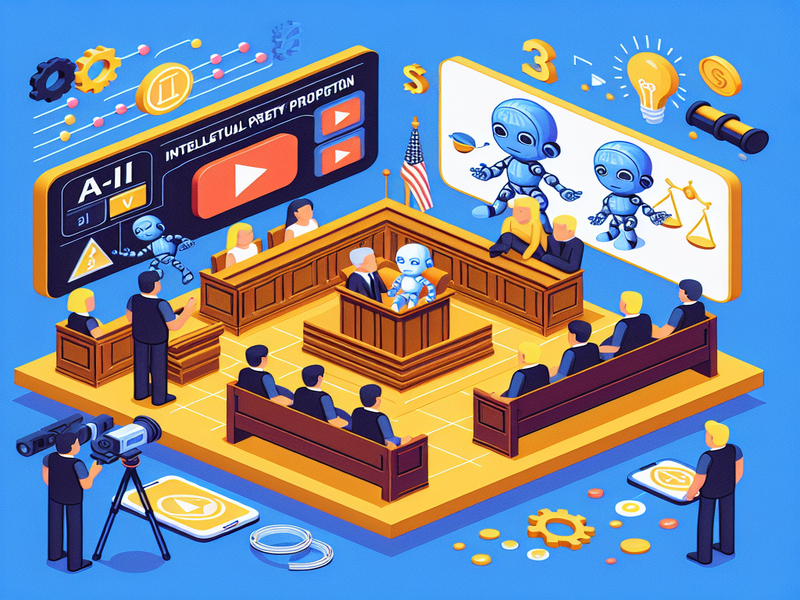
In the rapidly evolving landscape of artificial intelligence, Midjourney has unveiled a groundbreaking AI-generated video tool that promises to revolutionize content creation. However, this innovative technology has not gone unnoticed by industry giants like Disney and Universal, who have raised concerns over potential copyright infringements. This article delves into the legal challenges surrounding this tool, the implications of AI technology on intellectual property, and expert insights on the transformative potential and ethical considerations.
The Rise of AI-Generated Video Tools
Midjourney’s AI-generated video tool represents a significant leap forward in the realm of digital content creation. By leveraging advanced algorithms, the tool can produce high-quality videos with minimal human intervention, offering unprecedented efficiency and creativity. As AI technology continues to advance, tools like these are becoming increasingly integral to industries ranging from entertainment to marketing.
However, with great innovation comes great responsibility. The introduction of AI-generated content raises critical questions about ownership and the protection of intellectual property. As companies like Midjourney push the boundaries of what’s possible, they must also navigate the complex legal landscape that governs creative works.
Legal Challenges from Entertainment Giants
Disney and Universal, two of the most influential players in the entertainment industry, have expressed concerns over Midjourney’s AI-generated video tool. Their primary contention is that the tool could potentially infringe on existing copyrights by producing content that closely resembles their intellectual property. This has sparked a broader debate about how copyright laws apply to AI-generated works.
The legal challenges posed by Disney and Universal highlight the tension between innovation and intellectual property rights. As AI technology becomes more sophisticated, it blurs the lines between human and machine-generated content, complicating the enforcement of traditional copyright laws. This has led to calls for updated regulations that can adequately address the unique challenges posed by AI.
Implications of AI Technology on Intellectual Property
The implications of AI technology on intellectual property are profound and far-reaching. On one hand, AI-generated content offers immense potential for creativity and efficiency, enabling creators to produce high-quality content at scale. On the other hand, it poses significant challenges to the existing legal framework that protects intellectual property.
As AI tools become more prevalent, there is an urgent need for updated regulations that can balance the interests of creators, consumers, and technology developers. This includes clarifying the ownership of AI-generated works, establishing guidelines for fair use, and ensuring that creators are adequately compensated for their contributions.
Expert Insights on Transformative Potential and Ethical Considerations
Experts in the field of AI and intellectual property agree that the transformative potential of AI-generated content is immense. However, they also caution that ethical considerations must be at the forefront of any discussion about AI technology. This includes ensuring that AI tools are used responsibly and that they do not infringe on the rights of creators.
One of the key ethical considerations is the potential for AI-generated content to perpetuate biases and stereotypes. As AI tools are trained on existing data, they may inadvertently replicate harmful patterns present in the data. This underscores the importance of developing AI tools that are transparent, fair, and accountable.
Additionally, experts emphasize the need for collaboration between technology developers, legal professionals, and policymakers to create a regulatory framework that supports innovation while protecting intellectual property rights. This includes exploring new models of ownership and compensation that reflect the unique nature of AI-generated content.
Conclusion: The Need for Updated Regulations
As Midjourney’s AI-generated video tool continues to capture the attention of the tech world, it serves as a reminder of the need for updated regulations that can keep pace with the rapid advancements in AI technology. The legal challenges posed by Disney and Universal highlight the importance of balancing innovation with the protection of intellectual property rights.
To navigate this complex landscape, stakeholders must work together to create a regulatory framework that supports the responsible development and use of AI technology. This includes addressing the ethical considerations associated with AI-generated content and ensuring that creators are adequately compensated for their contributions.
As we move forward, it is essential to recognize the transformative potential of AI technology and to embrace its possibilities while safeguarding the rights of creators and consumers. By doing so, we can unlock the full potential of AI-generated content and pave the way for a future where innovation and intellectual property coexist harmoniously.
For more insights on AI and its implications, explore the Telegram integration on UBOS and the OpenAI ChatGPT integration. Additionally, learn about the ElevenLabs AI voice integration and discover how UBOS is transitioning to an AI-powered future.
Andrii Bidochko
CTO UBOS
Andrii Bidochko is an AI entrepreneur and researcher focused on AI agents, reinforcement learning, and autonomous systems. He writes about the technologies shaping the future of machine intelligence, from frontier models and agent architectures to real-world AI applications.