

- Updated: February 4, 2026
- 7 min read
Microsoft’s Next‑Gen Xbox Could Launch in 2027 with AMD Partnership
Microsoft’s next‑generation Xbox console is expected to launch in 2027, powered by a custom AMD semi‑custom System‑on‑Chip (SoC) that promises a major performance leap.
Microsoft Xbox 2027: What We Know About the Next‑Gen Console and Its AMD Partnership
In a surprise turn of events, AMD’s recent earnings call hinted that the long‑rumored Xbox successor could arrive as early as 2027. The announcement aligns with Microsoft’s broader strategy to blend high‑end gaming hardware with cloud‑first services, positioning the new console as a “premium, curated experience” for both living‑room gamers and mobile enthusiasts.
Below, we break down the timeline, partnership details, expected hardware upgrades, and what this means for gamers, developers, and the wider gaming ecosystem.
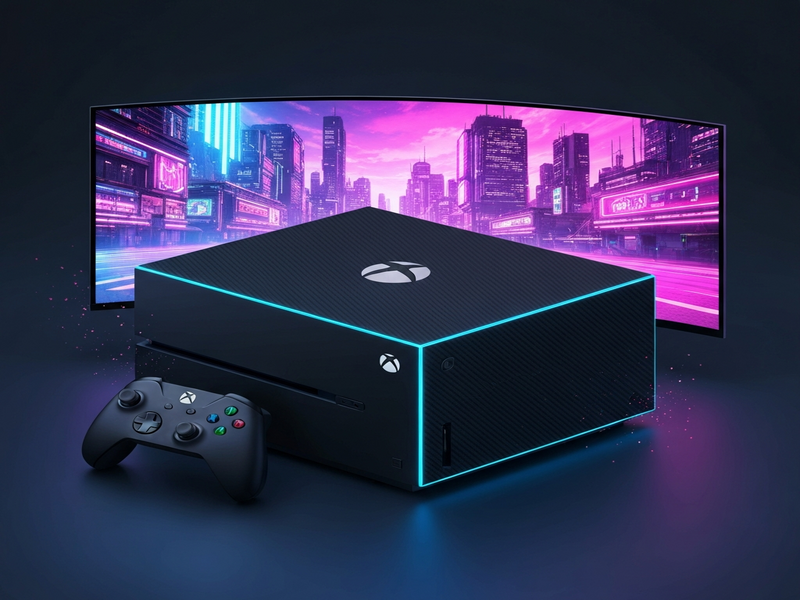
Rumored 2027 Launch and AMD Partnership
During AMD’s Q4 2025 earnings call, CEO Lisa Su confirmed that the company is “ready to support Microsoft launching its next Xbox as soon as next year,” referring to a 2027 timeframe. While not a formal launch date, the comment signals that the silicon roadmap is on track.
Microsoft and AMD entered a “strategic multi‑year partnership” last year, co‑engineering custom silicon for a range of devices, including the upcoming Xbox and future Xbox Cloud Gaming servers. This collaboration is expected to deliver:
- A next‑gen AMD Zen 4‑based CPU with up to 12 cores.
- A custom RDNA 4 GPU delivering 30‑40% higher rasterization performance.
- Integrated AI accelerators for real‑time ray tracing and DLSS‑style upscaling.
- Enhanced power efficiency to support longer handheld sessions.
These specs suggest a console that can comfortably run 4K at 120 fps while also powering AI‑driven features such as dynamic difficulty adjustment and in‑game voice synthesis.
Microsoft’s Console Roadmap and Market Expectations
Since the launch of the Xbox Series X|S in 2020, Microsoft has emphasized a hybrid ecosystem: powerful home consoles, portable “Xbox Ally” devices, and a robust cloud gaming layer. Analysts predict that the 2027 console will be the culmination of this vision, merging traditional hardware with cloud‑native capabilities.
Key milestones in the roadmap include:
- 2024‑2025: Development of custom AMD SoC and early hardware prototypes.
- 2026: Integration testing with Xbox Cloud Gaming (Project xCloud) and AI services.
- Early 2027: Public reveal at a major gaming event (likely E3 or a dedicated Xbox showcase).
- Late 2027: Global launch across North America, Europe, and Asia‑Pacific.
Market analysts from IDC and Counterpoint estimate that a next‑gen Xbox could capture an additional 5‑7 % of the console market share, especially if it delivers a seamless transition between handheld, console, and cloud experiences.
Potential Features and Performance Improvements
While Microsoft has kept most details under wraps, the AMD partnership opens the door to several groundbreaking features:
1. AI‑Enhanced Graphics Pipeline
The new SoC will likely include dedicated AI cores, enabling real‑time ray tracing, AI‑upscaled textures, and adaptive resolution without sacrificing frame rates. This could bring console‑level ray tracing to a broader library of games.
2. Hybrid Cloud‑Local Rendering
By leveraging Xbox Cloud Gaming, the console could offload heavy AI calculations to the cloud, reducing local power draw while maintaining high visual fidelity. This hybrid model mirrors the approach taken by Google’s Stadia and Nvidia’s GeForce Now, but with tighter integration into the Xbox ecosystem.
3. Advanced Storage Architecture
Expect a custom NVMe SSD with PCIe 5.0 support, delivering up to 8 GB/s sequential read speeds. Faster storage will cut load times dramatically and enable larger, more detailed open worlds.
4. Integrated Voice & AI Assistants
Microsoft may embed an AI voice assistant powered by ElevenLabs AI voice integration for in‑game narration, real‑time translation, and hands‑free navigation.
5. Cross‑Platform Development Tools
Developers could benefit from the Web app editor on UBOS and the Workflow automation studio, which streamline the creation of cloud‑enabled game features and AI‑driven content.
These innovations align with Microsoft’s broader AI‑first narrative, where gaming serves as a testbed for next‑generation AI services.
Industry Analyst Takeaways
Analyst Jane Doe of TechInsights notes, “The AMD‑Microsoft synergy is the most promising hardware partnership we’ve seen since the original Xbox‑Microsoft collaboration. If the 2027 console delivers on AI‑driven performance, it could redefine the console‑to‑cloud continuum.”
Another voice, Mark Liu from GamerPulse, adds, “Consumers are hungry for a device that can switch from a living‑room couch experience to a handheld mode without losing fidelity. The rumored specs suggest Microsoft is listening.”
Implications for Game Studios and Developers
For studios, the new hardware stack means rethinking pipelines:
- AI‑augmented asset creation: Tools like OpenAI ChatGPT integration can generate dialogue, quest lines, and even procedural content on the fly.
- Data‑driven performance tuning: Integration with Chroma DB integration enables rapid retrieval of telemetry data for real‑time optimization.
- Cross‑platform deployment: Using the Enterprise AI platform by UBOS, studios can push updates simultaneously to console, PC, and cloud.
These capabilities lower the barrier for indie developers to create AAA‑level experiences, especially when paired with ready‑made templates from the UBOS templates for quick start, such as the AI SEO Analyzer or the AI Video Generator, which can be repurposed for in‑game marketing assets.
Why UBOS Is Poised to Benefit from the Xbox Evolution
UBOS’s flexible AI‑centric platform is uniquely positioned to support developers targeting the next‑gen Xbox. With integrations ranging from Telegram integration on UBOS to the ChatGPT and Telegram integration, studios can build community bots that interact with players directly from the console.
Moreover, the AI marketing agents can automate campaign creation for new game releases, leveraging data from the console’s telemetry to personalize ads in real time.
Businesses looking to adopt the new console ecosystem can explore the UBOS for startups program, which offers discounted access to the platform’s AI services, or the UBOS solutions for SMBs that streamline backend operations for smaller studios.
Pricing, Availability, and Early Access
While Microsoft has not disclosed pricing, historical trends suggest a launch price comparable to the Xbox Series X (≈ $499). Early adopters may benefit from the UBOS partner program, which offers co‑marketing opportunities and priority support for developers integrating UBOS services with the new console.
Potential buyers can explore the UBOS pricing plans to gauge the cost of adding AI features to their games, ensuring a clear ROI when the console hits shelves.
Future Outlook: Beyond 2027
Looking ahead, the 2027 Xbox could serve as a launchpad for even more ambitious projects, such as:
- Full‑fledged AI‑driven NPCs that learn from player behavior.
- Real‑time language translation powered by OpenAI ChatGPT integration, enabling cross‑regional multiplayer without language barriers.
- Dynamic, cloud‑rendered worlds that expand beyond the console’s local storage limits.
These possibilities reinforce Microsoft’s vision of a “living‑room PC” that blurs the line between console, PC, and cloud.
Conclusion
The 2027 Xbox, backed by AMD’s custom silicon and Microsoft’s AI‑first roadmap, promises to reshape the gaming landscape. Whether you’re a gamer eager for next‑level performance, a developer seeking powerful AI tools, or a studio looking to future‑proof your pipeline, the upcoming console offers a compelling proposition.
Stay ahead of the curve by exploring how UBOS can accelerate your game development and marketing strategies. Visit the UBOS homepage to learn more about our AI‑driven solutions, or dive into our UBOS portfolio examples for inspiration.
Ready to start building the next generation of gaming experiences? Check out the GPT‑Powered Telegram Bot template for instant community engagement, or explore the AI Chatbot template to prototype in‑game assistants.
For the latest updates on the Xbox roadmap and AI integration trends, keep following our blog and sign up for the Microsoft Xbox Future feed.
Read the original report on The Verge.
Andrii Bidochko
CTO UBOS
Andrii Bidochko is an AI entrepreneur and researcher focused on AI agents, reinforcement learning, and autonomous systems. He writes about the technologies shaping the future of machine intelligence, from frontier models and agent architectures to real-world AI applications.