

- Updated: February 3, 2026
- 7 min read
Microsoft Launches Publisher Content Marketplace: AI Licensing Hub for Premium Content
Microsoft’s Publisher Content Marketplace (PCM) is an AI licensing hub that lets publishers define usage terms for their premium content, while AI developers can instantly discover, negotiate, and pay for those rights to power their models.
Why the Publisher Content Marketplace Matters Now
In the fast‑moving world of generative AI, the biggest bottleneck isn’t compute power—it’s legal access to high‑quality data. Microsoft’s new Publisher Content Marketplace promises to turn that bottleneck into a transparent, pay‑per‑use ecosystem. For technology enthusiasts, AI professionals, and publishing stakeholders, this could be the first truly scalable solution for “grounding” large language models with licensed, premium content.
1. Overview of Microsoft Publisher Content Marketplace
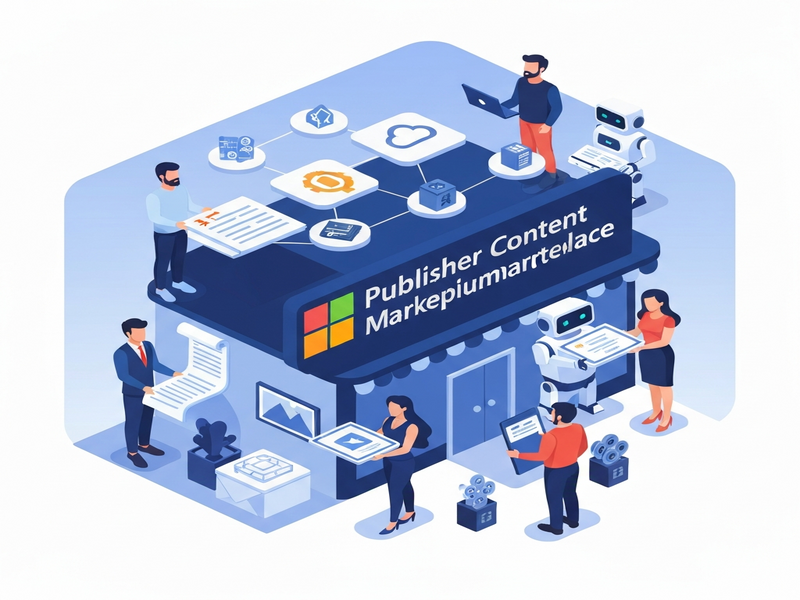
PCM is positioned as an AI licensing hub that aggregates usage terms set by participating publishers. The platform works like an app store for data:
- Publishers upload their licensing policies, pricing tiers, and usage metrics.
- AI developers browse a searchable catalog, filter by content type, region, or price, and instantly generate a licensing contract.
- Real‑time reporting feeds back usage data, enabling dynamic pricing based on actual value delivered.
Microsoft emphasizes that PCM will “support publishers of all sizes,” from global media conglomerates to independent blogs. The marketplace is built on Azure’s secure infrastructure, ensuring compliance with GDPR, CCPA, and other data‑privacy regimes.
How PCM Differs From Traditional Licensing
Traditional content licensing often involves lengthy negotiations, static contracts, and opaque royalty calculations. PCM replaces that with:
- Self‑service discovery: AI teams can instantly see what’s available without legal back‑and‑forth.
- Usage‑based pricing: Fees scale with the number of API calls or tokens consumed, aligning cost with value.
- Automated compliance: Built‑in attribution and audit trails reduce risk for both parties.
2. Key Partners and the AI Licensing Model
Microsoft has already co‑designed PCM with a roster of heavyweight media brands, including Vox Media, The Associated Press, Condé Nast, and People. These partners bring a mix of news, lifestyle, and entertainment content—exactly the kind of high‑quality data AI models crave.
Beyond traditional publishers, Microsoft is courting technology platforms that already excel at data licensing. For example, the ChatGPT and Telegram integration demonstrates how conversational AI can be paired with licensing data streams, while the Telegram integration on UBOS showcases real‑time content delivery to messaging apps.
Other notable integrations that illustrate the ecosystem’s breadth include:
- OpenAI ChatGPT integration – enabling seamless token‑based billing for licensed excerpts.
- Chroma DB integration – providing vector‑search capabilities for fast retrieval of licensed passages.
- ElevenLabs AI voice integration – turning licensed text into high‑fidelity speech for voice assistants.
The Licensing Mechanics
PCM adopts a “pay‑to‑scrape” model inspired by the industry‑wide Really Simple Licensing (RSL) standard. Publishers embed a JSON‑LD snippet on each article that declares:
{
  "@context": "https://schema.org",
  "@type": "CreativeWork",
  "license": {
    "type": "PayPerUse",
    "pricePerToken": "0.00002 USD",
    "maxTokensPerDay": 500000
  }
}
When an AI model queries the content, the marketplace automatically calculates the fee, records the transaction, and returns a usage receipt. This transparency is a game‑changer for compliance teams that previously struggled to prove lawful data sourcing.
3. Benefits for Publishers and Developers
Both sides of the equation stand to gain significant advantages.
For Publishers
- New revenue streams: Monetize archives that were previously “free‑to‑scrape.”
- Data‑driven pricing: Adjust rates based on real‑time demand signals.
- Brand protection: Enforce attribution and prevent misuse through automated policy enforcement.
- Analytics dashboard: Track which AI models are using your content and how often.
For AI Developers
- Speed to market: Instantly access a vetted library of premium text, images, and video.
- Compliance assurance: Built‑in licensing guarantees that models meet legal standards.
- Cost efficiency: Pay only for the tokens actually consumed, avoiding flat‑fee licensing traps.
- Quality boost: Licensed, editorially‑curated content improves factual accuracy and reduces hallucinations.
UBOS, a leading AI‑first SaaS platform, has already built tools that complement PCM’s vision. Their Enterprise AI platform by UBOS lets large organizations ingest licensed data directly into private LLMs, while the AI licensing hub (internal page) demonstrates how to expose your own content for third‑party consumption.
4. Industry Impact and Future Outlook
The launch of PCM could reshape three major industry dynamics:
A. The Economics of AI Training
Training large models currently costs billions, much of it due to data acquisition. By creating a transparent marketplace, Microsoft reduces the “data black‑box” cost, potentially lowering overall training budgets by 10‑15% for early adopters.
B. Legal Precedent for AI‑Generated Content
Recent lawsuits—such as those filed by The New York Times and The Intercept against OpenAI—highlight the legal risk of unlicensed data. PCM offers a defensible pathway that could become the de‑facto standard for AI developers seeking to avoid litigation.
C. Innovation in Content‑Driven AI Products
With licensed data at their fingertips, developers can build niche AI assistants—think a “legal‑brief generator” powered by premium law journals or a “medical‑research summarizer” using peer‑reviewed articles. UBOS’s AI marketing agents already showcase how specialized data can drive hyper‑personalized campaigns.
Moreover, the marketplace’s API‑first design aligns perfectly with emerging low‑code tools. For instance, the Web app editor on UBOS lets non‑technical teams assemble AI‑powered dashboards that pull licensed content directly from PCM, accelerating time‑to‑value.
Case Study: Boosting SEO with Licensed Content
Consider a SaaS company that wants to improve its organic reach. By feeding the AI SEO Analyzer with high‑quality, licensed industry reports from PCM, the tool can generate data‑rich meta descriptions, topic clusters, and schema markup that outrank competitors relying on scraped, low‑quality sources.
5. What’s Next for the Publisher Content Marketplace?
Microsoft has announced a pilot phase with early adopters like Yahoo and several niche publishers. The roadmap includes:
- Expansion to multimedia assets (audio, video, 3D models).
- Dynamic royalty splits for multi‑author works.
- AI‑driven recommendation engine that surfaces the most relevant licensed assets for a given model.
- Integration with third‑party compliance tools, such as Workflow automation studio, to automate contract renewal and usage alerts.
UBOS is already positioning itself as a partner in this ecosystem. Their UBOS partner program offers co‑marketing, technical support, and revenue‑share models for companies that list their content on PCM.
Conclusion – Why You Should Pay Attention Now
The Publisher Content Marketplace is more than a licensing catalog; it’s a strategic infrastructure that could become the backbone of responsible AI development. For publishers, it unlocks a sustainable monetization channel. For AI developers, it removes legal uncertainty and accelerates innovation.
If you’re a tech leader or a content creator looking to future‑proof your data strategy, now is the moment to explore Microsoft’s PCM and consider how it fits into your AI roadmap. Start by reviewing the UBOS homepage for complementary tools, then dive into the UBOS pricing plans to see how you can scale responsibly.
“The open web was built on an implicit value exchange. PCM formalizes that exchange for the AI era, turning data into a tradable asset rather than a free‑for‑all resource.” – Microsoft spokesperson Courtney Ramirez
Ready to experiment with licensed AI data? Check out UBOS’s UBOS templates for quick start and launch your first AI‑powered application today.
Andrii Bidochko
CTO UBOS
Andrii Bidochko is an AI entrepreneur and researcher focused on AI agents, reinforcement learning, and autonomous systems. He writes about the technologies shaping the future of machine intelligence, from frontier models and agent architectures to real-world AI applications.