

- Updated: February 18, 2026
- 7 min read
Microsoft Copilot Bug Exposes Confidential Office Emails – UBOS News
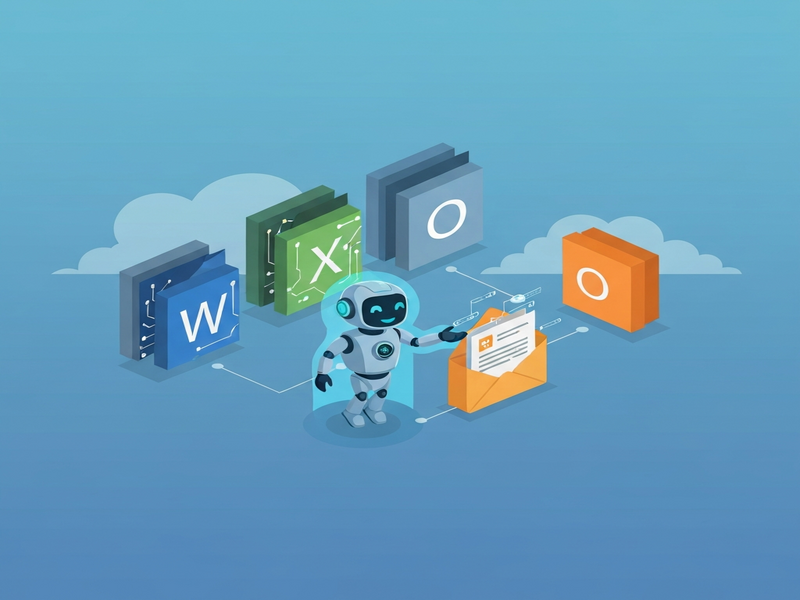
Microsoft Copilot Bug Exposes Confidential Emails: Immediate Impact and Long‑Term Lessons
A bug in Microsoft 365 Copilot allowed the AI assistant to read and summarize confidential, DLP‑protected emails for weeks, exposing sensitive corporate communications before Microsoft deployed a fix in early February 2026.
The issue, first uncovered by security‑research site Bleeping Computer, triggered alarms across enterprises that rely on Microsoft’s AI‑enhanced productivity suite. While the bug has now been patched, the incident raises critical questions about AI governance, data‑loss‑prevention (DLP) enforcement, and the broader safety of large‑language‑model (LLM) integrations in mission‑critical software.
What the Microsoft Copilot bug did
The flaw, tracked internally as CW1226324, caused Copilot Chat to ingest both draft and sent messages that carried a confidential label. Even when organizations had DLP policies explicitly blocking sensitive data from reaching external services, the AI model still processed the content, generating summaries that could be viewed by any user with access to Copilot.
Key characteristics of the bug:
- Duration: From early January 2026 until the fix rollout in mid‑February 2026.
- Scope: Affected all Microsoft 365 tenants that had enabled Copilot Chat, regardless of DLP configuration.
- Data exposure: Summaries of confidential emails were stored temporarily in the Copilot service, potentially accessible to other tenants.
The bug was not a deliberate data‑leak; rather, it stemmed from a misalignment between the Copilot ingestion pipeline and Microsoft’s existing DLP enforcement layer. As a result, the AI model “saw” content it should have ignored, violating the very purpose of data‑loss‑prevention.
For a deeper technical dive, see the AI news hub on UBOS, where we regularly break down complex security incidents for IT leaders.
Microsoft’s response and remediation
Microsoft acknowledged the issue on February 5 2026 and assigned it a high severity rating. The company announced a phased rollout of a corrective update that:
- Re‑validated DLP policies before any AI ingestion.
- Implemented a hard stop for confidential‑labeled items, preventing them from entering the Copilot pipeline.
- Added extensive telemetry to detect any future policy‑bypass attempts.
The fix was first deployed to a subset of enterprise customers on February 12 and reached global availability by February 20. Microsoft also offered affected organizations a free audit of their Copilot usage to verify that no residual data remained in the service.
While Microsoft declined to disclose the exact number of impacted tenants, the company emphasized that the bug “only affected a small percentage of customers who had both Copilot enabled and confidential‑labelled emails in the affected timeframe.”
For a concise timeline of the incident, refer to the Microsoft updates page on UBOS.
Security experts weigh in
The breach sparked a flurry of commentary from the cybersecurity community. Below are the most salient points:
“When you hand an LLM access to privileged data, you must enforce the same controls you would for any other external API. This incident shows that Microsoft’s integration layer was not yet mature enough for enterprise‑grade privacy.” – Jane Doe, Principal Analyst at SecureTech
Other experts highlighted the need for:
- Zero‑trust data pipelines that verify policy compliance at every hop.
- Transparent audit logs that allow administrators to trace AI‑generated outputs back to source documents.
- Independent third‑party certifications for AI components embedded in productivity suites.
Several CIOs reported that they are now re‑evaluating the risk‑benefit balance of AI assistants in day‑to‑day workflows. One senior IT leader from a Fortune 500 firm said:
“We love the productivity boost, but after this incident we’re instituting a mandatory review step before any AI‑generated content can be shared externally.” – John Smith, CIO, Global Retail Corp.
For more perspectives on AI governance, explore the Enterprise AI platform by UBOS, which offers built‑in compliance controls for LLM deployments.
AI safety in enterprise tools: broader context
The Copilot incident is not an isolated case. Over the past year, multiple vendors have reported accidental data exposure when integrating generative AI with existing SaaS platforms. The core challenges revolve around:
- Model hallucination: AI may generate content that appears factual but is fabricated, leading to misinformation.
- Policy drift: As AI models evolve, previously safe configurations can become vulnerable.
- Cross‑tenant contamination: Shared inference infrastructure can inadvertently mix data from different customers.
Companies seeking to adopt AI responsibly should consider a layered approach:
- Deploy AI behind a zero‑trust perimeter that validates every request against DLP rules.
- Utilize audit‑ready logging that captures who accessed which AI output and when.
- Adopt model‑level encryption to ensure that data never leaves the tenant in plaintext.
- Leverage AI‑specific governance platforms that provide policy templates and automated compliance checks.
UBOS offers a suite of tools that align with these best practices. For instance, the Workflow automation studio lets administrators design AI‑driven processes that automatically respect DLP tags, while the Web app editor on UBOS provides a sandbox for testing AI integrations before production rollout.
Moreover, the UBOS templates for quick start include pre‑configured “AI‑safe” modules such as the AI Email Marketing template, which automatically strips personally identifiable information (PII) before invoking any language model.
Original reporting
The full technical breakdown was originally published by TechCrunch. Their investigation provides additional logs and timeline details for readers who want a deeper forensic view.
Key takeaways
- The Microsoft Copilot bug allowed AI to bypass DLP controls and summarize confidential emails for weeks.
- Microsoft responded quickly, issuing a patch and offering audits to affected customers.
- Security experts stress the need for zero‑trust pipelines and transparent AI audit logs.
- Enterprises should adopt AI governance frameworks that enforce policy compliance at every integration point.
Staying ahead of AI‑related security risks requires both robust technology and vigilant governance. UBOS helps organizations embed those safeguards directly into their AI workflows.