

- Updated: February 20, 2026
- 6 min read
Meta’s Ray‑Ban Smart Glasses Face Privacy Backlash Over On‑Device Facial Recognition
Meta’s upcoming Ray‑Ban smart glasses will feature on‑device facial‑recognition, sparking a heated debate over privacy, surveillance, and the potential for groundbreaking accessibility tools.
Meta’s Ray‑Ban Smart Glasses: A Quick Overview
Meta (formerly Facebook) is set to launch a new generation of Ray‑Ban smart glasses that integrate advanced AR displays with on‑device facial‑recognition algorithms. The announcement, first reported by The Verge, has ignited a firestorm of discussion among tech enthusiasts, privacy advocates, and accessibility experts. This article dissects the hardware, the controversial facial‑recognition feature, the privacy implications, and the possible benefits for users with visual impairments—all while weaving in relevant resources from the UBOS ecosystem.
What Are Meta’s Ray‑Ban Smart Glasses and How Does Facial Recognition Work?
Meta’s partnership with Ray‑Ban brings together iconic eyewear design and Meta’s AI stack. The glasses will sport:
- Dual 1080p micro‑displays delivering overlay information directly onto the lenses.
- A built‑in 12‑megapixel camera capable of capturing high‑resolution video and stills.
- On‑device AI chips that run facial‑recognition models without sending raw images to the cloud.
- Voice activation powered by ElevenLabs AI voice integration for hands‑free control.
The facial‑recognition engine is designed to match live camera feeds against a user‑curated contact list or public profiles on Meta platforms (e.g., Instagram). When a match occurs, the glasses display the person’s name, recent posts, and mutual connections—similar to a “real‑time LinkedIn” for face‑to‑face interactions.
Technical Snapshot
| Component | Specification |
|---|---|
| Display | Dual 1080p micro‑LED |
| Camera | 12 MP, 30 fps, low‑light optimized |
| Processor | Meta‑custom AI accelerator (on‑device inference) |
| Battery | Up to 6 hours of continuous AR use |
| Connectivity | Bluetooth 5.2, Wi‑Fi 6E |
Privacy and Surveillance Concerns
Facial‑recognition on a discreet pair of glasses raises red‑flag warnings from civil‑rights groups, cybersecurity researchers, and everyday users. The core issues revolve around three pillars:
- Data Minimization: While Meta claims processing stays on‑device, the software still needs to sync identified profiles with Meta’s servers, creating a potential data pipeline.
- Consent & Transparency: Bystanders have no way to know they are being scanned, even though the glasses feature a small LED indicator that can be disabled or obscured.
- Potential for Abuse: Malicious actors could use the technology for stalking, doxxing, or mass surveillance in public spaces.
Expert Opinions
Privacy scholar Dr. Lina Patel of the Center for Digital Rights argues that “on‑device facial‑recognition does not absolve a company from responsibility; it merely shifts the risk from the cloud to the edge, where oversight is even harder.” She points to the privacy‑technology page on UBOS as an example of how emerging platforms can embed privacy‑by‑design principles.
Public Reaction on Social Media
Within hours of the Verge leak, Twitter threads and Reddit threads exploded with concerns:
- “If I can’t see a light, I can’t consent.” – a user on X.
- “Meta’s track record with data (Cambridge Analytica, ad‑targeting) makes me nervous about any new biometric capture.” – a comment on a tech forum.
- “Imagine a world where every stranger you meet is instantly profiled. That’s dystopia, not convenience.” – a Reddit discussion.
These sentiments echo the backlash faced by earlier wearables, such as Google Glass, which was pulled after privacy protests.
Potential Accessibility Advantages
Despite the controversy, the same facial‑recognition engine could become a powerful assistive technology for people with visual impairments. By converting facial data into audible cues, the glasses could:
- Announce the name of a person entering a room, helping users with memory challenges.
- Provide contextual information (e.g., “Your colleague John, senior engineer, is standing by the whiteboard”).
- Integrate with OpenAI ChatGPT integration to answer follow‑up questions like “What does John do?” or “When is our next meeting?”
Real‑World Scenarios
Consider these practical use‑cases:
- Networking Events: Attendees can receive a discreet audio prompt with a person’s name and recent professional highlights, reducing social anxiety.
- Public Transportation: The glasses could alert a user when a familiar face (e.g., a driver or a friend) appears, enhancing safety.
- Retail Assistance: For visually impaired shoppers, the device could identify store staff and read out their names, fostering smoother interactions.
How This Generation Differs From Meta’s Earlier Wearables
Meta’s previous attempts—such as the AI marketing agents prototype and the Web app editor on UBOS‑powered AR demos—failed to gain traction due to bulky form factors and limited battery life. The new Ray‑Ban glasses address those shortcomings with:
- Form Factor: Classic Ray‑Ban frames hide the technology, making the device socially acceptable.
- Battery Management: Optimized AI chips reduce power draw, extending usage time.
- Software Ecosystem: Integration with Meta’s broader AI stack, including Chroma DB integration for fast, on‑device vector search.
Nevertheless, the core privacy dilemma remains unchanged, echoing the challenges that plagued the Enterprise AI platform by UBOS when handling sensitive enterprise data.
Key Takeaway From The Verge’s Reporting
“Meta’s push to embed facial recognition in Ray‑Ban glasses feels like a calculated gamble—leveraging a feature many users have asked for while walking a thin line between convenience and surveillance.” – Paraphrased from The Verge.
What This Means for You—and How to Stay Ahead
Whether you’re a tech‑savvy professional, a developer, or an accessibility advocate, the emergence of facial‑recognition smart glasses forces a reassessment of how we balance innovation with privacy. Here are three steps you can take right now:
- Stay Informed: Follow the About UBOS blog for updates on privacy‑first AI solutions.
- Experiment with AI Tools: Try the AI SEO Analyzer or the AI Article Copywriter to see how on‑device AI can be leveraged responsibly.
- Join the Conversation: Register for the UBOS partner program to collaborate on building privacy‑centric AR experiences.
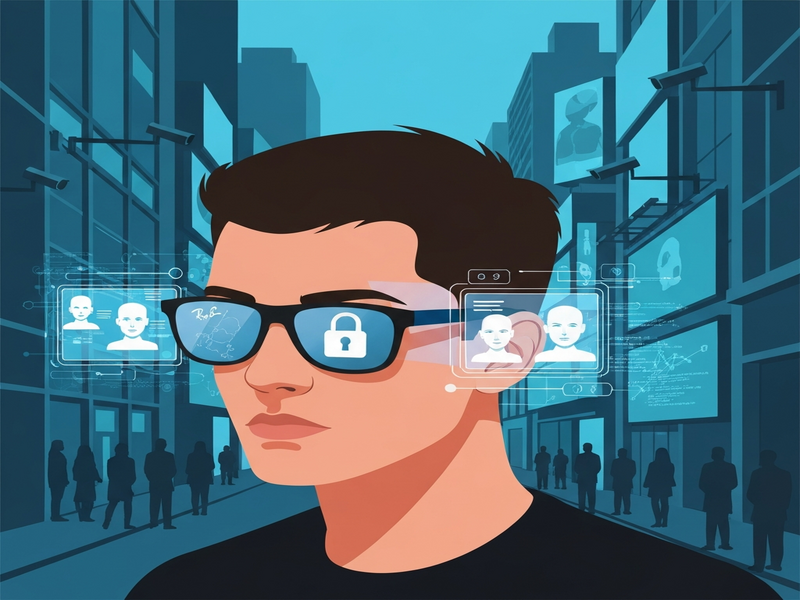
By exploring the intersection of cutting‑edge hardware and responsible AI, you can help shape a future where smart glasses empower rather than surveil.
Conclusion: Balancing Innovation, Privacy, and Accessibility
Meta’s Ray‑Ban smart glasses represent a bold step forward in wearable AR, promising seamless facial‑recognition that could transform networking, navigation, and accessibility. Yet the same technology revives long‑standing privacy anxieties, especially given Meta’s historical handling of user data. The ultimate success of these glasses will hinge on transparent policies, robust on‑device safeguards, and community‑driven oversight.
For professionals tracking the evolution of wearable tech, the story is far from over. Keep an eye on regulatory developments, watch how developers integrate tools like the AI Video Generator or the AI Image Generator, and consider how your own projects can adopt a privacy‑first mindset from the start.
Stay curious, stay critical, and stay ahead of the curve.
Andrii Bidochko
CTO UBOS
Andrii Bidochko is an AI entrepreneur and researcher focused on AI agents, reinforcement learning, and autonomous systems. He writes about the technologies shaping the future of machine intelligence, from frontier models and agent architectures to real-world AI applications.