

- Updated: March 12, 2026
- 7 min read
Massive Identity Records Leak Exposes Over 1 Billion Records Across 26 Countries
The IDMerit identity records leak exposed roughly 1 billion personal records across 26 countries, making it one of the largest data‑breach incidents involving verification data to date.
What Happened? A Snapshot of the IDMerit Breach
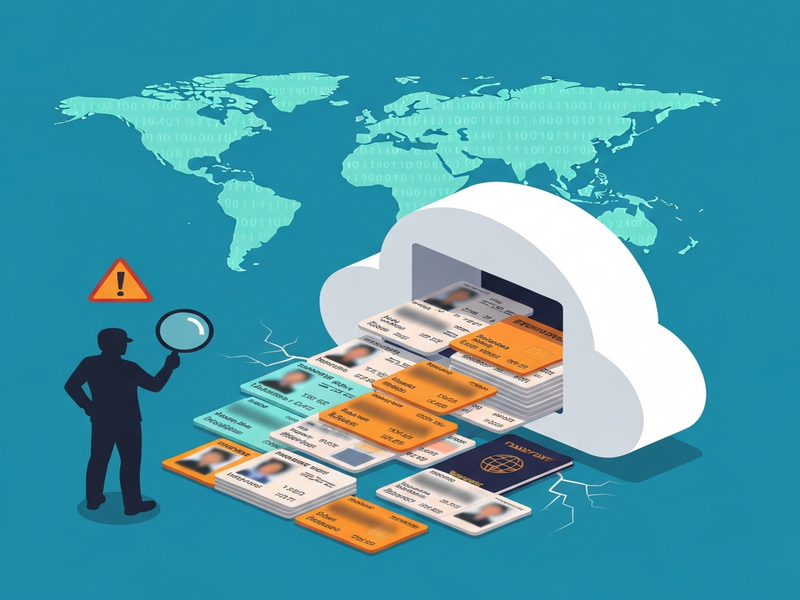
In November 2025, security researchers discovered an unsecured MongoDB database that appears to belong to UBOS homepage’s partner, IDMerit, a global identity‑verification provider. The database was left without authentication, allowing anyone with the URL to download the contents. By the time the issue was reported and the database was taken offline, the exposed dataset contained **approximately 1 billion records** spanning 26 nations, including more than 203 million records from the United States alone.
The breach is significant not only for its sheer scale but also because it involved highly sensitive verification data—full names, home addresses, dates of birth, national ID numbers, phone numbers, and in many cases, scanned government IDs. This type of data is the lifeblood of KYC (Know‑Your‑Customer) processes used by banks, fintech firms, and other financial services.
Details of the Exposed Records
The compromised collection included the following fields for each individual:
- Full legal name
- Residential street address and postal code
- Date of birth
- National identification numbers (e.g., Social Security Number, passport number)
- Phone numbers and email addresses
- Gender
- Metadata from telecom providers and internal breach‑flag indicators
The data was organized in a flat, query‑friendly format, making it trivial for automated scripts to filter by country, age, or other attributes. Researchers noted that the database also contained references to prior breach incidents, which could help threat actors map a victim’s exposure history.
While IDMerit claims that the breach did not involve direct access to its own servers, the fact that a third‑party data source was left exposed raises serious questions about the security hygiene of the entire verification ecosystem.
Impact on Individuals and Companies
The fallout from the leak is multi‑layered:
For Consumers
- Identity theft risk: With name, DOB, and national ID in hand, criminals can perform SIM‑swap attacks, open fraudulent bank accounts, or file false tax returns.
- Targeted phishing: Attackers can craft hyper‑personalized emails that reference a victim’s exact address or ID number, dramatically increasing click‑through rates.
- Credential stuffing: When combined with passwords from older breaches, the data enables credential‑stuffing campaigns that bypass weak authentication.
For Businesses
- Regulatory scrutiny: Financial institutions that rely on IDMerit may face fines under GDPR, CCPA, or other data‑protection statutes for insufficient vendor risk management.
- Reputational damage: Companies that inadvertently exposed customer data through a third‑party vendor risk losing customer trust.
- Operational costs: Incident response, legal counsel, and potential compensation for affected users can quickly run into millions of dollars.
The breach also underscores a broader industry challenge: identity‑verification platforms have become critical infrastructure for the digital economy, and any weakness can cascade across dozens of downstream services.
Official Responses and Regulatory Actions
IDMerit’s public statement emphasized that the company does not store customer data directly, but rather connects to authorized data sources. The firm claimed that an ethical hacker alerted them on November 11, prompting an internal review that “identified no exposure, vulnerability or unauthorized access within the IDMerit environment.”
However, the company also admitted that “certain data ports associated with independent data sources could have been open,” and that they worked with those partners to verify that no data exfiltration occurred. The statement further noted that the ethical hacker demanded payment for the incident report, suggesting a possible extortion attempt.
Regulators in the United States, the European Union, and several Asian jurisdictions have opened preliminary investigations. The U.S. Federal Trade Commission (FTC) has issued a notice of inquiry, while the EU’s Data Protection Authorities are assessing potential GDPR violations.
In parallel, industry groups are urging firms to adopt stricter vendor‑risk assessments and to implement continuous monitoring of third‑party data endpoints.
How to Protect Yourself: Actionable Best Practices
Whether you are a consumer, a fintech startup, or an established enterprise, the following steps can help mitigate the fallout from the IDMerit breach and future data‑security incidents.
For Individuals
- Freeze your credit. Contact major credit bureaus and place a freeze to prevent new accounts from being opened in your name.
- Upgrade multi‑factor authentication. Replace SMS‑based 2FA with authenticator apps or hardware tokens.
- Use a password manager. Generate unique, strong passwords for every service to limit credential‑stuffing risk.
- Monitor dark‑web activity. Subscribe to an identity‑theft monitoring service that alerts you when your data appears for sale.
- Verify communications. If you receive a call or email referencing your address or ID number, contact the organization directly using official contact details.
For Startups and SMBs
Small and medium‑size businesses often rely on third‑party verification services to meet KYC requirements. To safeguard your operations:
- Conduct a UBOS for startups style vendor risk assessment before onboarding any identity‑verification provider.
- Implement continuous endpoint monitoring using tools like the Workflow automation studio to detect misconfigurations in real time.
- Adopt a zero‑trust architecture that limits data exposure to the minimum required fields.
- Maintain an incident‑response playbook that includes rapid notification of affected users.
For Enterprises
Large organizations should treat identity‑verification platforms as critical components of their security stack. Recommended actions include:
- Leverage the Enterprise AI platform by UBOS to automate risk scoring and anomaly detection across all third‑party data flows.
- Integrate AI‑driven monitoring, such as the OpenAI ChatGPT integration, to flag suspicious data‑access patterns.
- Deploy the Chroma DB integration for secure vector‑search capabilities that keep sensitive embeddings encrypted.
- Utilize the ElevenLabs AI voice integration for secure voice‑based authentication in customer‑service channels.
Tools and Templates to Accelerate Your Response
UBOS offers a rich marketplace of ready‑to‑use AI applications that can help you quickly implement the above recommendations:
- AI SEO Analyzer – audit your public‑facing assets for inadvertent data exposure.
- AI Article Copywriter – generate clear communication for breach notifications.
- Talk with Claude AI app – prototype conversational security bots for user support.
- Your Speaking Avatar template – create engaging video briefings for internal security training.
- Before-After-Bridge copywriting template – craft persuasive messages for compliance reporting.
- AI YouTube Comment Analysis tool – monitor social media for emerging phishing trends.
- Image Generation with Stable Diffusion – produce visual guides for security awareness campaigns.
- AI Chatbot template – deploy instant help desks for breach‑related queries.
- Customer Support with ChatGPT API – scale response capacity during incident spikes.
- AI Video Generator – create short explainer videos on data‑security best practices.
- AI Image Generator – design custom infographics for internal briefings.
- AI Email Marketing – automate outreach to affected users with personalized guidance.
By leveraging these resources, organizations can reduce the time‑to‑remediation and improve overall resilience against future verification‑data leaks.
Conclusion
The IDMerit breach serves as a stark reminder that the security of third‑party verification services is inseparable from the security of the businesses that rely on them. Proactive vendor risk management, continuous monitoring, and rapid incident response are no longer optional—they are essential components of any modern data‑security strategy.
For a deeper dive into the technical specifics of the breach and expert commentary, see the original investigative report by Cybernews: Cybernews IDMerit breach analysis.
Stay informed, stay prepared, and leverage the power of AI‑driven tools—like those offered on the UBOS platform overview—to safeguard your digital identity ecosystem.