

- Updated: February 6, 2026
- 5 min read
LLMs Could Be Compilers, But Shouldn’t Be – A Critical Analysis
LLM compilers are an emerging class of AI‑driven code generators that can translate natural‑language specifications into runnable software, but they lack the deterministic guarantees and formal semantics of traditional compilers.
Why the Debate Over LLMs as Compilers Matters
Large language models (LLMs) have taken the software world by storm, promising to turn a simple English prompt into a full‑stack application. The original essay that sparked this conversation argues that while LLMs can generate code, treating them as true compilers is premature. For technology enthusiasts, software engineers, and AI researchers, understanding the nuances of this claim is essential to harnessing AI responsibly.
In this article we’ll unpack the core arguments, weigh the benefits against the risks, and explore how this shift could reshape software engineering practices. Along the way, we’ll illustrate how UBOS’s AI‑powered platform empowers developers to experiment safely with LLM‑generated code.
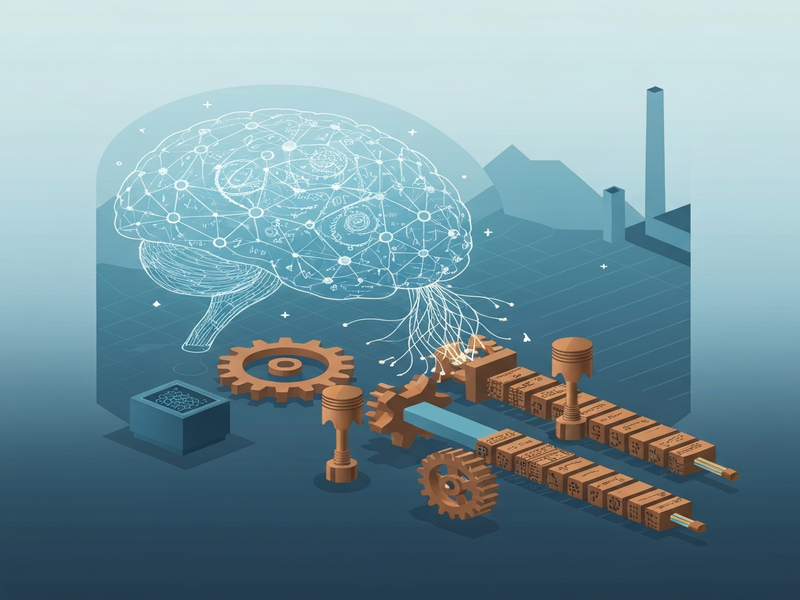
Core Arguments from the Essay: LLMs vs. Traditional Compilers
The essay outlines three pivotal ideas:
- Specification is Hard, Laziness is Real. Writing precise requirements is often more challenging than implementing them. LLMs exploit this by filling gaps in vague prompts.
- Higher‑Level Languages Trade Control for Abstraction. Traditional compilers give up low‑level control in exchange for well‑defined semantics and testable guarantees.
- LLMs Introduce Underspecification. Natural language lacks formal semantics, so the model must guess data models, edge cases, and security considerations, leading to unpredictable outcomes.
These points highlight why LLMs cannot yet replace the rigor of a compiler pipeline that guarantees correctness, performance, and safety.
Benefits and Risks of Treating LLMs as Compilers
Potential Benefits
- Speed of Prototyping: Turn a high‑level description into a working prototype in seconds, accelerating product discovery.
- Lower Barrier to Entry: Non‑programmers can articulate requirements in natural language, democratizing software creation.
- Automation of Repetitive Tasks: Refactoring, migration, and boilerplate generation become trivial when guided by clear constraints.
- Integration with AI‑First Platforms: UBOS’s UBOS platform overview lets you plug LLM‑generated modules directly into a managed runtime, reducing operational overhead.
Key Risks
- Hallucinations: Even state‑of‑the‑art models can produce syntactically correct but semantically wrong code, leading to security vulnerabilities.
- Underspecification: Ambiguous prompts cause the model to make arbitrary design choices that may not align with business logic.
- Lack of Formal Guarantees: Traditional compilers enforce type safety and memory safety; LLMs rely on statistical patterns, not provable correctness.
- Maintenance Burden: Generated code often lacks documentation, making future debugging and hand‑over difficult.
Balancing these forces requires a disciplined workflow that couples LLM generation with rigorous verification.
Implications for Modern Software Engineering Practices
Adopting LLMs as a “compiler‑like” layer reshapes the development lifecycle in several concrete ways.
1. Specification‑First Mindset
Because LLMs thrive on clear prompts, teams must invest in precise, testable specifications. This mirrors the essay’s call for “the will to specify.” Tools such as UBOS templates for quick start provide structured prompt scaffolds that reduce ambiguity.
2. Automated Verification Pipelines
Integrate unit tests, type checking, and static analysis directly after generation. UBOS’s Workflow automation studio can orchestrate a “generate → test → deploy” loop, catching hallucinations before they reach production.
3. Hybrid Development Model
Human developers become “prompt engineers” and reviewers rather than line‑by‑line coders. They focus on:
- Designing high‑level architecture.
- Curating prompt libraries (e.g., AI Article Copywriter for documentation generation).
- Validating security and performance constraints.
4. New Business Models
Startups can launch MVPs faster using LLM‑generated code, while enterprises can accelerate internal tooling. UBOS’s UBOS for startups and Enterprise AI platform by UBOS illustrate how both segments benefit.
5. Ethical and Governance Considerations
Because LLMs can embed biases or insecure patterns, organizations must establish governance policies. Auditing generated code, maintaining provenance, and applying About UBOS’s responsible AI guidelines are essential steps.
UBOS Templates That Turn LLM‑Generated Code into Production‑Ready Apps
UBOS’s marketplace offers dozens of ready‑made AI‑enhanced modules that demonstrate safe LLM integration. Below are a few that directly address the essay’s concerns:
- Talk with Claude AI app – showcases a controlled conversational agent with built‑in validation.
- AI SEO Analyzer – combines LLM text generation with deterministic rule‑based scoring.
- AI Article Copywriter – uses prompt templates to ensure consistent tone and factuality.
- AI Video Generator – pairs LLM script creation with a verified rendering pipeline.
- AI Chatbot template – demonstrates safe fallback handling for unexpected user inputs.
- GPT-Powered Telegram Bot – integrates Telegram integration on UBOS with strict rate‑limiting.
- Customer Support with ChatGPT API – illustrates how to wrap LLM responses in a verification layer.
- ElevenLabs AI voice integration – adds voice output while preserving deterministic audio pipelines.
Each template embeds testing hooks, type contracts, and monitoring dashboards, turning the “LLM as compiler” concept into a manageable reality.
What Should You Do Next?
If you’re ready to experiment with LLM‑driven development while keeping the safety nets of a traditional compiler, explore UBOS’s ecosystem:
- Visit the UBOS homepage for a quick overview.
- Check out the UBOS pricing plans to find a tier that fits your team.
- Browse the UBOS portfolio examples for real‑world success stories.
- Join the UBOS partner program to co‑create AI‑enhanced solutions.
- Leverage the AI marketing agents to automate content generation and reduce manual effort.
Remember, the power of LLMs lies in augmenting—not replacing—human expertise. By pairing precise specifications with robust verification, you can reap the speed of AI while preserving the reliability of traditional compilers.
Stay ahead of the curve: adopt a specification‑first workflow, use UBOS’s verified templates, and keep a vigilant eye on hallucinations. The future of software engineering is hybrid, and the tools you choose today will define the next generation of intelligent, trustworthy applications.