

- Updated: March 17, 2025
- 4 min read
Isometric and Flat Design Illustrations: The Future of Urban Landscapes
Exploring the Future: Isometric and Flat Design Illustrations of Futuristic Cityscapes
In an era where technology and art increasingly intertwine, the depiction of futuristic cityscapes through isometric and flat design illustrations has become a fascinating subject. These artistic visions not only capture the imagination but also reflect the potential of advanced technology and modern architecture. With the growing interest in the integration of technology in urban planning, these illustrations serve as a window into the future.
Understanding the Appeal of Futuristic Cityscape Illustrations
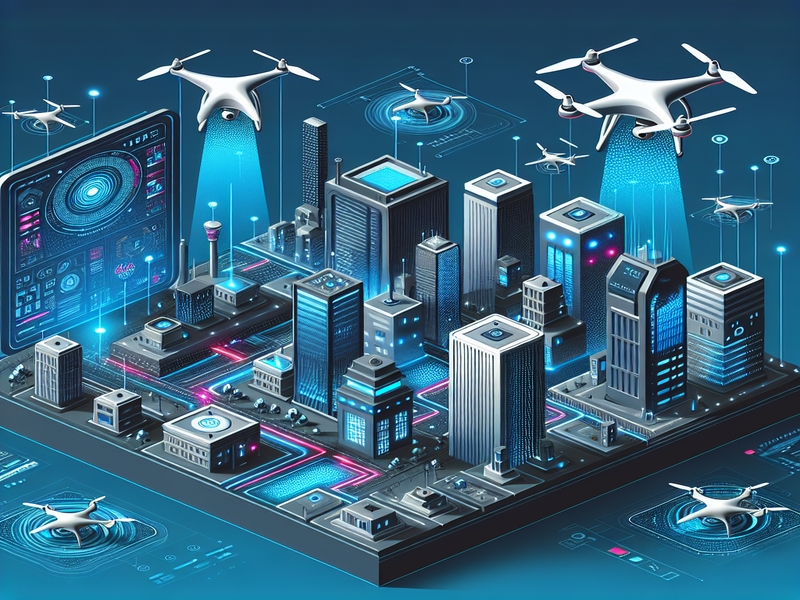
Futuristic cityscape illustrations have gained popularity for their ability to depict complex urban environments with precision and creativity. The use of isometric design allows artists to present a three-dimensional perspective on a two-dimensional plane, offering a unique and engaging view of urban landscapes. This technique is particularly effective in showcasing the intricacies of modern architecture and the seamless integration of advanced technology in urban settings.
In contrast, flat design emphasizes simplicity and minimalism, using vibrant color palettes and clean lines to create striking visual representations. This style is often used to highlight the futuristic elements of cityscapes, such as drones and surveillance systems, without the clutter of excessive detail.
Key Elements in Futuristic Cityscape Illustrations
When creating illustrations of futuristic cityscapes, artists often incorporate several key elements to convey a sense of innovation and progress:
- Advanced Technology: Illustrations often feature cutting-edge technologies such as autonomous vehicles, smart buildings, and integrated AI systems. These elements reflect the growing trend towards smart cities and the role of technology in shaping urban environments.
- Modern Architecture: The depiction of sleek, innovative structures is a hallmark of futuristic cityscapes. Architects and designers use these illustrations to explore new design concepts and push the boundaries of traditional architecture.
- Surveillance and Drones: As cities become more connected, surveillance systems and drones are increasingly common features in these illustrations. They highlight the balance between security and privacy in future urban settings.
To delve deeper into the role of AI in shaping urban landscapes, explore the AI and the autonomous organization and how it is driving the next stage in business evolution.
Analysis and Insights: The Impact of Futuristic Cityscape Illustrations
Futuristic cityscape illustrations offer more than just aesthetic appeal; they provide valuable insights into the potential direction of urban development. These illustrations often serve as a catalyst for discussions on the implications of technology in cities, particularly in areas such as sustainability, connectivity, and security.
For instance, the integration of ChatGPT and Telegram integration in urban settings could revolutionize communication and information dissemination. Similarly, the use of ElevenLabs AI voice integration could enhance accessibility and interaction within smart cities.
Moreover, these illustrations encourage a reimagining of urban spaces, prompting architects and city planners to consider how technology can be harnessed to create more efficient and sustainable environments. The potential for AI-driven urban planning is further explored in the AI-powered chatbot solutions and their role in transforming communication and decision-making processes.
Conclusion: The Future of Urban Design and Technology
As we look towards the future, the intersection of technology, art, and urban planning continues to inspire new possibilities. Futuristic cityscape illustrations, with their isometric and flat design approaches, offer a glimpse into the potential of advanced technology and modern architecture to reshape our cities.
By embracing these artistic visions, we can better understand the challenges and opportunities that lie ahead in urban development. The exploration of Revolutionizing AI projects with UBOS highlights the importance of innovative platforms in driving this transformation.
For those interested in further exploring the role of AI in urban design, the AI-infused CRM systems on UBOS offer a comprehensive overview of how AI can enhance customer relationship management in smart cities.
In conclusion, the journey towards a technologically advanced urban future is both exciting and complex. By leveraging the power of illustrations and AI, we can pave the way for more connected, efficient, and sustainable cities that meet the needs of future generations.
Andrii Bidochko
CTO UBOS
Andrii Bidochko is an AI entrepreneur and researcher focused on AI agents, reinforcement learning, and autonomous systems. He writes about the technologies shaping the future of machine intelligence, from frontier models and agent architectures to real-world AI applications.