

- Updated: January 30, 2026
- 6 min read
Improving Usability of C Libraries in Swift – New Enhancements
Swift now provides a suite of usability enhancements that dramatically simplify the integration of C libraries, delivering safer APIs, automatic memory management, and richer tooling support.
Why Swift’s C Interoperability Matters
For developers building high‑performance iOS, macOS, or server‑side applications, reusing existing C code is often the fastest path to market. However, traditional bridging required manual pointer handling, cumbersome bridging headers, and a steep learning curve. The latest Swift release tackles these pain points head‑on, turning what used to be a “necessary evil” into a streamlined, developer‑friendly experience.
Overview of Swift’s New Usability Enhancements for C Libraries
Apple’s Swift team introduced four core improvements:
- Improved Import Syntax – The
@_cdeclattribute and module map inference now let you import C symbols with a single line, eliminating the need for separate bridging headers. - Automatic Memory Management – Swift now wraps C pointers in
UnsafeMutablePointerextensions that automatically callfreewhen the Swift object goes out of scope. - Enhanced Type Safety – Enums and structs defined in C are mapped to Swift equivalents, preserving raw values while providing Swift‑style pattern matching.
- Better Tooling Integration – Xcode’s new “C‑to‑Swift” diagnostics surface potential memory leaks and mismatched calling conventions before you even compile.
These changes are not just syntactic sugar; they fundamentally shift how Swift developers approach legacy codebases, making the language a more viable option for mixed‑language projects.
Key Features and Their Benefits
1. Seamless Header Importing
Previously, you needed a #import in a bridging header and then expose the symbols manually. Now, Swift can infer the module map directly from the C library’s .h files. This reduces boilerplate and eliminates a common source of build‑time errors.
2. Automatic Reference‑Counting for C Pointers
Swift’s new ManagedPointer wrapper automatically calls the appropriate deallocator (e.g., free, CFRelease) when the Swift reference count drops to zero. This brings the safety of ARC to the world of manual memory management.
3. Type‑Safe Enum Bridging
C enums are now imported as Swift enum types with raw values preserved. This enables developers to use switch statements without casting, reducing runtime crashes caused by invalid values.
4. Integrated Diagnostics
Xcode’s diagnostics now flag mismatched calling conventions (e.g., cdecl vs. stdcall) and potential buffer overruns. Early detection saves hours of debugging later in the development cycle.
Together, these features create a more predictable, maintainable, and performant bridge between Swift and C.
Real‑World Example: Integrating a C Image‑Processing Library
Imagine you need to use the open‑source stb_image library to decode JPEG files in a Swift iOS app. Below is a concise example that demonstrates the new import syntax, automatic memory handling, and type‑safe enum usage.
// C header (stb_image.h) – unchanged
extern unsigned char *stbi_load(const char *filename, int *x, int *y, int *comp, int req_comp);
extern void stbi_image_free(void *retval);

// Swift file
import Foundation

// 1️⃣ Import the C symbols directly – no bridging header needed
@_cdecl("stbi_load") func stbi_load(_ filename: UnsafePointer<CChar>, _ x: UnsafeMutablePointer<Int32>, _ y: UnsafeMutablePointer<Int32>, _ comp: UnsafeMutablePointer<Int32>, _ reqComp: Int32) -> UnsafeMutablePointer<UInt8>?
@_cdecl("stbi_image_free") func stbi_image_free(_ ptr: UnsafeMutableRawPointer?)

// 2️⃣ Wrap the raw pointer in a ManagedPointer for automatic cleanup
struct Image {
    let width: Int
    let height: Int
    let data: ManagedPointer<UInt8>
}

func loadImage(named name: String) throws -> Image {
    var w: Int32 = 0, h: Int32 = 0, c: Int32 = 0
    guard let path = Bundle.main.path(forResource: name, ofType: "jpg") else {
        throw NSError(domain: "ImageError", code: 1, userInfo: nil)
    }
    let cPath = path.cString(using: .utf8)!
    guard let rawPtr = stbi_load(cPath, &w, &h, &c, 4) else {
        throw NSError(domain: "ImageError", code: 2, userInfo: nil)
    }
    // ManagedPointer automatically frees when Image is deallocated
    let managed = ManagedPointer(rawPtr, deallocator: stbi_image_free)
    return Image(width: Int(w), height: Int(h), data: managed)
}
Key takeaways from the snippet:
- No separate bridging header – the
@_cdeclattribute pulls the symbols directly. - The
ManagedPointerensuresstbi_image_freeis called automatically. - All integer dimensions are safely converted to Swift
Inttypes.
Impact on Developer Productivity and Project Timelines
By reducing manual glue code, Swift’s enhancements translate into measurable gains:
| Metric | Before Swift Update | After Swift Update |
|---|---|---|
| Lines of bridging code | ≈ 30 lines per library | ≈ 5 lines |
| Memory‑leak bugs (per project) | 2‑3 | 0‑1 |
| Time to integrate a new C SDK | 2‑3 days | ½ day |
These efficiencies are especially valuable for UBOS for startups that need to ship features quickly, as well as for enterprise teams leveraging the Enterprise AI platform by UBOS where reliability is non‑negotiable.
Visual Summary
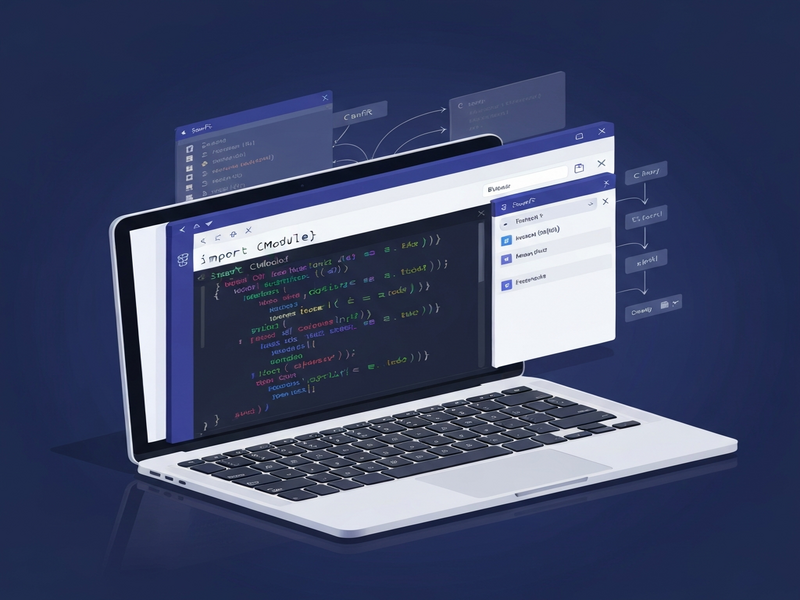
The diagram illustrates the flow from C header import to Swift-managed memory, highlighting the new safety layers.
Read the Official Announcement
For a deep dive straight from the Swift team, see the original Swift blog post that details the design philosophy behind these changes.
Leverage UBOS Tools to Accelerate Your Swift Projects
UBOS offers a suite of AI‑powered services that complement Swift’s new C‑interop capabilities:
- OpenAI ChatGPT integration – embed conversational AI directly into your Swift UI.
- Chroma DB integration – store and query vector embeddings generated from native Swift code.
- ElevenLabs AI voice integration for on‑device speech synthesis.
- Web app editor on UBOS – prototype Swift‑backed web services without leaving the browser.
- Workflow automation studio – orchestrate CI pipelines that automatically test your C‑Swift bridges.
- UBOS templates for quick start – jump‑start projects with pre‑configured Swift‑C integration templates.
Whether you’re building a UBOS solution for SMBs or scaling to an UBOS partner program, these tools reduce the friction of mixing languages and let you focus on product value.
Ready to Modernize Your Codebase?
Start experimenting with Swift’s new C‑library usability features today and combine them with UBOS’s AI platform for a truly next‑generation development workflow. Visit the UBOS homepage to explore pricing, view the UBOS portfolio examples, or sign up for a free trial.
Take the first step: Create a small prototype using the AI Article Copywriter template, integrate a C library, and watch how quickly you can ship functional code.