

- Updated: December 12, 2025
- 5 min read
Home Depot’s GitHub Token Leak Exposed Internal Systems for a Year – What It Means for Retail Security
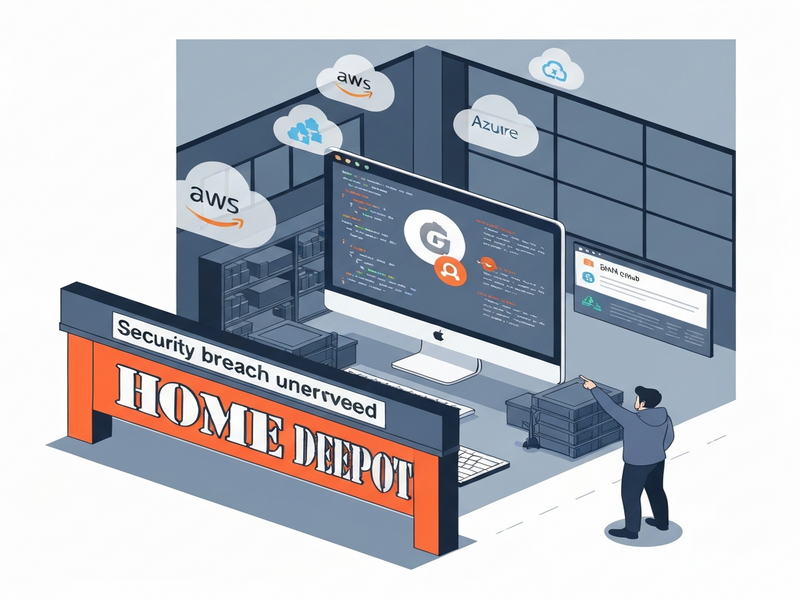
Home Depot Security Breach: What Went Wrong and How to Prevent It
Home Depot unintentionally exposed a GitHub access token for over a year, granting attackers potential access to its internal code repositories, cloud infrastructure, and order‑fulfillment systems. The breach was discovered by a security researcher, disclosed publicly after weeks of silence, and has since been remediated.
Why This Breach Matters to Every Security Professional
In an era where supply‑chain resilience and data protection are non‑negotiable, a single leaked credential can open the floodgates to a cascade of vulnerabilities. The Home Depot incident underscores how a seemingly innocuous mistake—publishing a private GitHub token—can jeopardize an entire enterprise’s digital backbone. For IT managers, this case study offers a stark reminder to tighten credential hygiene, enforce robust disclosure programs, and adopt automated secret‑scanning tools.

Detailed Summary of the Home Depot Breach
GitHub Token Exposure
In early November 2024, security researcher Ben Zimmermann discovered a publicly visible GitHub personal access token (PAT) belonging to a Home Depot employee. The token was embedded in a public repository commit, likely due to a copy‑and‑paste error. When validated, the token granted read‑write access to:
- Hundreds of private Home Depot source‑code repositories.
- Write permissions to modify repository contents.
- Access to GitHub‑hosted CI/CD pipelines linked to the company’s cloud environment.
Timeline of Events
| Date | Event |
|---|---|
| Early Nov 2024 | Token published in a public GitHub repo. |
| Nov 2024 – Dec 2025 | Token remained accessible; researcher attempted private disclosure. |
| Dec 5 2025 | TechCrunch contacted Home Depot after no response from the company. |
| Dec 12 2025 | Public disclosure of the breach; token revoked. |
“Home Depot is the only company that ignored me after I reported a critical secret leak,” Zimmermann told TechCrunch. “Without a vulnerability‑disclosure program, researchers are forced to go public to protect users.”
The exposed token also linked to Home Depot’s OpenAI ChatGPT integration, which the company uses for internal support bots. This connection amplified the risk, as compromised credentials could have been leveraged to query internal knowledge bases.
Impact on Home Depot’s Infrastructure and Customers
While no public evidence of data exfiltration has emerged, the potential impact is significant:
- Code Integrity Threat: An attacker could inject malicious code into the supply chain, affecting point‑of‑sale (POS) systems, inventory APIs, and e‑commerce front‑ends.
- Cloud Resource Abuse: Access to CI/CD pipelines could enable the creation of rogue cloud instances, leading to unexpected cost spikes or ransomware deployment.
- Customer Data Exposure: Although the token did not directly grant database access, compromised code could introduce backdoors that harvest payment or personal data.
- Brand Reputation Damage: Public disclosure erodes consumer trust, especially for a retailer handling millions of transactions daily.
The breach also highlighted a systemic issue: Home Depot lacked a formal vulnerability disclosure program. Without a clear channel for researchers, the company missed an early remediation window, extending the exposure period to over a year.
Home Depot’s Response and Remediation Steps
After TechCrunch’s outreach, Home Depot finally acknowledged the issue. The company’s public statement confirmed that the token was revoked and that internal audits are underway. Key remediation actions include:
- Immediate revocation of the compromised GitHub PAT.
- Comprehensive review of all active tokens and implementation of automated secret‑scanning tools (e.g., GitGuardian, TruffleHog).
- Deployment of a Workflow automation studio to enforce token rotation policies.
- Establishment of a public bug‑bounty program in partnership with a third‑party platform.
- Enhanced employee training on credential management and secure coding practices.
The incident also spurred Home Depot to explore AI‑driven security monitoring. Leveraging the Chroma DB integration, the company can now index and query security logs with vector similarity, enabling faster detection of anomalous token usage.
Expert Commentary on Broader Security Implications
Cybersecurity analysts agree that the Home Depot breach is a textbook example of “credential sprawl.” Dr. Lina Patel, senior security architect at a Fortune 500 firm, notes:
“When a single token can traverse from source control to production, the attack surface expands exponentially. Organizations must treat secrets as code—subject to version control, automated testing, and continuous monitoring.”
The incident also raises questions about the security of AI‑enabled tools. As companies integrate services like AI SEO Analyzer or AI Article Copywriter into their pipelines, the need for strict API key governance becomes paramount.
For enterprises seeking a unified security posture, the Enterprise AI platform by UBOS offers built‑in secret management, role‑based access control, and audit trails that can mitigate similar risks.
Conclusion: Turning a Breach Into a Blueprint for Better Security
The Home Depot GitHub token leak serves as a cautionary tale for any organization that stores critical assets in public‑facing platforms. By adopting automated secret detection, establishing clear disclosure pathways, and leveraging AI‑driven monitoring, businesses can dramatically reduce the window of exposure.
Ready to future‑proof your security operations? Explore the UBOS homepage for a comprehensive suite of tools, from the Web app editor on UBOS to the AI Video Generator. Join the UBOS partner program and stay ahead of emerging threats.
For security teams looking for actionable templates, the UBOS templates for quick start include pre‑configured secret‑scanning workflows and incident‑response playbooks. Implement these today and turn today’s lessons into tomorrow’s resilience.
For the full investigative report, read the original TechCrunch article: Home Depot exposed access to internal systems for a year, says researcher.
Further Reading on UBOS Solutions
- About UBOS – Learn how our team builds secure AI‑first platforms.
- UBOS platform overview – A deep dive into our architecture and security features.
- UBOS for startups – Scalable security for fast‑growing companies.
- UBOS solutions for SMBs – Tailored protection for small and medium businesses.
- UBOS portfolio examples – Real‑world case studies of secure deployments.
- AI marketing agents – How AI can automate outreach while staying secure.
- UBOS pricing plans – Choose a plan that fits your security budget.