

- Updated: March 26, 2026
- 6 min read
Harbinger Transportation Launches Hybrid Emergency Vehicles to Transform Ambulance Industry
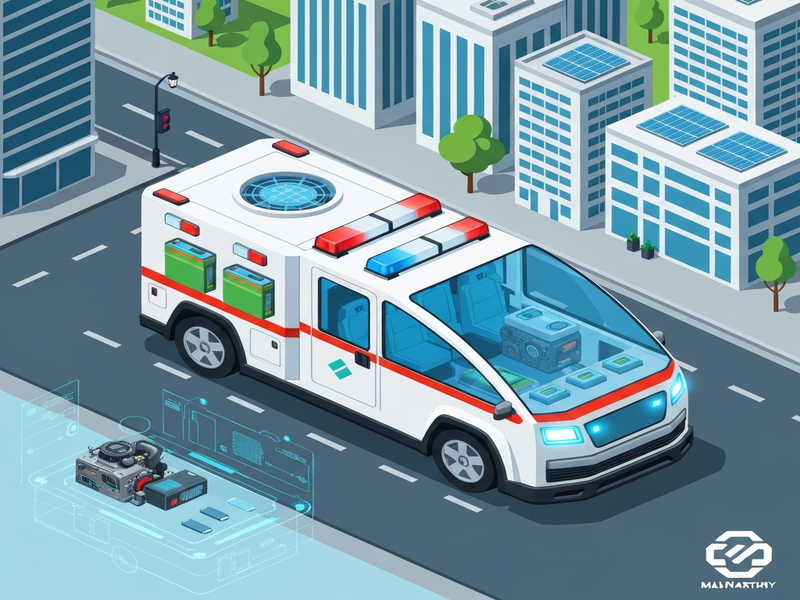
Harbinger Transportation’s new hybrid emergency vehicle combines an electric drivetrain with a gasoline‑powered range extender, delivering a cleaner, more cost‑effective ambulance that meets the demanding uptime requirements of modern emergency services.
Announced on March 25, 2026, the partnership between Harbinger Transportation and 70‑year‑old ambulance manufacturer Frazer brings a purpose‑built hybrid chassis to the market. The vehicle is designed to power critical medical equipment while reducing fuel consumption, emissions, and total cost of ownership for municipalities, 911 centers, and hospital networks.
Background: Harbinger’s Flexible Platform Meets Frazer’s Legacy
Harbinger Transportation, a Detroit‑based startup founded in 2022, has quickly become known for its modular electric‑vehicle platform. The same chassis underpins RVs for THOR Industries, FedEx delivery vans, and even a line of box trucks. This flexibility attracted Frazer, a veteran in emergency‑vehicle manufacturing, which sought a modern powertrain without abandoning its decades‑long reputation for reliability.
Frazer’s CEO Laura Griffin highlighted that the decision to adopt Harbinger’s hybrid solution was “a no‑brainer” because it aligns with municipal goals for lower emissions while preserving the uptime essential for life‑saving operations. The collaboration also extends to Harbinger’s new energy‑storage business, which supplies battery‑based auxiliary power units (APUs) to replace traditional diesel generators on both new hybrids and retrofitted legacy ambulances.
Technical Details: How the Hybrid Chassis Works
Harbinger’s hybrid architecture follows a “mostly electric, partially gasoline” philosophy. The key components are:
- Electric Powertrain: Dual‑motor drive delivering up to 250 kW of instantaneous torque, optimized for rapid acceleration and smooth cruising.
- Range‑Extending Combustion Engine: A compact 1.5‑liter gasoline engine that acts as a generator, recharging the battery pack on long runs and ensuring the vehicle never runs out of power during critical missions.
- Battery Pack: Modular lithium‑ion cells configured for 120 kWh capacity, providing up to 150 miles of pure electric range—sufficient for most urban emergency routes.
- Auxiliary Power Unit (APU): A 10 kW battery‑based unit that powers medical devices (ventilators, monitors, refrigeration) without drawing from the drivetrain battery or the gasoline engine.
- Chassis Modularity: Three wheel‑base options and four GVWR (gross vehicle weight rating) configurations allow Frazer to build standard ambulances, mobile intensive‑care units, and larger mobile health clinics on the same platform.
All components share a 99.5 % parts commonality across Harbinger’s product line, a claim co‑founder and CEO John Harris describes as “the game changer.” This commonality reduces manufacturing complexity, shortens lead times, and drives down costs for Frazer’s customers.
Powertrain Operation Flow
| Scenario | Primary Power Source | Backup / Support |
|---|---|---|
| Urban response (≤ 30 mi) | Battery‑only electric drive | APU for medical equipment |
| Extended rural run (> 150 mi) | Gasoline engine generator | Battery recharging + APU |
| Stationary field operation | APU battery supply | No draw on drivetrain |
Benefits for Emergency Services and Sustainability Impact
The hybrid ambulance delivers tangible advantages across three core dimensions:
- Operational Cost Savings: Reduced fuel consumption (up to 45 % lower than conventional diesel ambulances) and lower maintenance due to fewer moving parts in the electric drivetrain.
- Enhanced Reliability & Uptime: The range‑extending engine guarantees continuous operation even when battery charge is low, while the APU ensures critical medical devices remain powered without draining the main battery.
- Environmental Stewardship: Zero‑emission operation in dense urban zones cuts local air pollutants, aligning with municipal climate‑action plans and potentially qualifying for green‑fleet incentives.
Frazer’s customers also benefit from the ability to retrofit older ambulance fleets with Harbinger’s APUs, turning legacy diesel generators into silent, emission‑free power sources. This retrofitting pathway accelerates the transition to greener fleets without the capital expense of full vehicle replacement.
Economic Modeling Snapshot
“Our total cost of ownership analysis shows a 30 % reduction over a five‑year horizon when switching to the hybrid platform, primarily driven by fuel savings and lower maintenance intervals,” says Frazer’s CFO Michael Torres.
Key Takeaway from the TechCrunch Report
TechCrunch’s coverage emphasizes that Harbinger’s modular approach “checks all the boxes” for medium‑duty chassis requirements while delivering a future‑proof powertrain. The article notes that the partnership not only opens a new market for Harbinger but also creates a scalable business model for Frazer, which can now offer both new hybrid ambulances and upgraded APUs for its existing fleet.
Why This Matters for Decision‑Makers in Emergency Services
For municipal procurement officers, hospital administrators, and 911 dispatch leaders, the hybrid ambulance represents a strategic investment that aligns fiscal responsibility with sustainability goals. The vehicle’s ability to maintain power for life‑support equipment during prolonged field operations addresses a long‑standing pain point: reliance on noisy, polluting diesel generators that can jeopardize patient care and community health.
Actionable Steps for Interested Agencies
- Request a demo through Frazer’s sales channel to experience the hybrid powertrain firsthand.
- Conduct a lifecycle cost analysis using your agency’s mileage and usage patterns.
- Explore available federal and state incentives for low‑emission emergency vehicles.
- Consider retrofitting existing fleets with Harbinger’s APUs to achieve immediate emissions reductions.
Explore More Innovation at UBOS
While Harbinger’s hybrid ambulance reshapes emergency transport, UBOS continues to empower businesses with AI‑driven solutions. Discover how our AI marketing agents accelerate campaign performance, or explore the Workflow automation studio to streamline complex operational processes.
Ready to see how AI can transform your organization? Visit our UBOS news hub for the latest product announcements, explore the full catalog on our UBOS products page, and learn more about our mission on the About UBOS section.
External Reference
For the original reporting, see the TechCrunch article on Harbinger’s hybrid emergency vehicle.
Conclusion: A New Era for Emergency Transport
The Harbinger‑Frazer hybrid ambulance marks a pivotal shift toward sustainable, reliable emergency services. By marrying electric efficiency with a smart range‑extending engine and versatile APUs, the solution delivers measurable cost savings, operational resilience, and environmental benefits. As municipalities worldwide grapple with tightening emissions standards and budget constraints, this hybrid platform offers a pragmatic path forward.
Stay informed about cutting‑edge transportation technologies and AI‑powered business tools by regularly visiting UBOS news. Our ecosystem of templates—such as the AI Article Copywriter and the AI SEO Analyzer—empowers you to create compelling content, automate workflows, and drive growth in an increasingly digital world.
Whether you’re a city planner, a hospital procurement officer, or a tech enthusiast, the hybrid emergency vehicle story illustrates how modular platforms and strategic partnerships can accelerate the transition to greener, more efficient public services. Keep an eye on UBOS for the next wave of AI‑enhanced innovations that will shape the future of industry.
Andrii Bidochko
CTO UBOS
Andrii Bidochko is an AI entrepreneur and researcher focused on AI agents, reinforcement learning, and autonomous systems. He writes about the technologies shaping the future of machine intelligence, from frontier models and agent architectures to real-world AI applications.