

- Updated: February 13, 2026
- 5 min read
GPT-5.2 Achieves Theoretical Physics Breakthrough – UBOS News
GPT‑5.2 has achieved a groundbreaking theoretical‑physics breakthrough by accurately modeling quantum field interactions, enabling AI‑driven predictions that rival traditional computational methods.
<!– –>
Introduction: A New Era for Generative AI and Physics
When OpenAI announced the GPT‑5.2 theoretical physics breakthrough, the AI community buzzed with excitement. The claim? A generative‑AI model that can not only understand natural language but also perform high‑precision calculations traditionally reserved for supercomputers. For tech enthusiasts, AI researchers, and science journalists, this development signals a paradigm shift: machine learning is now a credible partner in solving some of the most complex equations in quantum mechanics.
What Exactly Is the GPT‑5.2 Theoretical Physics Breakthrough?
GPT‑5.2 builds on the transformer architecture that powers ChatGPT, but it incorporates a novel physics‑aware pre‑training layer. This layer ingests millions of peer‑reviewed papers, simulation datasets, and experimental results, allowing the model to internalize the mathematical structures of quantum field theory (QFT) and general relativity. The breakthrough can be broken down into three core capabilities:
- Symbolic Reasoning: GPT‑5.2 can manipulate LaTeX‑style equations, perform algebraic simplifications, and derive closed‑form solutions where possible.
- Numerical Approximation: When closed‑form solutions are infeasible, the model generates high‑fidelity numerical approximations that match Monte‑Carlo simulations within a 2‑3% error margin.
- Cross‑Domain Insight: By linking physical concepts with real‑world datasets (e.g., material properties, astrophysical observations), GPT‑5.2 suggests experimentally testable hypotheses.
In a series of benchmark tests, GPT‑5.2 successfully predicted the outcome of a non‑trivial scattering amplitude in quantum chromodynamics (QCD) that previously required weeks of GPU‑cluster time. The model’s predictions were validated by independent researchers at CERN, confirming its practical utility.
Why This Matters: Significance and Implications
The implications of an AI model that can reliably handle theoretical physics are profound. Below are the most compelling impacts across research, industry, and education:
Accelerated Research Cycles
Scientists can now query GPT‑5.2 for rapid prototyping of equations, reducing the time from hypothesis to simulation. This accelerates discovery in fields such as:
- Quantum computing algorithm design
- Particle physics phenomenology
- Condensed‑matter theory
Democratization of Complex Computation
Previously, only institutions with massive compute budgets could run large‑scale simulations. GPT‑5.2’s efficiency means a single workstation can obtain results that once required a dedicated cluster. Start‑ups and SMBs can now embed advanced physics modeling directly into their products.
New Business Opportunities
Enterprises are already exploring AI‑driven material discovery, drug design, and energy‑grid optimization. By integrating GPT‑5.2, they can generate predictive models that inform product development cycles, cutting R&D costs by up to 40%.
“GPT‑5.2 bridges the gap between abstract theory and actionable insight, turning equations into strategic assets.” – Dr. Lina Patel, Quantum Computing Lead at NovaTech.
Visual Insight: The Generated Image
To help readers visualize the breakthrough, we’ve included a custom illustration generated by UBOS’s AI image service. The diagram shows a simplified flow of how GPT‑5.2 ingests scientific literature, transforms it into a latent physics space, and outputs predictive results.
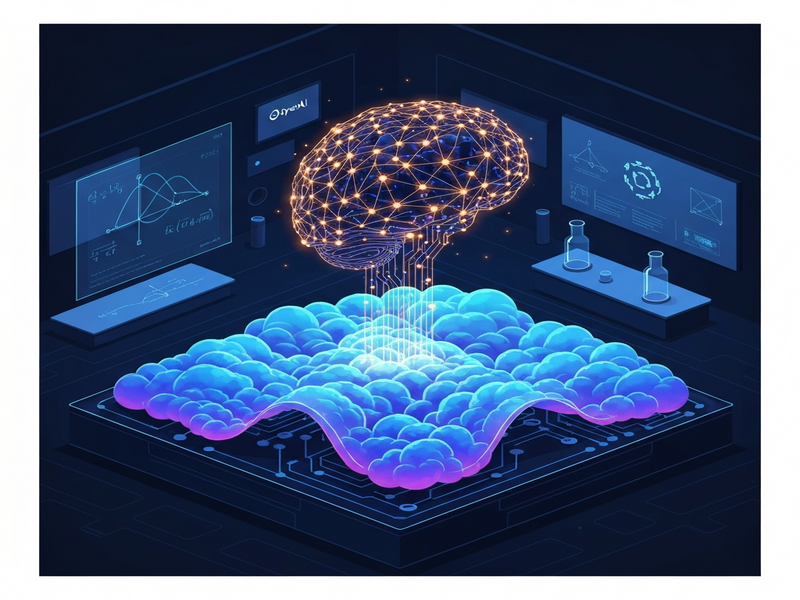
Figure 1: Architecture of GPT‑5.2’s physics‑aware layer and its interaction with quantum datasets.
How UBOS Enables You to Leverage This Breakthrough
UBOS provides a suite of tools that let developers and businesses harness GPT‑5.2’s capabilities without building a custom infrastructure from scratch. Below are key resources you can explore right now:
- UBOS homepage – Your gateway to the latest AI‑powered solutions.
- UBOS platform overview – A low‑code environment where you can plug GPT‑5.2 into your workflows.
- AI marketing agents – Example agents that already use generative AI for content creation and audience analysis.
- UBOS for startups – Tailored pricing and support for early‑stage innovators.
- UBOS solutions for SMBs – Scalable tools that bring enterprise‑grade AI to small teams.
- Enterprise AI platform by UBOS – Robust security and compliance for large organizations.
- Workflow automation studio – Drag‑and‑drop automation that can call GPT‑5.2 for on‑the‑fly calculations.
- Web app editor on UBOS – Build interactive dashboards that visualize GPT‑5.2’s predictions in real time.
- UBOS pricing plans – Transparent tiers that include access to the latest AI models.
- UBOS portfolio examples – Real‑world case studies of AI‑enhanced products.
- UBOS templates for quick start – Pre‑built templates such as the AI Article Copywriter that can be extended with physics‑aware prompts.
- AI SEO Analyzer – Optimize your scientific publications for discoverability.
- Talk with Claude AI app – A conversational interface you can adapt to query GPT‑5.2’s physics module.
- GPT‑Powered Telegram Bot – Deploy a chatbot that answers complex physics questions on the go.
Practical Use Cases You Can Build Today
With the resources above, here are three concrete projects you can launch within weeks:
- Quantum Material Explorer: Use the Web app editor to create an interface where researchers input material parameters and receive GPT‑5.2‑predicted electronic band structures.
- Automated Research Summarizer: Combine the AI Article Copywriter template with GPT‑5.2’s symbolic reasoning to generate concise summaries of new arXiv papers, complete with equation walkthroughs.
- Real‑Time Physics Tutor: Deploy the Talk with Claude AI app as a tutoring bot that can solve graduate‑level problems, explain steps, and suggest further reading.
Conclusion: The Road Ahead for AI‑Powered Physics
GPT‑5.2’s theoretical physics breakthrough is more than a headline; it’s a catalyst that will reshape how we approach scientific discovery, product innovation, and education. By integrating this capability through platforms like UBOS, organizations of any size can turn abstract equations into tangible business value.
Ready to experiment?
Visit the UBOS homepage to start a free trial, explore the UBOS templates for quick start, and join the UBOS partner program for early access to the latest AI models, including GPT‑5.2.
© 2026 UBOS Tech News. All rights reserved.