

- Updated: February 24, 2026
- 5 min read
Google Opal Introduces AI‑Powered Automated Workflows – A Game Changer
Google’s new workflow feature for Opal lets users create AI‑driven automated workflows using simple text prompts, eliminating the need for code and accelerating app development.
What Is Google Opal and Why Its New Workflow Agents Matter
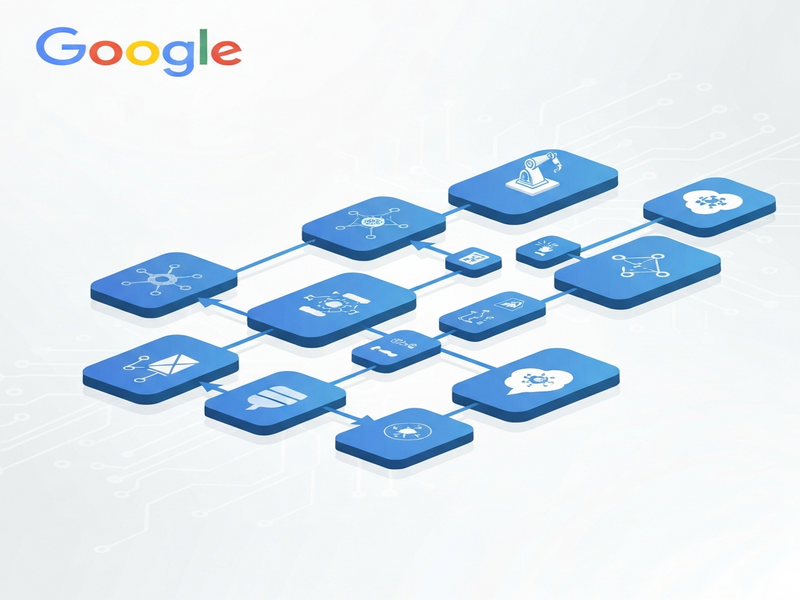
Opal, Google’s “vibe‑coding” platform, debuted in July 2025 as a visual, low‑code environment where anyone can remix existing mini‑apps or build new ones from scratch. The latest upgrade adds a dedicated workflow agent powered by the Gemini 3 Flash model. This agent interprets natural‑language instructions, selects the appropriate Google tools (Sheets, Docs, Drive, etc.), and orchestrates multi‑step processes without any programming knowledge.
How the Gemini 3 Flash Engine Powers the Agent
The Gemini 3 Flash model is Google’s most efficient large‑language model for real‑time reasoning. When a user types a prompt such as “Create a weekly sales report and email it to the team,” the agent:
- Parses the intent and breaks it into discrete actions.
- Selects Google Sheets to aggregate data, Google Docs for formatting, and Gmail for delivery.
- Stores intermediate results in a temporary memory layer, enabling continuity across sessions.
- Asks clarifying questions if any parameter is ambiguous, ensuring a fully interactive experience.
Key AI Capabilities of the New Opal Workflow Agent
The agent introduces several first‑generation capabilities that set a new benchmark for AI automation:
- Natural‑Language Orchestration: Users describe complex processes in plain English; the agent translates them into actionable steps.
- Dynamic Tool Selection: The system automatically picks the most suitable Google service (Sheets, Drive, Calendar, etc.) based on the task.
- Session Memory: Persistent memory across interactions lets the agent maintain state, such as a shopping list or a project backlog.
- Interactive Clarification: If the prompt lacks detail, the agent prompts the user for missing information before proceeding.
- Zero‑Code Deployment: The entire workflow runs inside Opal’s visual editor, requiring no code snippets or API keys.
Benefits for Users and Market Impact
For tech‑savvy professionals and decision‑makers, the new feature translates into tangible business value:
- Speed to Market: Teams can prototype and launch internal tools in minutes rather than weeks.
- Cost Reduction: Eliminating the need for specialized developers cuts labor expenses dramatically.
- Scalability: Because the agent leverages Google’s cloud infrastructure, workflows scale automatically with demand.
- Empowerment of Non‑Technical Staff: Marketing, sales, and operations can build their own automations without IT bottlenecks.
- Competitive Differentiation: Early adopters gain a strategic edge by embedding AI‑driven processes directly into their products.
Official Comment from Google
“Our goal with Opal’s workflow agents is to democratize AI automation. By allowing anyone to describe a process in natural language and have it executed instantly, we’re turning ideas into reality faster than ever before,” said Ruth Porat, Senior Vice President of Google Cloud, during the launch event.
How Opal Stacks Up Against Competitors
Several startups have been racing to offer “no‑code AI app builders.” Notable players include Replit, Lovable, and the emerging Wabi platform. While these solutions provide visual editors, most still require users to select pre‑built blocks manually. Opal’s differentiator is its agent‑first approach—AI decides the blocks for you.
For organizations looking for an enterprise‑grade alternative that integrates seamlessly with existing data pipelines, Enterprise AI platform by UBOS offers a comparable low‑code environment with built‑in governance, role‑based access, and on‑prem deployment options.
Similarly, Workflow automation studio from UBOS provides drag‑and‑drop workflow creation, but it still relies on users to map each step. Combining Opal’s natural‑language agent with UBOS’s robust data connectors could give enterprises the best of both worlds.
Getting Started with AI‑Powered Workflows Today
If you’re eager to experiment with AI automation without waiting for Opal’s rollout in your region, UBOS offers a suite of ready‑made templates that emulate similar capabilities:
- AI SEO Analyzer – automatically audits website SEO and generates action plans.
- AI Article Copywriter – creates long‑form content from brief prompts.
- AI Video Generator – turns scripts into short videos with AI‑generated voiceovers.
To build a custom workflow from scratch, start with the Web app editor on UBOS. The editor’s visual canvas lets you drag data sources, define triggers, and attach AI actions such as OpenAI ChatGPT integration or Chroma DB integration for vector search.
For voice‑first experiences, explore the ElevenLabs AI voice integration, which can read back workflow results or prompt users for missing data.
Why Choose UBOS for Your AI Automation Journey
UBOS is more than a platform; it’s an ecosystem designed for rapid AI adoption:
- UBOS homepage – discover the full product suite and latest updates.
- About UBOS – learn about our mission to democratize AI.
- AI marketing agents – pre‑built agents that generate campaigns, copy, and analytics.
- UBOS partner program – collaborate with us to co‑create solutions.
- UBOS pricing plans – flexible pricing for startups, SMBs, and enterprises.
- UBOS portfolio examples – see real‑world deployments across industries.
- UBOS templates for quick start – jump‑start projects with one‑click templates.
- UBOS for startups – accelerate product‑market fit with AI‑enhanced features.
- UBOS solutions for SMBs – affordable automation for growing teams.
- Telegram integration on UBOS – push notifications and bot interactions directly to Telegram.
- ChatGPT and Telegram integration – combine conversational AI with instant messaging.
Take Action: Build Your First AI Workflow Today
Ready to experience AI‑driven automation? Follow these three steps:
- Visit the UBOS platform overview and sign up for a free trial.
- Choose a template such as the AI Article Copywriter or AI Video Generator to see the workflow engine in action.
- Customize the workflow with natural‑language prompts, connect your data sources, and let the built‑in agent handle the rest.
By leveraging both Google’s Opal agents and UBOS’s extensible platform, you can create end‑to‑end AI solutions that scale from a single user to an enterprise‑wide deployment.
Read the Full Announcement
For the original press coverage, see the TechCrunch article that first reported the launch.
Andrii Bidochko
CTO UBOS
Andrii Bidochko is an AI entrepreneur and researcher focused on AI agents, reinforcement learning, and autonomous systems. He writes about the technologies shaping the future of machine intelligence, from frontier models and agent architectures to real-world AI applications.