

- Updated: January 18, 2026
- 6 min read
Global PC RAM Shortage Drives Prices Up: What Consumers Need to Know
The global PC RAM shortage is causing a steep memory price spike, driven primarily by soaring AI data‑center demand, and analysts predict the crunch will linger until at least 2027.
Why the RAM Shortage Matters to Every PC Enthusiast
If you’ve tried to upgrade a gaming rig or build a new workstation in the past few months, you’ve probably noticed RAM prices soaring like never before. This isn’t a temporary blip; it’s a structural imbalance caused by the massive appetite of AI giants for high‑bandwidth memory. For a deep dive into the original reporting, see The Verge’s coverage of the RAM price hikes. Understanding the forces behind this shortage helps you make smarter purchasing decisions and anticipate future cost trends.
Root Causes: From AI Data Centers to Supply‑Chain Shifts
Three interlocking factors are fueling the current crunch:
- AI data‑center demand: Companies like OpenAI, Google, and Meta are buying DRAM in bulk to power large language models and inference clusters. This has forced the three biggest memory manufacturers—Samsung, SK Hynix, and Micron—to prioritize AI contracts over consumer‑grade modules.
- Production re‑allocation: To meet AI orders, fabs are repurposing wafer lines that previously produced DDR4/DDR5 sticks for laptops and desktops. The shift reduces the output of consumer‑focused RAM, tightening supply.
- Geopolitical and logistics bottlenecks: Trade restrictions on semiconductor equipment and lingering pandemic‑era shipping delays have further constrained the ability to ramp up capacity quickly.
These dynamics create a classic supply‑demand mismatch, where the price elasticity of memory is low, leading to rapid price spikes.
How the Shortage Is Inflating Prices Across the Ecosystem
Memory price spikes ripple through every tier of the hardware market:
Consumer PC Kits
Average DDR5 16 GB kits have risen from $70 in early 2025 to over $180 by late 2025—a 150% increase. Premium 32 GB kits now exceed $350, making high‑performance builds significantly more expensive.
Laptops and Ultrabooks
Manufacturers such as Dell, Asus, and Xiaomi have announced upcoming price adjustments for flagship laptops, citing “memory cost pressures.” Some models have already seen a $100‑$150 markup.
Smartphones & Wearables
Even mobile devices feel the pinch. Companies like Nothing and Apple are warning that LPDDR5X modules could cost five times more than a year ago, potentially adding $30‑$50 to premium phone price tags.
Gaming Consoles & Embedded Systems
Raspberry Pi and Framework have publicly raised prices for their RAM‑dependent products, while console manufacturers are quietly adjusting component budgets.
For businesses looking to mitigate these costs, the Enterprise AI platform by UBOS offers a way to optimize memory usage in AI workloads, potentially reducing the amount of RAM needed per inference task.
What the Experts Say: Forecasts Through 2027
Research firm IDC predicts the RAM shortage will “persist well into 2027,” with memory price volatility remaining high until new fab capacity comes online. Their key takeaways:
- Capacity lag: Even with announced expansions, new DRAM fabs won’t be fully operational until mid‑2026, leaving a gap of at least 12‑18 months.
- AI‑driven pricing floor: As AI workloads grow, a baseline price floor for high‑bandwidth memory will stay elevated, preventing a rapid price drop.
- Potential for alternative memory tech: Emerging solutions like MRAM and HBM2E could alleviate pressure, but widespread adoption is unlikely before 2028.
For startups navigating this landscape, the UBOS for startups program provides cost‑effective cloud‑native AI services that can offload memory‑intensive tasks to shared infrastructure, sidestepping the need for on‑premise DRAM purchases.
Visual Snapshot of the RAM Market
The chart below illustrates the price trajectory of DDR5 modules from 2023 to 2026, highlighting the sharp inflection point in early 2025 when AI demand surged.
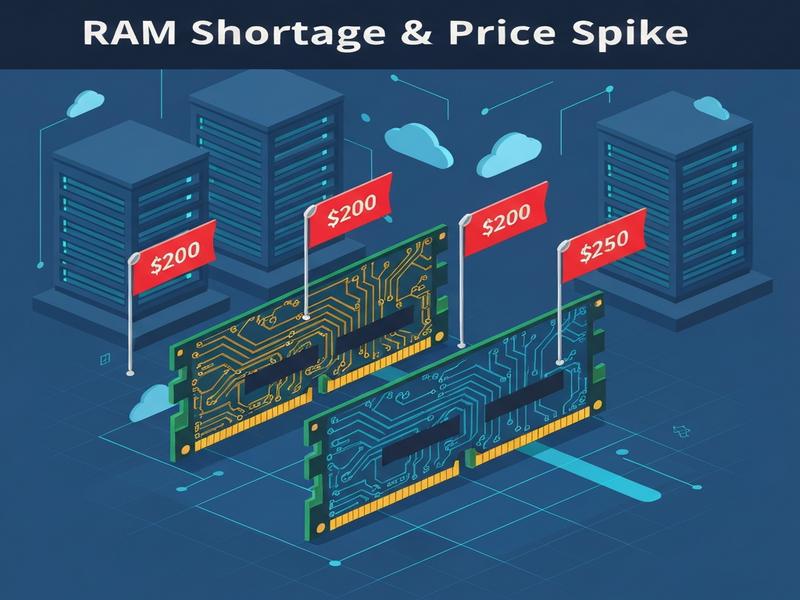
Notice how the upward trend aligns with major AI model releases from OpenAI and Google, underscoring the direct correlation between AI data‑center expansion and memory scarcity.
How UBOS Solutions Can Help You Navigate the Shortage
UBOS offers a suite of tools designed to reduce your reliance on expensive on‑premise RAM:
- UBOS homepage – Explore the full platform and its AI‑first approach.
- UBOS platform overview – Learn how modular services let you scale memory usage dynamically.
- AI marketing agents – Automate content generation without needing local GPU‑heavy models.
- UBOS solutions for SMBs – Cost‑effective AI pipelines that run on shared cloud resources.
- Web app editor on UBOS – Build low‑latency web apps that offload heavy processing to the cloud.
- Workflow automation studio – Orchestrate data‑processing tasks to minimize memory footprints.
- UBOS pricing plans – Transparent, usage‑based pricing that protects you from sudden hardware cost spikes.
- UBOS portfolio examples – Real‑world case studies of companies that reduced RAM spend by up to 40%.
- UBOS templates for quick start – Jump‑start AI projects with pre‑built templates that are memory‑efficient.
For developers who want to integrate conversational AI without buying extra RAM, check out the OpenAI ChatGPT integration or the ChatGPT and Telegram integration. These connectors let you run powerful language models in the cloud, delivering responses to end‑users while keeping local memory usage minimal.
If you need vector search capabilities, the Chroma DB integration provides a scalable, low‑latency alternative to on‑premise embeddings, further reducing RAM pressure.
And for voice‑enabled applications, the ElevenLabs AI voice integration offers high‑quality speech synthesis without requiring local GPU or large memory buffers.
Boost Productivity with UBOS Template Marketplace
UBOS’s marketplace hosts dozens of ready‑made AI tools that are designed to be lightweight and cost‑effective:
- AI SEO Analyzer – Optimize your site without heavy local processing.
- AI Article Copywriter – Generate high‑quality content in the cloud, sidestepping RAM‑intensive language models.
- AI Video Generator – Produce short videos using server‑side rendering.
- AI Image Generator – Create visuals on demand without local GPU memory.
- GPT-Powered Telegram Bot – Deploy a chatbot that leverages cloud‑hosted GPT models, keeping your device RAM free.
These templates illustrate how you can deliver sophisticated AI experiences while avoiding the pitfalls of the current RAM shortage.
What Should You Do Next?
While the RAM shortage is likely to linger, you can mitigate its impact by:
- Prioritizing cloud‑based AI services (e.g., UBOS partner program) to offload memory‑heavy workloads.
- Choosing hardware that supports lower‑frequency DDR4 where possible, as it remains cheaper than DDR5.
- Leveraging UBOS’s AI impact insights to forecast demand spikes and plan purchases ahead of price surges.
- Monitoring the UBOS tech news feed for updates on memory‑related product releases and pricing changes.
Stay ahead of the curve—subscribe to our newsletter, explore the UBOS partner program, and start building memory‑efficient AI solutions today.