

- Updated: January 18, 2026
- 5 min read
Generative AI Under Scrutiny: Gary Marcus’s Five‑Point Critique and Its Business Implications
Gary Marcus argues that generative AI, despite its hype, suffers from serious trust issues, excessive memorization, limited real‑world value, modest job impact, and scaling challenges that undermine its promised revolutionary potential.
Gary Marcus’ Five‑Point Critique of Generative AI
In a candid essay titled “Let’s Be Honest: Generative AI Isn’t …” Marcus pulls back the curtain on the artificial intelligence criticism that’s been echoing across tech circles. His analysis, published on Substack, outlines five core problems that any business leader, AI enthusiast, or tech‑savvy professional should weigh before betting on the next wave of generative models.
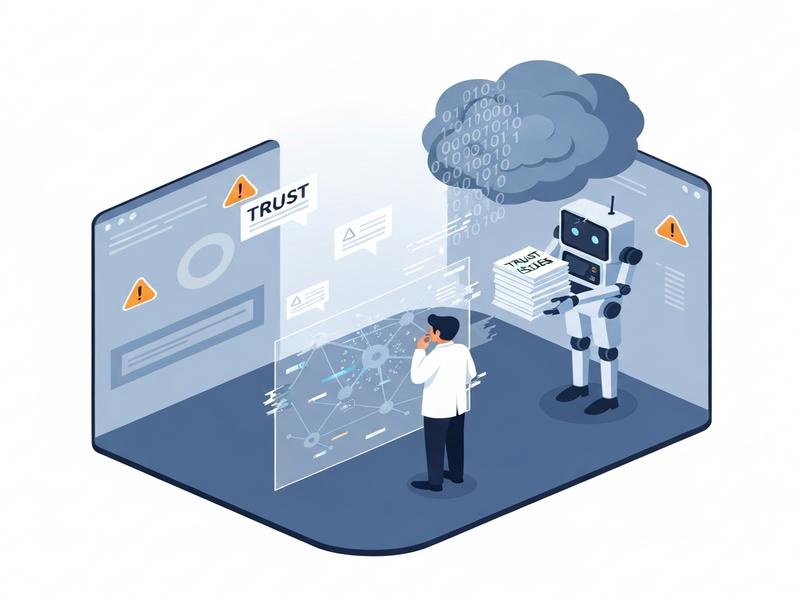
1️⃣ AI Trust Issues
Marcus contends that large language models (LLMs) still cannot be trusted for critical decisions because they frequently produce hallucinations—plausible‑sounding but factually incorrect statements.
- Inconsistent factual accuracy across domains.
- Lack of transparent reasoning pathways.
- Difficulty in auditing model outputs for bias or error.
2️⃣ Memorization Over Understanding
Rather than truly “understanding” language, LLMs excel at memorizing massive corpora. Marcus points out that this memorization leads to:
- Reproducing copyrighted text without attribution.
- Repeating outdated or harmful information.
- Limited ability to generalize to novel, out‑of‑distribution scenarios.
3️⃣ Minimal Real‑World Value
While generative AI dazzles with creative outputs, its measurable contribution to productivity remains modest. A recent Washington Post analysis (cited by Marcus) shows AI can automate only about 2.5 % of jobs today, far below the lofty forecasts that dominate headlines.
4️⃣ Overstated Job Impact
Many pundits predict massive workforce displacement, yet empirical data suggests a more nuanced picture. Marcus warns that:
- Automation tends to augment rather than replace roles.
- New job categories emerge, but they require advanced AI literacy.
- Short‑term productivity gains may be offset by long‑term skill gaps.
5️⃣ Scaling Challenges & AI Hype
Scaling model size does not automatically solve the above problems. Marcus notes that larger models increase compute costs, carbon footprints, and the risk of entrenched biases, while still delivering marginal improvements in factual reliability.
“The fundamental problem with generative AI is that the creators overpromised. The underlying technology itself is fine. There is a real business here. It is just not what the creators are saying it is.” – Gary Marcus
Implications for Business Leaders and AI Practitioners
Understanding Marcus’ critique helps organizations make smarter decisions about AI adoption. Below is a MECE‑structured guide that translates each criticism into actionable insight.
| Criticism | Strategic Implication | Recommended Action |
|---|---|---|
| AI Trust Issues | Risk of misinformation in customer‑facing channels. | Implement human‑in‑the‑loop validation and use AI SEO Analyzer to flag factual errors. |
| Memorization Over Understanding | Potential copyright violations and stale content. | Leverage AI Article Copywriter with custom prompts that enforce citation. |
| Minimal Real‑World Value | Low ROI on generic LLM deployments. | Target niche use‑cases using UBOS templates for quick start that align with existing workflows. |
| Overstated Job Impact | Workforce anxiety and skill mismatches. | Invest in upskilling via AI marketing agents training modules. |
| Scaling Challenges & AI Hype | Unsustainable cost structures. | Adopt modular AI stacks with OpenAI ChatGPT integration and monitor usage via the Workflow automation studio. |
How UBOS Helps Navigate the Generative AI Landscape
At UBOS homepage, we’ve built an Enterprise AI platform by UBOS that directly addresses the pain points highlighted by Marcus. Below are the key components that turn criticism into competitive advantage.
🔧 Modular Integrations for Trust & Transparency
Our platform offers plug‑and‑play connections to trusted services:
- ChatGPT and Telegram integration—enables real‑time human oversight of bot responses.
- ElevenLabs AI voice integration—adds an auditable voice layer for customer support.
- Chroma DB integration—provides vector‑based retrieval that improves factual grounding.
🚀 Accelerated Development with Low‑Code Tools
Non‑technical teams can launch AI‑enhanced products using our Web app editor on UBOS and pre‑built UBOS templates for quick start. For example, the AI Chatbot template can be deployed in minutes, complete with built‑in validation hooks.
📊 Data‑Driven Automation
Our Workflow automation studio lets you orchestrate AI calls, human approvals, and logging in a single visual canvas. This reduces hallucination risk and provides an audit trail for compliance.
💡 Tailored Solutions for Every Market Segment
Whether you’re a startup, SMB, or large enterprise, UBOS offers a fit‑for‑purpose stack:
- UBOS for startups – fast prototyping with cost‑effective compute.
- UBOS solutions for SMBs – pre‑configured pipelines that integrate with existing CRMs.
- Enterprise AI platform by UBOS – scalable, secure, and governed AI at the corporate level.
🤝 Partner Ecosystem & Support
Join the UBOS partner program to co‑create industry‑specific AI solutions, share best practices, and gain early access to new model integrations.
Visual Insight: The Core of Marcus’ Argument
Further Reading & Resources on UBOS
Deepen your understanding of how to mitigate the challenges highlighted above:
- About UBOS – our mission and expertise in responsible AI.
- UBOS platform overview – architecture designed for transparency.
- UBOS pricing plans – flexible tiers that align cost with value.
- UBOS portfolio examples – real‑world deployments that balance innovation with reliability.
- AI YouTube Comment Analysis tool – a concrete use‑case of trustworthy sentiment extraction.
- AI Image Generator – showcases safe content creation with built‑in moderation.
- AI Video Generator – leverages controlled generation pipelines.
Conclusion: A Balanced Path Forward
Gary Marcus’ critique serves as a reality check that prevents organizations from chasing AI hype at the expense of trust, value, and sustainability. By acknowledging the limitations—trust issues, memorization, modest job impact, and scaling hurdles—businesses can adopt a measured strategy that pairs generative models with robust governance, human oversight, and purpose‑built tooling.
UBOS provides that toolkit. From low‑code editors to enterprise‑grade integrations, our platform empowers you to harness generative AI responsibly while delivering measurable ROI.
Ready to turn criticism into competitive advantage? Visit the UBOS homepage today, explore our AI marketing agents, and start building trustworthy AI experiences that truly move the needle.