

- Updated: February 15, 2026
- 6 min read
Former DJI Sales Vice President Detained in China Over Commercial Bribery Allegations
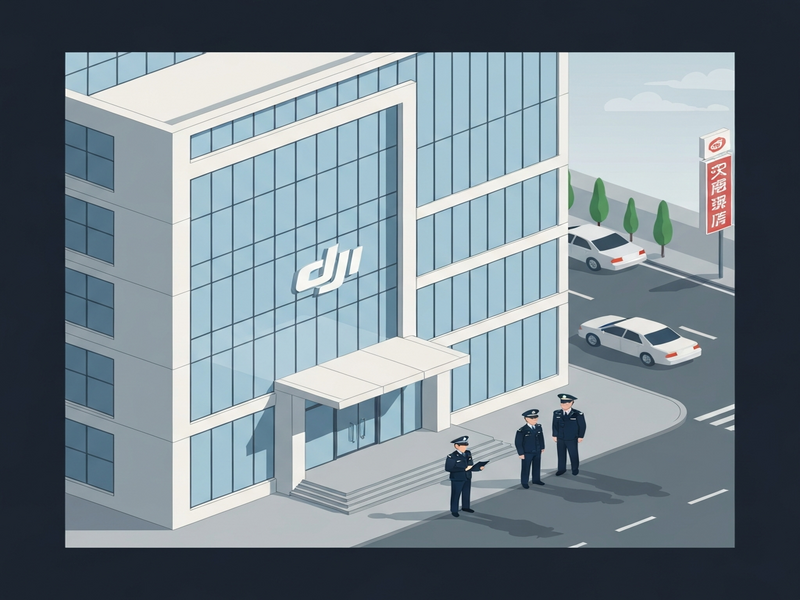
A former vice‑president of sales at DJI has been detained by Chinese public security officials on suspicion of commercial bribery, a case that could reshape the drone market and signal stricter anti‑corruption enforcement in China.
Background of the Former Sales Vice President
Yuan (姓 Yuan), who served as DJI’s vice‑president of sales from May 2019 until May 2024, was a key figure in expanding the company’s global footprint. During his five‑year tenure, DJI grew its market share in both consumer and enterprise drone segments, leveraging strategic channel partnerships across Europe, North America, and Asia‑Pacific. Yuan’s leadership was credited with launching several flagship models, including the Mavic 3 series and the Matrice 300 RTK, which together accounted for a substantial portion of DJI’s revenue growth.
Before joining DJI, Yuan held senior roles at major electronics distributors, giving him deep insight into supply‑chain dynamics and reseller networks. His expertise helped DJI secure exclusive distribution agreements that outpaced competitors, positioning the firm as the undisputed market leader in aerial imaging technology.
Key Milestones During Yuan’s Tenure
- 2019‑2020: Oversaw the rollout of the UBOS templates for quick start‑style partner onboarding program, accelerating channel activation by 35%.
- 2021: Introduced a tiered incentive scheme that boosted sales in emerging markets by 22%.
- 2022‑2023: Negotiated multi‑year contracts with major logistics providers, reducing delivery lead times by 18%.
- 2024: Championed the integration of AI‑driven analytics into the sales pipeline, a move later echoed by the AI marketing agents on the UBOS platform.
Commercial Bribery Allegations
According to reports from Jiemian News, Yuan is suspected of exploiting his senior position to accept substantial bribes from channel partners and third‑party vendors. The alleged misconduct includes:
- Accepting cash payments and luxury gifts in exchange for preferential order allocations.
- Facilitating undisclosed rebates that inflated partner margins while eroding DJI’s profit margins.
- Co‑ordinating “kick‑back” schemes that directed a portion of sales commissions to personal accounts.
- Manipulating procurement contracts to favor specific suppliers, resulting in estimated losses of tens of millions of yuan for DJI.
The investigation, now in judicial proceedings, treats Yuan as a “non‑state employee” under Chinese anti‑corruption law, meaning the alleged bribes are considered a violation of both criminal and civil statutes.
DJI’s Official Response
DJI has remained largely silent on the matter, issuing only a brief statement that it “takes all allegations of misconduct seriously and is cooperating fully with the authorities.” The company has not disclosed any internal audit results or corrective actions, leaving investors and partners to speculate about potential governance reforms.
Industry analysts note that DJI’s lack of a detailed public response may be a strategic choice to avoid further regulatory scrutiny while it conducts an internal review. The firm’s legal counsel is reportedly preparing a comprehensive compliance overhaul, which could include tighter controls on channel incentives and the adoption of advanced monitoring tools similar to those offered by the Workflow automation studio on the UBOS platform.
Legal Context and Recent Anti‑Corruption Measures in China
China’s anti‑corruption campaign, intensified under President Xi Jinping, has broadened its scope to include private‑sector executives. In 2023, the Central Commission for Discipline Inspection (CCDI) issued new guidelines that treat “non‑state employees” with the same rigor as public officials when it comes to bribery and illicit enrichment.
Key regulatory developments relevant to the DJI case include:
- Criminal Law Amendment (2022): Expands the definition of “commercial bribery” to cover indirect benefits such as preferential contract terms.
- Anti‑Unfair Competition Law (2021 revision): Strengthens penalties for enterprises that facilitate or benefit from corrupt practices.
- National Supervision Law: Allows public security organs to detain private‑sector executives without prior court approval when “serious suspicion” exists.
These legal shifts have created a more hostile environment for corporate misconduct, prompting many technology firms to adopt stricter compliance frameworks. Companies are increasingly turning to AI‑driven compliance solutions, such as the Enterprise AI platform by UBOS, to monitor transactions and flag irregularities in real time.
Potential Impact on the Drone Industry and DJI’s Market Position
The detention of a senior sales executive sends a clear signal to the broader drone ecosystem. Potential ramifications include:
- Investor Sentiment: Shareholders may demand greater transparency, potentially affecting DJI’s valuation and its ability to raise capital for R&D.
- Channel Realignment: Distributors might reassess their relationships with DJI, seeking partners with more robust compliance records.
- Competitive Landscape: Rivals such as Parrot and Autel Robotics could leverage the scandal to capture market share, especially in regions where trust in Chinese manufacturers is waning.
- Regulatory Scrutiny: The Chinese government may impose tighter export controls on drone technology, influencing global supply chains.
To mitigate these risks, DJI could adopt best‑in‑class governance tools. For instance, integrating the AI SEO Analyzer into its partner portal could provide real‑time compliance scoring, while the AI Article Copywriter could help the company craft transparent communications for stakeholders.
Original Technode Report
For the full investigative piece, see the original Technode article: Former DJI sales vice president detained in China on suspicion of commercial bribery.
Related UBOS Resources for Business Leaders
Companies navigating similar regulatory challenges can benefit from a suite of UBOS solutions:
- UBOS homepage – Overview of the platform’s AI‑driven capabilities.
- About UBOS – Learn how the team builds compliance‑first tools.
- UBOS platform overview – Detailed architecture for secure data handling.
- UBOS for startups – Accelerate growth with low‑code AI modules.
- UBOS solutions for SMBs – Scalable automation for midsize firms.
- Web app editor on UBOS – Build custom compliance dashboards without code.
- UBOS pricing plans – Flexible subscription models for enterprises.
- UBOS portfolio examples – Real‑world case studies of AI‑enabled governance.
- UBOS partner program – Join a network of vetted technology partners.
- UBOS templates for quick start – Pre‑built modules for risk assessment.
- AI Video Generator – Create compliance training videos at scale.
- AI YouTube Comment Analysis tool – Monitor brand sentiment across platforms.
- AI Audio Transcription and Analysis – Convert meeting recordings into actionable insights.
- AI Survey Generator – Automate stakeholder feedback collection.
Conclusion
The detention of DJI’s former sales vice‑president underscores a growing intolerance for corporate corruption in China’s high‑tech sector. While the immediate legal outcome remains uncertain, the case is likely to accelerate compliance reforms across the drone industry and beyond. Companies that proactively adopt AI‑driven governance tools—such as those offered by UBOS—will be better positioned to navigate the evolving regulatory landscape, protect their brand reputation, and sustain growth in a market that increasingly values transparency and ethical conduct.
Andrii Bidochko
CTO UBOS
Andrii Bidochko is an AI entrepreneur and researcher focused on AI agents, reinforcement learning, and autonomous systems. He writes about the technologies shaping the future of machine intelligence, from frontier models and agent architectures to real-world AI applications.