

- Updated: February 26, 2026
- 6 min read
Figma Partners with OpenAI to Embed Codex into Design Platform
Figma and OpenAI have partnered to embed OpenAI’s Codex AI directly into the Figma design platform, allowing designers to generate production‑ready code from visual components with a single prompt.
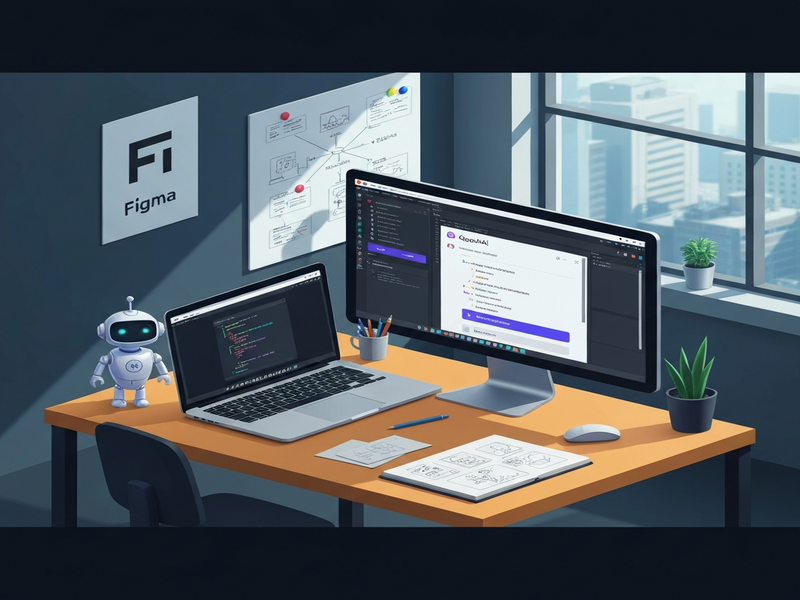
1. Partnership Overview: Why Figma Chose OpenAI’s Codex
In early 2026, Figma announced a strategic partnership with OpenAI to integrate Codex, the AI model that translates natural‑language instructions into functional code. The collaboration aims to close the long‑standing “design‑to‑development” gap that has forced UI/UX teams to hand off static mockups to engineers for translation.
Both companies see a shared vision: democratizing code creation so that designers can prototype, iterate, and ship features without waiting for a developer’s queue. By embedding Codex inside Figma’s collaborative canvas, the partnership promises a seamless workflow where a button click can produce React, Vue, or Swift snippets that match the visual design.
For design professionals who already rely on Figma’s real‑time collaboration, this integration adds an AI‑powered assistant that can understand design intent, suggest layout adjustments, and output clean, production‑ready code.
Businesses looking to accelerate AI adoption can explore the UBOS platform overview for a broader view of how AI services are being embedded across SaaS products.
2. How Codex Is Integrated Inside Figma
Codex is accessed through a new “AI Code Generator” panel located on the right‑hand sidebar. The workflow is intentionally MECE (Mutually Exclusive, Collectively Exhaustive) to keep the user experience intuitive:
- Select a component: Choose any frame, vector, or text block.
- Describe the target platform: Type “React component” or “Flutter widget”.
- Generate code: Press “Generate” and watch Codex produce clean, lint‑free code in seconds.
- Iterate instantly: Edit the design, re‑run the prompt, and Codex updates the snippet automatically.
Under the hood, Figma sends a concise JSON representation of the selected design element to OpenAI’s API. Codex then returns a code block that respects the user’s styling tokens, responsive breakpoints, and accessibility attributes. The result is a bidirectional sync: changes in the code can be pushed back to the canvas, enabling a true “design‑code loop”.
Developers can also leverage the integration via a Web app editor on UBOS that allows them to embed the generated snippets directly into their codebase, reducing context switching.
3. Implications for Designers and Developers
For UI/UX designers, the biggest win is speed. A typical hand‑off that once took days can now be completed in minutes. Designers can prototype interactive flows with real code, test performance, and validate accessibility without waiting for a developer.
For developers, Codex reduces repetitive boilerplate work. Instead of translating pixel‑perfect designs line‑by‑line, engineers receive a ready‑made component that follows the project’s linting rules and design system. This frees up senior engineers to focus on business logic and complex integrations.
Both roles benefit from a shared language: natural language prompts. A designer can type “Create a dark‑mode toggle with smooth animation” and receive a fully functional component that adheres to the project’s CSS variables.
“The integration turns design files into living code, which is a paradigm shift for product teams,” says a senior product manager at a leading fintech startup.
Companies that have already adopted AI‑enhanced workflows report a 30‑40% reduction in time‑to‑market. For SMBs, this translates into cost savings and the ability to compete with larger enterprises. Explore how UBOS solutions for SMBs are helping smaller teams leverage AI without massive infrastructure investments.
4. Market Impact and Future Outlook
The Figma‑OpenAI partnership is likely to accelerate the broader trend of AI design tools reshaping the software development lifecycle. Analysts predict that by 2028, AI‑generated code will account for up to 25% of all front‑end development work.
Key market implications include:
- Increased competition: Other design platforms such as Sketch and Adobe XD will feel pressure to launch comparable AI assistants.
- New revenue models: SaaS providers may monetize AI‑generated code as a premium feature, similar to how AI marketing agents are sold as add‑ons.
- Talent shift: Designers will need to acquire basic coding literacy, while developers will focus more on architecture and data engineering.
- Regulatory considerations: As AI writes more production code, compliance teams will need tools to audit generated snippets for security vulnerabilities.
Figma has hinted at future expansions, including support for back‑end languages (Node.js, Python) and deeper integration with version‑control systems like GitHub. The partnership also opens doors for third‑party extensions built on the Workflow automation studio, allowing agencies to create custom AI‑driven pipelines.
From an enterprise perspective, the Enterprise AI platform by UBOS already offers governance layers that could be adapted to monitor Codex‑generated code across large organizations, ensuring consistency and security.
Practical Use Cases for Teams
- Rapid prototyping: Product teams can spin up interactive demos in hours instead of weeks.
- Design system enforcement: Codex respects token libraries, guaranteeing that generated components align with brand guidelines.
- Localization: By prompting “Create a French version of this form”, designers receive both UI adjustments and i18n‑ready code.
- Accessibility compliance: Codex can automatically add ARIA attributes based on design intent.
Figma’s pricing model for the Codex feature will be tiered. Early adopters can test the functionality through a free trial, after which a per‑seat fee will apply. For organizations evaluating cost, the UBOS pricing plans provide a benchmark for AI‑enhanced SaaS subscriptions.
Developers and designers can accelerate their workflow by leveraging community‑built templates. For example, the AI SEO Analyzer template demonstrates how AI can be embedded into a Figma prototype to analyze on‑page SEO in real time.
Other popular templates include the AI Image Generator and the AI Chatbot template, both of which can be combined with Codex‑generated code to create end‑to‑end AI‑powered products.
5. Conclusion: A New Era for Design‑Code Collaboration
The Figma‑OpenAI Codex partnership marks a pivotal moment in the evolution of design tools, turning static mockups into executable code with a few keystrokes. By bridging the gap between UI/UX and engineering, the integration empowers teams to ship faster, iterate more confidently, and reduce the friction that traditionally separates designers from developers.
As AI continues to mature, we can expect deeper, more context‑aware assistants that not only write code but also suggest design improvements, perform usability testing, and enforce compliance automatically. For anyone invested in the future of product development, staying informed about these AI‑driven workflows is no longer optional—it’s essential.
Read the full announcement and technical details in the original TechCrunch story.
Explore more AI‑enabled solutions on the UBOS homepage and discover how the About UBOS team is shaping the next generation of intelligent SaaS platforms.
Need inspiration? Browse the UBOS portfolio examples or start a project with ready‑made UBOS templates for quick start.
Andrii Bidochko
CTO UBOS
Andrii Bidochko is an AI entrepreneur and researcher focused on AI agents, reinforcement learning, and autonomous systems. He writes about the technologies shaping the future of machine intelligence, from frontier models and agent architectures to real-world AI applications.