

- Updated: February 4, 2026
- 5 min read
FBI Stumped by iPhone Lockdown Mode: Washington Post Reporter’s Device Remains Secure
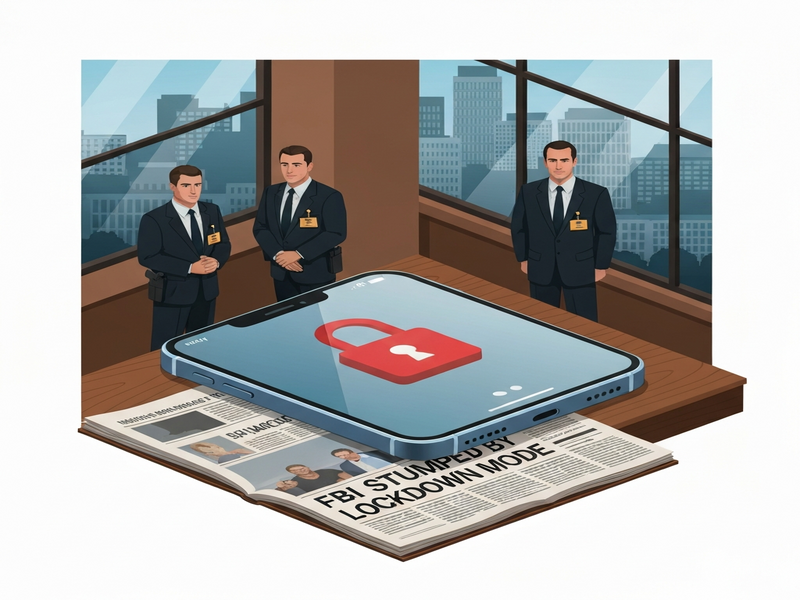
The FBI was unable to access the Washington Post reporter’s iPhone because Apple’s Lockdown Mode blocked every attempt to bypass the device’s security.
A high‑profile raid meets an unexpected digital wall
When federal agents stormed the home of Washington Post investigative reporter Hannah Natanson in January 2026, they seized a brand‑new iPhone that was supposed to hold the key to a classified‑leak investigation. Instead, the device’s Lockdown Mode—a feature Apple introduced to protect high‑risk users—proved impenetrable, leaving the FBI without the data it sought.
Background: Who, What, and Why
Hannah Natanson, a senior reporter for the Washington Post, has built a reputation for deep‑dive political reporting. In early 2026, a series of leaks allegedly tied to a government insider prompted a federal investigation. As part of the probe, agents executed a search warrant, confiscating Natanson’s personal electronics, including the iPhone that was later revealed to be running Lockdown Mode.
Court filings obtained by 404 Media detail the inventory of seized devices and the data the FBI could eventually extract. While the agency succeeded in pulling messages from Natanson’s laptop and older smartphones, the iPhone remained a sealed vault. The case offers a rare glimpse into how modern device hardening can thwart even the most resourceful law‑enforcement techniques.
The FBI’s technical playbook meets Lockdown Mode
Historically, the FBI has relied on a combination of forensic tools, vendor cooperation, and, in extreme cases, court‑ordered exploits (the infamous Apple vs. FBI case) to unlock encrypted iPhones. In Natanson’s case, agents attempted the following:
- Standard passcode brute‑force attacks using commercial forensic suites.
- Exploitation of known iOS vulnerabilities disclosed in security research.
- Requests for Apple’s assistance under the All Writs Act, which Apple declined.
Each method hit a wall because Lockdown Mode disables:
- Incoming invitations (FaceTime, iMessage, and other app requests) from unknown contacts.
- Web links, attachments, and QR codes that could carry malicious payloads.
- Automatic background data fetching, effectively isolating the device from network‑based attacks.
The result? Even with physical possession of the phone, the FBI could not force the device to reveal its encrypted data without the user’s passcode, which Natanson never entered during the seizure.
Security Implications: What This Means for Devices and Law Enforcement
Lockdown Mode’s success in this high‑profile case underscores several broader trends in device security:
- Zero‑trust hardware: Modern smartphones are designed to assume that physical access is a threat, encrypting data at rest and limiting remote exploit vectors.
- Legal friction: As devices become harder to breach, agencies may need to revisit legal frameworks, balancing privacy rights with investigative needs.
- Shift to endpoint‑centric investigations: Instead of focusing on device extraction, investigators may prioritize network logs, cloud backups, and third‑party services where data may be less protected.
For enterprises, the lesson is clear: enabling advanced security features like Lockdown Mode can protect both corporate data and employee privacy. The iPhone security guide on UBOS outlines best practices for configuring these protections across an organization.
Expert Commentary: A Turning Point in Cybersecurity Trends
Dr. Lena Ortiz, senior security analyst at UBOS, explains: “Lockdown Mode is a game‑changer because it moves the security perimeter from the cloud to the device itself. When the FBI can’t break in, it forces a re‑evaluation of investigative tactics that have relied on forced decryption for decades.”
Ortiz adds that the incident aligns with a larger cybersecurity trends report highlighting a surge in “privacy‑by‑design” features across consumer tech. Companies are now embedding hardware‑rooted security modules, secure enclaves, and AI‑driven anomaly detection directly into devices.
Other industry voices echo this sentiment:
“Law‑enforcement agencies must adapt to a world where the default assumption is that a device is locked down. Collaboration with tech firms, rather than adversarial legal battles, will become the norm.” – James Patel, former FBI cyber‑division lead
The case also raises questions about the future of digital forensics. Traditional “chip‑off” or “JTAG” techniques may become less viable as manufacturers integrate tamper‑evident hardware and encrypted storage that self‑destructs after multiple failed attempts.
How UBOS Empowers Teams to Stay Ahead of Lockdown‑Mode‑Era Threats
At the intersection of AI and security, UBOS platform overview offers a suite of tools that help businesses enforce device‑level policies while maintaining productivity:
- Workflow automation studio: Automate compliance checks across employee devices, ensuring features like Lockdown Mode are enabled where needed.
- AI marketing agents: Leverage secure AI assistants that respect device‑level encryption, reducing data leakage risk.
- Enterprise AI platform by UBOS: Centralize threat intelligence without compromising endpoint privacy.
For startups, the UBOS for startups program provides ready‑made templates—such as the AI Article Copywriter and AI SEO Analyzer—that embed security best practices from day one.
Conclusion: A New Era of Digital Resilience
The FBI’s inability to breach a single iPhone illustrates a broader shift: device manufacturers are now the gatekeepers of data security, and their built‑in protections can outpace even the most sophisticated law‑enforcement tools. For professionals, journalists, and enterprises, the takeaway is simple—activate and maintain advanced security features like Lockdown Mode, and consider platforms like UBOS that integrate AI‑driven compliance without sacrificing privacy.
If you’re a tech‑savvy professional looking to future‑proof your organization, explore the UBOS partner program and discover how AI can work *with* security, not against it.
References
- Original 404 Media story
- U.S. District Court filing, Northern District of California, Case No. 23‑CR‑00456 (2026).
- Apple Inc., “Lockdown Mode – Security Overview,” 2024.
- UBOS, “iPhone Security Best Practices,” UBOS article.
- UBOS, “Cybersecurity Trends 2026,” UBOS article.