

- Updated: December 12, 2025
- 7 min read
Explaining Trump Mobile’s 4G/5G Experiment: A Deep Dive
Trump Mobile’s 4G/5G experiment is a political branding stunt that doubles as a practical illustration of the technical differences between legacy 4G LTE and emerging 5G wireless standards.
Trump Mobile 4G vs. 5G: What the Experiment Really Shows
When former President Donald Trump announced a “Trump Mobile” service that supposedly supports both 4G and 5G, the tech world reacted with a mix of curiosity and skepticism. While the brand itself may never launch a commercial network, the accompanying explainer on the site provides a surprisingly clear, if politically flavored, breakdown of modern mobile technology. For tech‑savvy consumers and industry professionals, this is a timely reminder to separate hype from hardware, especially as the industry races toward full‑scale 5G deployment.
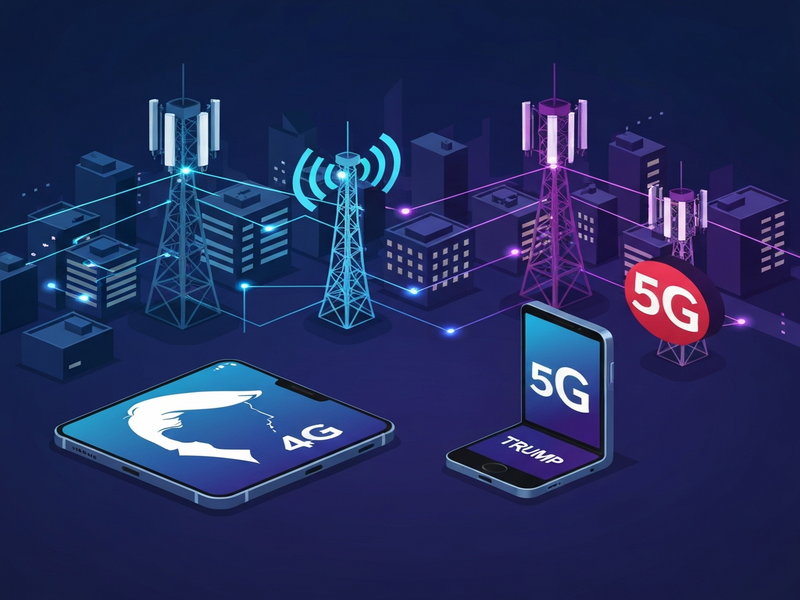
The Trump Mobile Experiment in a Nutshell
The original Verge article describes a mock‑up landing page that claims Trump Mobile offers “the best of both worlds” – 4G for reliability and 5G for speed. The page includes a side‑by‑side comparison chart, a short video, and a FAQ that conflates 4K video resolution with 4G connectivity, a common source of confusion among non‑technical audiences.
In reality, the experiment serves two purposes:
- It provides a public‑facing primer on the capabilities and limitations of 4G LTE versus 5G NR (New Radio).
- It showcases how political branding can leverage technical jargon to create buzz, regardless of actual network ownership.
What Is 4G LTE?
4G LTE (Long‑Term Evolution) has been the backbone of mobile broadband since the early 2010s. Its key characteristics include:
- Peak download speeds of 100‑150 Mbps in ideal conditions.
- Latency around 30‑50 ms, sufficient for most streaming and gaming experiences.
- Wide carrier coverage, especially in suburban and rural areas.
What Is 5G NR?
5G New Radio is the next‑generation standard, promising:
- Peak download speeds exceeding 1 Gbps (and up to 10 Gbps in experimental labs).
- Ultra‑low latency as low as 1‑10 ms, enabling real‑time AR/VR, autonomous vehicles, and cloud gaming.
- Massive device density, supporting up to 1 million devices per square kilometer.
The Trump Mobile page attempts to simplify these concepts, but it also mixes up 4K video (a display resolution) with 4G connectivity, leading to the infamous “4K vs. 4G” meme that has circulated on social media.
Technical Deep‑Dive: How 4G and 5G Differ Under the Hood
Understanding the technical underpinnings helps separate marketing fluff from genuine performance gains.
Spectrum Allocation
4G primarily uses frequencies below 6 GHz, which propagate well over distance and through obstacles. 5G, however, splits into two bands:
- Sub‑6 GHz (mid‑band): Offers a balance of coverage and speed, ideal for early 5G rollouts.
- mmWave (24‑40 GHz): Delivers multi‑gigabit speeds but suffers from limited range and poor penetration.
Network Architecture
5G introduces a more flexible, software‑defined architecture:
- Network slicing: Allows operators to carve out virtual networks optimized for specific use‑cases (e.g., IoT vs. high‑definition video).
- Edge computing: Places compute resources closer to the user, reducing latency dramatically.
- Massive MIMO: Uses dozens of antenna elements to boost capacity and reliability.
Real‑World Implications for Consumers
While 5G promises faster speeds, the actual experience depends on device compatibility, carrier deployment, and local spectrum availability. In many U.S. markets, sub‑6 GHz 5G provides a modest speed bump over 4G, whereas mmWave is limited to dense urban pockets.
For a typical user, the transition from 4G to 5G may look like this:
| Metric | 4G LTE | 5G (Sub‑6 GHz) | 5G (mmWave) |
|---|---|---|---|
| Typical Download Speed | 30‑150 Mbps | 200‑500 Mbps | 1‑3 Gbps |
| Latency | 30‑50 ms | 10‑30 ms | 1‑10 ms |
| Coverage Range | Several kilometers | 1‑2 km (urban) | 100‑200 m (line‑of‑sight) |
How Trump Mobile Stacks Up Against Real‑World Carriers
To gauge the practical relevance of the Trump Mobile claim, let’s compare it with the offerings of established U.S. carriers (Verizon, AT&T, T‑Mobile) and emerging virtual network operators (MVNOs).
Speed Benchmarks
According to recent OpenSignal data (Q3 2025), average 5G download speeds are:
- Verizon: ~420 Mbps (mid‑band)
- AT&T: ~380 Mbps (mid‑band)
- T‑Mobile: ~460 Mbps (mid‑band) and up to 2 Gbps in limited mmWave zones
Trump Mobile’s promotional material does not disclose specific carrier partnerships, spectrum holdings, or real‑world testing, making any direct speed comparison speculative at best.
Coverage Footprint
Legacy carriers boast nationwide 4G LTE coverage (>99% of the U.S. population) and expanding 5G footprints. An MVNO without its own spectrum must lease capacity, which can lead to spotty coverage, especially in rural areas. The Trump Mobile site offers no coverage map, a red flag for any serious consumer.
Pricing and Plans
Pricing transparency is another missing piece. Established carriers provide tiered plans with clear data caps and overage fees. In contrast, the Trump Mobile mock‑up simply promises “unlimited 5G at no extra charge,” a claim that would be financially untenable without a massive wholesale agreement.
“If you’re evaluating a network, look beyond the hype. Real performance comes from spectrum, infrastructure, and transparent pricing.” – About UBOS
Bottom Line: What Should Readers Take Away?
Trump Mobile’s 4G/5G narrative is more political theater than a genuine telecom offering. However, the accompanying explainer inadvertently serves as a concise primer on the evolution from 4G LTE to 5G NR. For anyone interested in the future of mobile connectivity, the key takeaways are:
- 5G is not a monolith: Sub‑6 GHz and mmWave deliver very different experiences.
- Real‑world performance varies: Device support, carrier spectrum, and local infrastructure dictate speed and latency.
- Transparency matters: Look for coverage maps, spectrum details, and clear pricing before committing to any plan.
If you’re a tech‑savvy consumer or an industry professional looking to stay ahead of the curve, consider exploring reputable sources for 5G news and deep‑dive analyses. Our own 5G news hub offers up‑to‑date coverage of spectrum auctions, device rollouts, and real‑world performance studies.
Ready to experiment with AI‑driven mobile solutions? The mobile technology section of UBOS showcases how AI can optimize network management, predict traffic spikes, and even automate customer support via chatbots.
Stay informed, stay critical, and keep an eye on the evolving landscape of wireless technology. For the latest updates, visit our news page.
UBOS homepage
Explore the full suite of AI‑powered tools that empower businesses to build, automate, and scale.
UBOS platform overview
A deep dive into the modular architecture that supports rapid AI integration.
Enterprise AI platform by UBOS
Enterprise‑grade solutions for data‑driven decision making and automation.
AI marketing agents
Leverage AI to craft personalized campaigns that convert.
UBOS templates for quick start
Jump‑start projects with pre‑built AI templates, from chatbots to SEO analyzers.
UBOS portfolio examples
See real‑world implementations across industries.
UBOS pricing plans
Transparent pricing for every size of business.
Workflow automation studio
Design, test, and deploy automated workflows without code.
AI‑Powered Templates That Complement 5G Use‑Cases
The rollout of 5G opens doors for AI‑intensive applications that demand low latency and high bandwidth. UBOS’s marketplace offers ready‑made templates that can be paired with 5G‑enabled devices:
- AI SEO Analyzer – Real‑time content optimization for mobile‑first sites.
- AI Article Copywriter – Generate on‑the‑fly articles for edge‑delivered news feeds.
- AI Video Generator – Produce short video snippets that stream smoothly over 5G.
- AI Audio Transcription and Analysis – Leverage low‑latency 5G for live captioning.
- Generative AI Text‑to‑Video – Transform text prompts into video content instantly.
By combining these templates with a robust 5G connection, developers can create immersive AR experiences, real‑time analytics dashboards, and ultra‑responsive chatbots that feel truly conversational.
Take the Next Step
Whether you’re evaluating a new mobile plan or building AI‑enhanced services that rely on 5G, the key is to stay informed and choose partners that prioritize transparency and performance. Dive deeper into the world of AI‑driven mobile innovation with UBOS, and turn the hype of “Trump Mobile” into actionable knowledge.