

- Updated: March 20, 2026
- 6 min read
Essex Police Pause Facial Recognition After Racial Bias Study
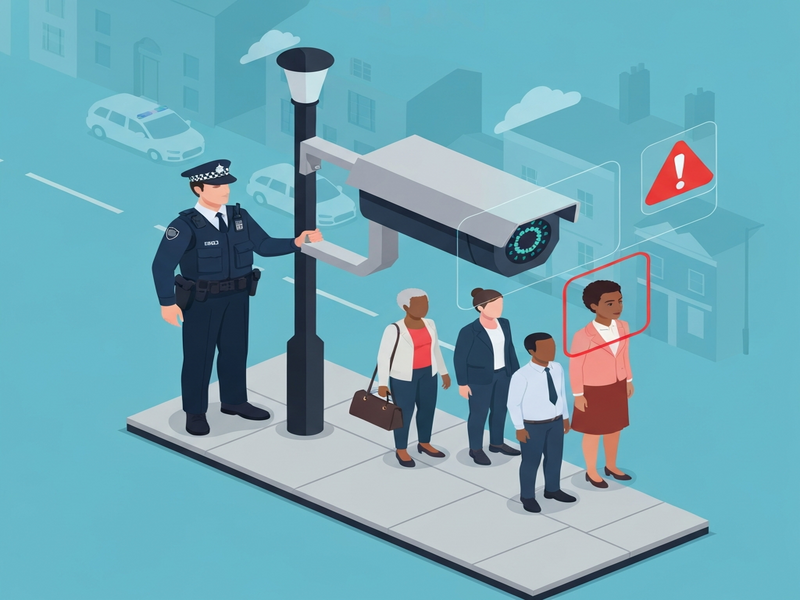
Answer: Essex Police have temporarily halted the deployment of live facial‑recognition (LFR) cameras after a University of Cambridge study demonstrated that the technology is significantly more likely to correctly identify Black individuals than people of other ethnicities, raising serious concerns about racial bias and AI ethics.
Background: Facial Recognition in UK Policing
Since 2022, live facial‑recognition systems have been rolled out across at least 13 police forces in England and Wales, including London, Greater Manchester, and Surrey. The technology is mounted on fixed poles or mobile vans and scans crowds in real time, matching faces against watchlists supplied by law‑enforcement databases. Proponents argue that LFR helps locate suspects quickly, citing over 1,300 arrests linked to the system between January 2024 and September 2025.
However, the rapid expansion has been accompanied by mounting criticism from civil‑rights organisations, privacy advocates, and academic researchers who warn that the technology can amplify existing societal biases. The Home Secretary, Shabana Mahmood, announced a five‑fold increase in LFR vans earlier this year, aiming for 50 units per force, a move that intensified scrutiny.
The Cambridge Study: Methodology and Findings
In January 2026, Essex Police commissioned a team of criminologists and computer‑science experts from the University of Cambridge to evaluate the accuracy and fairness of their LFR deployment in Chelmsford. The study involved 188 volunteers of diverse ages, genders, and ethnic backgrounds walking past active cameras mounted on a marked police van.
Key Metrics
- Overall correct identification rate: ≈ 50 % of watchlist matches were accurately flagged.
- False‑positive rate: under 1 %, indicating rare misidentifications.
- Gender disparity: Men were identified at a higher rate than women (≈ 55 % vs. 42 %).
- Ethnic disparity: Black participants were statistically significantly more likely to be correctly identified than White, Asian, or mixed‑heritage participants.
“If you’re an offender passing facial‑recognition cameras which are set up as they have been in Essex, the chances of being identified as being on a police watchlist are greater if you’re Black. To me, that warrants further investigation.” – Dr Matt Bland, criminologist, University of Cambridge
The researchers suggested that the bias could stem from over‑training the algorithm on datasets that contain a disproportionate number of Black faces, a common issue in commercial facial‑recognition models. While the study found that false matches were rare, the unequal likelihood of correct matches raises fairness concerns, especially when the technology is used in public spaces without explicit consent.
Reactions: Police, Civil‑Liberties Groups, and Technology Providers
Essex Police
Following the ICO’s announcement, Essex Police issued a statement confirming the pause: “We are suspending live facial‑recognition deployments while we work with independent experts to address the identified accuracy and bias risks.” The force emphasized its commitment to transparency and pledged to publish a remediation plan within 30 days.
Civil‑Liberties Organisations
Big Brother Watch, Liberty, and the Campaign Against Arms Trade (CAAT) welcomed the pause, calling it “a necessary corrective step.” Jake Hurfurt, head of research at Big Brother Watch, warned: “AI surveillance that is experimental, untested, inaccurate or potentially biased has no place on our streets.”
Technology Providers
The vendor supplying the LFR system, a subsidiary of a major US AI firm, responded by stating that they are “working closely with Essex Police and independent auditors to recalibrate the model and improve demographic parity.” The company also highlighted ongoing collaborations with academic institutions to develop bias‑mitigation toolkits.
Implications for AI Ethics and Future Policy
The Essex pause underscores a broader ethical dilemma: how to balance public‑safety benefits with the risk of reinforcing systemic discrimination. The incident aligns with concerns raised in the AI ethics community, where scholars argue that transparency, accountability, and fairness must be baked into AI lifecycle management.
Policy‑makers are now faced with several pressing questions:
- Should live facial‑recognition be classified as a high‑risk AI system under the UK’s forthcoming AI Regulation?
- What independent oversight mechanisms are needed to audit bias before deployment?
- How can police forces ensure that mitigation strategies (e.g., diverse training data, regular bias audits) are enforceable?
The facial recognition news portal notes a growing trend of municipalities worldwide imposing moratoriums or outright bans on LFR until robust safeguards are proven.
What This Means for the Tech Industry
For developers and SaaS providers, the Essex case is a cautionary tale about the importance of integrating ethical checks early in the product pipeline. Companies like UBOS homepage are positioning themselves as responsible AI platforms, offering tools that help organisations embed bias detection, data‑governance, and compliance reporting into their workflows.
Key resources that can aid businesses in navigating these challenges include:
- About UBOS – a deep dive into the company’s ethical AI philosophy.
- AI ethics guidelines that align with UK regulatory drafts.
- Enterprise AI platform by UBOS – built‑in bias‑monitoring dashboards.
- Workflow automation studio – automates compliance checks across data pipelines.
- UBOS templates for quick start – includes a “Bias‑Mitigation” template for AI projects.
- AI SEO Analyzer – ensures content complies with ethical SEO standards.
- AI Article Copywriter – generates balanced, non‑biased copy for public communications.
- AI Video Generator – creates transparent explainer videos about AI usage.
By leveraging these tools, organisations can proactively address the very concerns that prompted Essex Police’s pause, turning compliance into a competitive advantage.
External Perspective: Guardian Coverage
The full story, including quotes from Dr Matt Bland and the official police statement, was reported by The Guardian. The article highlights the broader national debate and the potential ripple effects on future policing contracts.
Conclusion: A Turning Point for Surveillance AI
Essex Police’s decision to pause live facial‑recognition cameras marks a pivotal moment in the UK’s journey toward responsible AI deployment. The Cambridge study’s evidence of racial bias forces a re‑examination of how surveillance technologies are trained, audited, and governed. As policymakers, civil‑society groups, and tech firms grapple with these findings, the emphasis is shifting from rapid adoption to measured, ethical integration.
For stakeholders seeking to stay ahead of the curve, the lesson is clear: embed fairness checks, maintain transparent reporting, and engage independent auditors from day one. Only then can AI‑driven policing deliver public‑safety benefits without compromising the fundamental rights of the communities it serves.
© 2026 UBOS. All rights reserved.
Andrii Bidochko
CTO UBOS
Andrii Bidochko is an AI entrepreneur and researcher focused on AI agents, reinforcement learning, and autonomous systems. He writes about the technologies shaping the future of machine intelligence, from frontier models and agent architectures to real-world AI applications.