

- Updated: February 18, 2026
- 6 min read
Elon Musk Shifts SpaceX Focus from Mars to Moon City: Implications for Space Industry
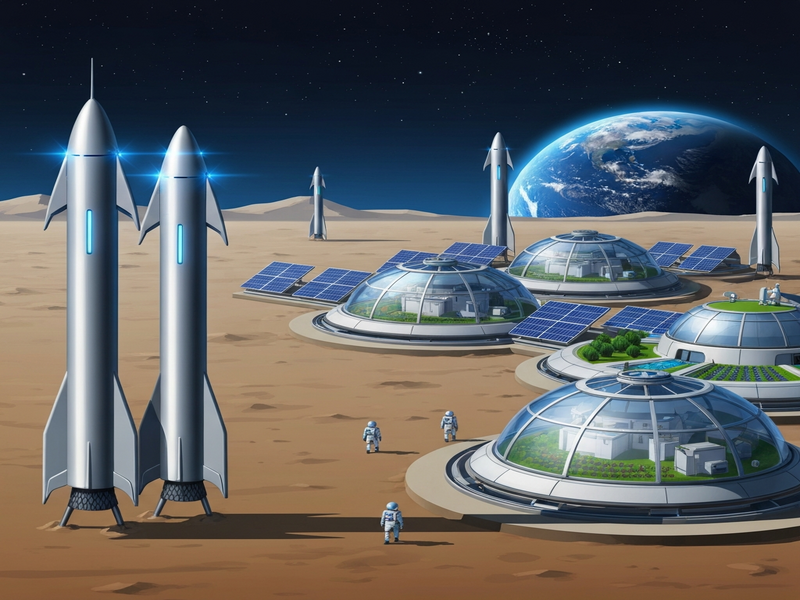
Elon Musk has officially shifted SpaceX’s focus from a Mars‑first strategy to building a permanent lunar city, a move that is reshaping the space‑industry roadmap and creating new business opportunities for investors, contractors, and technology providers.
Elon Musk’s Moon Pivot: SpaceX’s Lunar City Plans, Industry Reactions, and Business Implications
Why the Moon Now?
For years, Musk portrayed Mars as the ultimate destination, dismissing the Moon as “a distraction.” In a surprise announcement, he declared that SpaceX will first establish a self‑sustaining city on the Moon before turning its attention to the Red Planet. The shift reflects a pragmatic assessment of technology readiness, market demand, and competitive pressure from rivals such as Blue Origin.
The decision also aligns with NASA’s Artemis program, which is using the lunar surface as a testbed for deep‑space operations. By positioning itself as a primary commercial partner, SpaceX can leverage existing launch infrastructure, accelerate revenue generation, and demonstrate a viable business model to investors ahead of its upcoming IPO.
Read the original report on The Verge for full details.
SpaceX’s Lunar City Blueprint
Technical Roadmap
SpaceX plans to use an upgraded version of Starship, dubbed “Starship‑L,” capable of delivering 150 tonnes to low‑Earth orbit and 30 tonnes to the lunar surface. The vehicle will feature a reusable lunar ascent stage, in‑situ resource utilization (ISRU) modules for extracting water ice, and a modular habitat system that can be expanded incrementally.
Infrastructure Plans
- Habitat Pods: 3‑meter‑diameter inflatable modules with radiation‑shielding composites.
- Power Generation: Deployable solar farms paired with lunar‑based energy storage.
- Communications: Low‑latency relay satellites forming a lunar “internet” for Earth‑Moon data exchange.
- ISRU Facilities: Oxygen extraction from regolith and 3‑D printing of construction materials.
The first crewed landing is targeted for 2029, with a “City‑One” footprint of 10 habitat pods and supporting infrastructure. Subsequent phases will add commercial modules for tourism, research labs, and eventually a manufacturing hub.
For a deeper dive into how emerging AI platforms can accelerate such complex projects, explore the UBOS platform overview, which offers AI‑driven workflow automation for aerospace engineering.
Industry Reactions and Competitor Moves
NASA & Artemis Synergy
NASA officials welcomed the pivot, noting that a commercial lunar city dovetails with Artemis’ goal of establishing a sustainable presence by the early 2030s. The agency plans to award contracts for lunar surface power and habitat modules, many of which could be sourced from SpaceX’s supply chain.
Blue Origin’s Counter‑Strategy
Jeff Bezos’ Blue Origin, already developing the “Blue Moon” lander for NASA, has accelerated its own lunar‑habitat roadmap. Analysts see a classic “Space Race 2.0” emerging, where both companies vie for government contracts, private tourism, and lunar resource rights.
The competitive environment is prompting other players to explore AI‑enhanced mission planning. The AI marketing agents offered by UBOS can help aerospace firms craft targeted outreach to investors and government stakeholders.
Business and Financial Implications
IPO Timing and Valuation
SpaceX’s upcoming public offering is expected to price shares based on near‑term revenue streams. A lunar city promises tangible cash flow from tourism, mining rights, and licensing of ISRU technology, providing a more concrete valuation metric than speculative Mars colonization.
Revenue Streams
- Lunar Tourism: Premium packages for high‑net‑worth individuals and scientific delegations.
- Resource Extraction: Sale of water‑ice and rare‑earth elements to Earth‑based manufacturers.
- Infrastructure Leasing: Rental of habitat modules and power stations to research institutions.
- Data Services: High‑resolution lunar mapping and communications bandwidth.
Investor Outlook
Analysts predict a “Moon‑first” premium, with equity analysts upgrading SpaceX’s risk profile. The shift also reduces the timeline for return on investment, as lunar missions can be completed within a decade versus the multi‑decade horizon of Mars.
Companies looking to align with this new ecosystem can benefit from the UBOS pricing plans, which include scalable AI‑driven analytics for financial modeling and market forecasting.
Broader Implications for Space Policy and the Global Economy
The lunar pivot is reshaping policy discussions in Washington and Beijing. Nations are accelerating their own lunar ambitions to avoid ceding strategic advantage. The United Nations Office for Outer Space Affairs (UNOOSA) is expected to draft new guidelines on lunar resource rights, potentially opening a regulated market for private extraction.
Economically, a lunar city could generate an estimated $30 billion in annual revenue by 2040, according to a recent consultancy report. This influx would stimulate downstream industries such as advanced robotics, AI‑based logistics, and high‑precision manufacturing.
What This Means for Tech Companies and SaaS Providers
The emerging lunar economy creates a fertile ground for SaaS platforms that can automate complex workflows, analyze massive telemetry datasets, and provide real‑time decision support. UBOS’s Workflow automation studio enables rapid development of custom pipelines for mission planning, risk assessment, and supply‑chain optimization.
Startups can accelerate product development using the UBOS templates for quick start, which include pre‑built modules for AI‑driven data ingestion, predictive maintenance, and interactive dashboards—critical capabilities for lunar infrastructure operators.
For enterprises seeking to integrate AI across their operations, the Enterprise AI platform by UBOS offers a secure, scalable environment that complies with emerging space‑law regulations.
SMBs interested in the lunar supply market can explore UBOS solutions for SMBs, which provide cost‑effective AI tools for inventory forecasting and logistics routing.
Related Coverage on UBOS
Stay updated on the latest developments in space technology and business strategy by visiting our space news hub and the tech business section.
Conclusion
Elon Musk’s decision to prioritize a lunar city over an immediate Mars push reflects a strategic blend of technical feasibility, market demand, and competitive positioning. The move promises faster revenue, clearer regulatory pathways, and a tangible showcase for SpaceX’s reusable launch system.
For investors, contractors, and technology providers, the lunar pivot opens a new frontier of commercial opportunities that are likely to dominate the space‑industry narrative for the next decade. Companies that adopt AI‑enabled platforms—such as those offered by UBOS homepage—will be best positioned to capture value in this emerging ecosystem.