

- Updated: February 19, 2026
- 6 min read
Electrobun v1 Launch: A Fast, Tiny Cross‑Platform Desktop App Framework
Electrobun v1 is a fast, tiny, cross‑platform desktop framework built with TypeScript that enables developers to ship lightweight native‑like applications for macOS, Windows, and Linux with built‑in auto‑updates and advanced OOPIF support.
Electrobun v1 Launch: The New Era of Ultra‑Lightweight Desktop Apps
On February 6 2026, the open‑source community welcomed Electrobun v1, a groundbreaking desktop‑app framework that promises the speed of native code, the tiny footprint of modern web bundles, and the flexibility of TypeScript. After a two‑year development sprint that spanned Zig, C, C++, and Objective‑C, the framework is now stable, production‑ready, and ready to reshape how developers think about cross‑platform desktop software.
Why Electrobun Was Born
The creator’s journey began in the early 2000s with Visual Basic 6, moved through the golden era of Adobe AIR, and later navigated the complexities of large‑scale SaaS products. While building UBOS’s own hybrid browser‑editor‑terminal (Web app editor on UBOS), the existing Electron‑based workflow proved cumbersome:
- Heavy binary sizes that ballooned beyond 150 MB.
- Fragmented code‑signing and notarization pipelines.
- Manual update mechanisms that conflicted with continuous‑delivery goals.
Tauri, though promising, required Rust—a language the team wasn’t ready to adopt at scale. Bun’s emerging FFI offered a middle ground, but still lacked the cohesive tooling needed for a production‑grade desktop framework. The result? A decision to build a purpose‑made solution from the ground up—Electrobun.
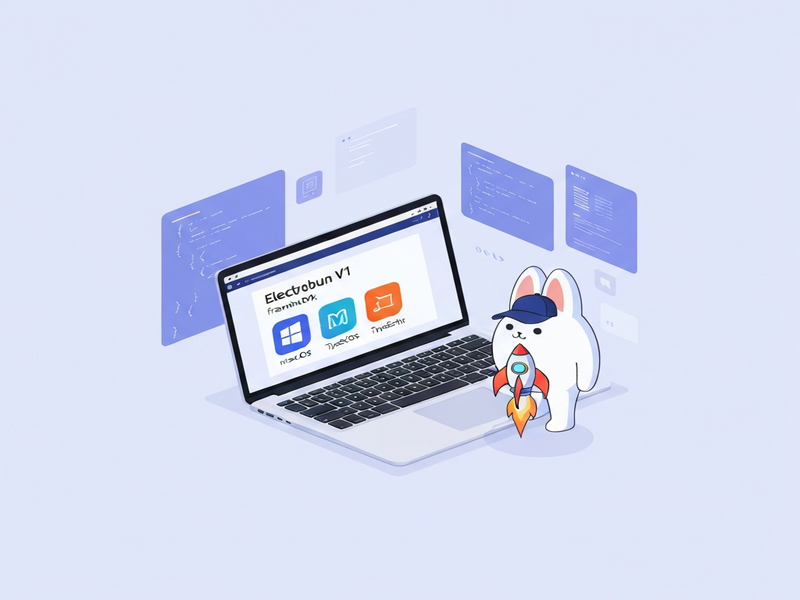
Core Architecture: TypeScript, OOPIF, and Auto‑Updates
Electrobun’s architecture is deliberately minimalistic yet powerful. At its heart lies a TypeScript‑first API that compiles to native binaries via Bun’s fast JavaScript engine. The framework leverages the following key components:
- TypeScript SDK: Provides type‑safe bindings for window management, menus, shortcuts, clipboard, dialogs, and more.
- OOPIF (Out‑of‑Process IFrames): A custom implementation that isolates web content in separate processes, eliminating the security and stability issues of traditional
<webview>tags. - Auto‑Updates Engine: Powered by
zig‑bsdiff(ported to Zig and optimized with SIMD + ZSTD), delivering differential patches that shrink update payloads to a few kilobytes. - Cross‑Process Shared Memory: Bun’s shared‑memory workers keep inter‑process communication fast without sacrificing the tiny memory footprint.
The framework’s build pipeline automatically generates installers for macOS (.dmg), Windows (.exe), and Ubuntu (.deb), while also producing the necessary signing artifacts. Developers can host these artifacts on any static file service—Amazon S3, Cloudflare R2, or GitHub Releases—making the deployment workflow as simple as a single git push.
Key Features That Set Electrobun Apart
Multi‑OS Support
From day one, Electrobun targets the three major desktop ecosystems. The same TypeScript codebase produces native‑looking windows on macOS, Windows, and Ubuntu without any platform‑specific hacks. This “write once, run everywhere” promise is reinforced by the framework’s built‑in UBOS platform overview, which offers a unified runtime environment for all supported OSes.
Performance & Size
Electrobun binaries typically sit under 10 MB, a stark contrast to Electron’s 150 MB+ footprints. The combination of Bun’s JIT‑compiled JavaScript, Zig‑based diffing, and lean native wrappers ensures that startup times are measured in milliseconds, and CPU usage stays under 5 % for idle apps.
Developer Experience (DX)
The framework ships with a Workflow automation studio that automates code signing, notarization, and release publishing. Integrated with the UBOS templates for quick start, developers can scaffold a new app in under a minute:
bun create electrobun my‑app
cd my‑app
bun dev   # hot‑reload during development
bun build # produces installers for all platforms
The OOPIF layer eliminates the flickering and security concerns that plagued older Chromium‑based solutions, delivering a stable “super‑iframe” that can host any web content while keeping the host process isolated.
Auto‑Updates & Differential Patching
Updates are generated automatically after each successful build. The zig‑bsdiff engine creates binary diffs that are up to 95 % smaller than full installers, dramatically reducing bandwidth costs for both developers and end‑users. The update flow integrates seamlessly with any static host, and the framework’s runtime checks for new patches on launch, applying them silently in the background.
The Two‑Year Development Journey
Building Electrobun was a marathon of learning and iteration. The core challenges included:
- Language Interoperability: Bridging TypeScript with low‑level Zig and C required a custom FFI layer. Over time, Bun’s stabilizing FFI reduced this complexity, allowing the team to replace most Zig glue code with direct Bun calls.
- Process Isolation: Implementing a reliable OOPIF demanded deep modifications to Chromium’s rendering pipeline. The solution involved creating a “super‑iframe” that maintains DOM positioning while running in a separate OS process, eliminating cursor flicker and memory leaks.
- Cross‑Platform Packaging: Each OS has unique signing requirements (Apple notarization, Windows Authenticode, Ubuntu GPG). The UBOS pricing plans team contributed a unified signing service that abstracts these differences behind a single CLI command.
- Community Feedback Loop: Early beta testers from the UBOS partner program reported edge‑case bugs (e.g., high‑DPI scaling on Windows, sandbox restrictions on macOS). Their input shaped the final release, making the framework robust for production workloads.
The result is a polished, battle‑tested framework that already powers several internal UBOS products, including the newly rewritten UBOS for startups desktop client and the UBOS solutions for SMBs.
Roadmap: What’s Next for Electrobun?
The v1 release marks the foundation; the roadmap focuses on expanding capabilities and deepening community engagement:
- Plugin Ecosystem: A marketplace for community‑built plugins (e.g., native file‑system watchers, custom protocol handlers) will launch in Q3 2026.
- AI‑Powered Tooling: Integration with OpenAI ChatGPT integration and ChatGPT and Telegram integration will enable AI‑assisted code generation and in‑app assistance.
- Extended Platform Support: Early prototypes for ARM‑based Linux and Apple Silicon are already in the pipeline, ensuring future‑proof performance on emerging hardware.
- Enhanced Documentation & Templates: New starter kits such as the AI SEO Analyzer and AI Article Copywriter will showcase best practices for building real‑world apps.
Community contributions are encouraged through GitHub issues, pull requests, and the UBOS partner program. The team plans quarterly “hack‑sprints” where contributors can co‑design new features, ensuring the framework evolves with the needs of modern developers.
Conclusion: Join the Lightweight Desktop Revolution
Electrobun v1 delivers on the promise of a lightweight, fast, and truly cross‑platform desktop development experience. By marrying TypeScript’s developer friendliness with a lean native runtime, it eliminates the bloat of legacy solutions while providing enterprise‑grade features like auto‑updates and secure OOPIF isolation.
Whether you’re building a startup MVP, an internal tool for SMBs, or an enterprise‑scale application, Electrobun gives you the freedom to ship quickly and iterate continuously. Explore the framework, try the starter templates, and become part of a growing ecosystem that’s redefining desktop software.
Image credit: Blackboard Blog – Electrobun v1 announcement.
Andrii Bidochko
CTO UBOS
Andrii Bidochko is an AI entrepreneur and researcher focused on AI agents, reinforcement learning, and autonomous systems. He writes about the technologies shaping the future of machine intelligence, from frontier models and agent architectures to real-world AI applications.