

- Updated: January 7, 2026
- 5 min read
Dell Shifts Focus from AI‑First PCs to Performance‑Driven Consumer Laptops
Dell has admitted that consumers aren’t currently buying AI‑first PCs, so the company is pivoting its 2026 product strategy away from hype‑driven AI features toward real‑world performance and value.
Dell Concedes: AI‑First PCs Aren’t Driving Consumer Purchases – A New Direction Unveiled at CES 2026
At CES 2026, Dell surprised the tech community by openly stating that “AI probably confuses consumers more than it helps them.” The candid admission, first reported by The Verge, signals a strategic recalibration for the PC giant as it wrestles with a market that still prioritizes battery life, price, and reliability over flashy AI capabilities.
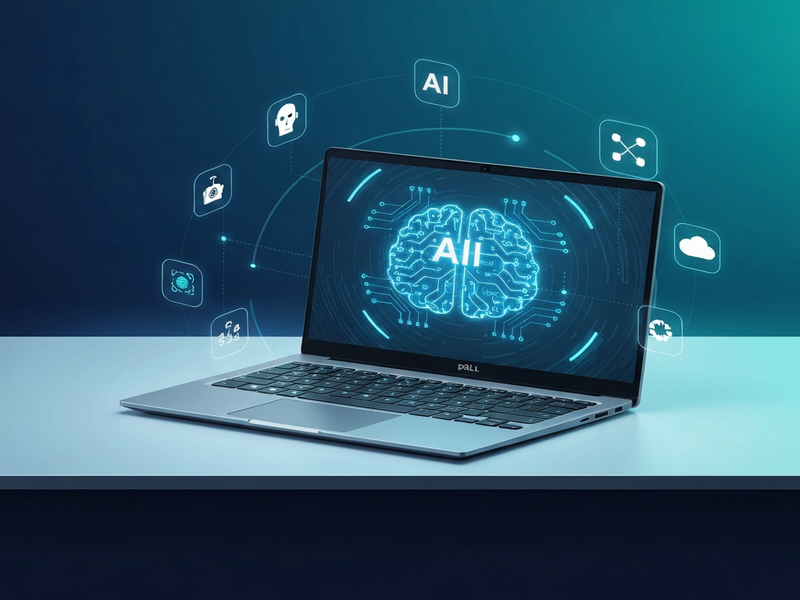
Why Dell Is Re‑Thinking Its AI‑First Narrative
During a candid interview with PC Gamer, Kevin Terwilliger, Dell’s head of product, explained that every device announced for 2026 now ships with a dedicated Neural Processing Unit (NPU), but the marketing message has shifted:
- AI is treated as a performance accelerator, not a headline feature.
- Product roadmaps now emphasize tangible benefits—faster photo editing, smoother video calls, and longer battery life.
- Pricing tiers are being realigned to avoid “AI premium” mark‑ups that customers reject.
This pivot aligns Dell with broader industry data showing that while AI awareness is high, purchase intent remains low unless the technology translates into clear, everyday advantages.
Consumer Sentiment: The Gap Between Hype and Need
Recent surveys from IDC and Gartner reveal a consistent pattern:
- Only 12% of consumers say AI features are a primary factor when choosing a laptop.
- 78% prioritize battery life and overall performance over AI capabilities.
- Price sensitivity remains the strongest driver, especially among Gen Z and remote‑work professionals.
These numbers explain why Dell’s “AI‑first” messaging, which worked well for early adopters, now risks alienating the mainstream market that simply wants a reliable, fast, and affordable device.
“We’re very focused on delivering upon the AI capabilities of a device—in fact everything that we’re announcing has an NPU in it—but what we’ve learned over the course of this year, especially from a consumer perspective, is they’re not buying based on AI,” said Kevin Terwilliger, Dell’s head of product.
What This Means for AI Adoption in Consumer Hardware
Dell’s shift has several ripple effects for the broader ecosystem:
1. AI Becomes a Backend Engine
Manufacturers will embed NPUs to accelerate tasks like image upscaling, voice transcription, and real‑time translation, but they’ll market these as “speed boosts” rather than “AI features.”
2. Software Platforms Gain Leverage
Platforms that can abstract AI power into plug‑and‑play modules—such as OpenAI ChatGPT integration or Chroma DB integration—will become essential for developers seeking to add value without re‑inventing the wheel.
3. New Business Models for AI‑Enhanced Services
Companies like AI marketing agents can offer subscription‑based AI services that run on any NPU‑enabled device, decoupling revenue from hardware sales.
4. Competitive Landscape Realigns
Competitors will likely follow Dell’s lead, focusing on tangible performance gains. Expect to see more “AI‑powered” but “price‑neutral” laptops from HP, Lenovo, and ASUS.
How UBOS Helps Developers Ride This Wave
If you’re a developer or a startup looking to harness the newly‑available NPU horsepower, UBOS offers a suite of tools that make AI integration painless:
- Explore the UBOS platform overview for a low‑code environment that auto‑detects NPU resources.
- Kick‑start projects with the UBOS templates for quick start, including the AI SEO Analyzer and AI Article Copywriter.
- Leverage the Workflow automation studio to chain AI‑driven steps—like image‑to‑text conversion using Image to Text AI service—into a seamless user experience.
- Deploy conversational agents with the ChatGPT and Telegram integration or the GPT‑Powered Telegram Bot (example placeholder).
Whether you’re a budding startup (UBOS for startups) or an established SMB (UBOS solutions for SMBs), the platform’s modular architecture lets you embed AI where it matters most—without inflating hardware costs.
Next Steps for Tech‑Savvy Consumers and Professionals
If you’re evaluating a new laptop, ask yourself:
- Does the device’s NPU accelerate the specific tasks I need (e.g., video editing, AI‑assisted writing, real‑time translation)?
- Is the price justified by measurable performance gains, not just AI branding?
- Can I extend the hardware’s lifespan with third‑party AI services like those offered on the UBOS portfolio examples?
Ready to explore AI‑enhanced applications without overpaying for hype? Visit the UBOS homepage to discover how you can build, test, and launch AI‑powered solutions on any NPU‑enabled PC.
Stay informed about the evolving AI hardware landscape by following our tech news hub. For partnership opportunities, check out the UBOS partner program and start co‑creating the next generation of intelligent consumer experiences.