

- Updated: February 5, 2026
- 6 min read
Debian Developer Exodus Highlights Need for Automated Outreach – UBOS Insights
Debian is currently grappling with a silent attrition problem among its volunteer developers, and the project is testing an automated outreach system to keep packages maintained and security responsibilities clear.
Why the Debian Community Is Talking About Developer Attrition
The latest discussion surfaced in a Phoronix article that highlighted how many long‑time contributors quietly step back from their responsibilities without notifying the rest of the project. This trend threatens the stability of critical packages, security oversight, and the overall health of the Debian ecosystem.
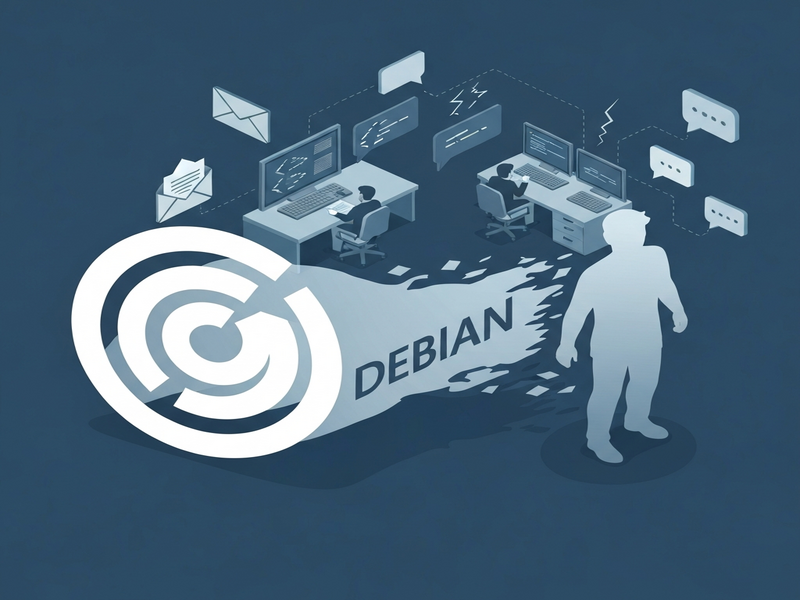
Image: Visual metaphor for collaborative open‑source work.
The Core Issue: Silent Developer Drift
Debian’s volunteer model relies on goodwill and personal time. Over the past year, project leader Andreas Tille observed a pattern where developers stop contributing but never announce their reduced availability. The consequences are concrete:
- Unattended bugs linger, increasing technical debt.
- Security‑sensitive packages lose active maintainers, exposing users to risk.
- Delegated roles remain on paper, creating administrative confusion.
This “quiet exit” is not a sign of waning commitment; it’s a symptom of the lack of lightweight, low‑pressure communication channels within a fully volunteer‑driven project.
Why Communication Gaps Matter More Than You Think
In a community where contributors often know each other personally, asking “Are you still active?” can feel intrusive. As Tille noted, many volunteers avoid the question out of respect, which unintentionally creates a blind spot for the project’s governance.
The result is a cascade of hidden gaps:
- Package abandonment: Packages become stale, missing updates or patches.
- Security oversight loss: Critical CVEs may go unaddressed.
- Team coordination breakdown: New contributors cannot step in because they are unaware of the vacancy.
Addressing these gaps requires a systematic, non‑intrusive way to surface availability changes.
Automated Outreach: A Pragmatic Solution
Following last year’s DebConf, the Debian “Missing In Action” (MIA) team drafted a process that leverages automation to nudge inactive contributors gently.
Key elements of the proposal include:
- Detect inactivity after ~6 months of no commits or mailing list activity.
- Send an automated, friendly email asking for a status update.
- If no response, follow up monthly with a low‑pressure reminder.
- Provide a simple “I’m still active / I’m stepping back” button to update the system.
This approach respects volunteers’ time while giving the project a clear signal when a hand‑off is needed.
Potential Impact on the Debian Ecosystem
If the automated outreach system succeeds, Debian can expect:
- Faster bug resolution: Active maintainers are identified sooner.
- Improved security posture: Vulnerable packages receive timely attention.
- Better onboarding: New contributors can see open slots and step in confidently.
- Higher morale: Volunteers feel supported rather than forgotten.
Conversely, without such a system, the risk of “orphaned” packages grows, potentially eroding Debian’s reputation for stability and security.
How UBOS Can Help Open‑Source Projects Stay Resilient
At UBOS homepage, we specialize in building AI‑driven automation platforms that can be adapted to community‑run projects like Debian. Our UBOS platform overview showcases a modular architecture that makes it easy to plug in custom notification workflows, similar to the proposed Debian MIA system.
Key UBOS capabilities that align with Debian’s needs include:
- Workflow automation studio – design, test, and deploy automated email reminders without writing code.
- Enterprise AI platform by UBOS – adds intelligent routing, so reminders reach the right person at the right time.
- AI marketing agents – while built for marketing, the same conversational agents can handle “status‑check” dialogs with volunteers.
- UBOS pricing plans offer flexible tiers, making it affordable for non‑profit projects.
By leveraging UBOS, Debian could prototype the outreach workflow in weeks rather than months, ensuring a smooth transition from concept to production.
Ready‑Made UBOS Templates to Accelerate Your Automation
Our UBOS templates for quick start include several pre‑built solutions that map directly to Debian’s challenges:
- AI SEO Analyzer – keep documentation searchable and up‑to‑date.
- AI Article Copywriter – generate clear contributor guides.
- AI YouTube Comment Analysis tool – monitor community sentiment on video tutorials.
- Talk with Claude AI app – prototype a conversational bot that volunteers can query for status updates.
- Your Speaking Avatar template – add a friendly voice reminder using ElevenLabs AI voice integration.
- Before-After-Bridge copywriting template – craft concise outreach emails.
- AI Video Generator – produce short onboarding videos for new maintainers.
- AI Image Generator – create visual assets for documentation.
- AI Email Marketing – fine‑tune reminder cadence and subject lines.
These templates are fully customizable, allowing Debian’s community managers to tailor messages, frequency, and escalation paths without deep engineering effort.
Integrating ChatGPT, Telegram, and Other AI Services
Modern communication platforms can serve as the delivery channel for automated outreach. UBOS offers seamless Telegram integration on UBOS, enabling bots to ping volunteers directly in their preferred chat app.
Couple that with ChatGPT and Telegram integration to let volunteers answer a quick “Are you still active?” questionnaire using natural language.
For deeper AI reasoning, the OpenAI ChatGPT integration can analyze response sentiment and flag ambiguous replies for human follow‑up.
All of these can be stored in a Chroma DB integration, providing a vector‑searchable knowledge base of contributor status over time.
Take Action: Strengthen Your Open‑Source Community Today
If you’re part of a volunteer‑driven project, consider the following steps:
- Audit your current maintainer list for silent gaps.
- Deploy a lightweight outreach workflow using Web app editor on UBOS or any low‑code tool.
- Choose a communication channel (Telegram, email, or Slack) and integrate with ChatGPT and Telegram integration for conversational check‑ins.
- Leverage our UBOS partner program for support and co‑development.
By acting now, you can prevent the “quiet drift” that threatens critical open‑source projects.
Conclusion
Debian’s developer attrition issue is a wake‑up call for all volunteer‑run ecosystems. The proposed automated outreach, combined with modern AI‑powered communication tools, offers a scalable path to keep projects healthy, secure, and vibrant. UBOS provides the infrastructure, templates, and integrations to turn this vision into reality—empowering communities to stay connected, informed, and productive.
Stay tuned for further updates on Debian’s progress and explore how UBOS can accelerate your own open‑source initiatives.