

- Updated: February 13, 2026
- 5 min read
Data Engineering Book: Your Complete Guide to Modern Data Pipelines
The Data Engineering Book repository is an open‑source, end‑to‑end guide that teaches data engineers how to build, scale, and maintain modern data pipelines for large‑language‑model (LLM) applications, complete with code, architecture diagrams, and five hands‑on projects.
Why This Data Engineering Book Matters Now
In the era of generative AI, data engineering has become the bottleneck that separates experimental prototypes from production‑grade AI services. The Data Engineering Book GitHub repository fills a critical gap by delivering a systematic, practical curriculum that covers everything from raw data ingestion to multimodal Retrieval‑Augmented Generation (RAG) pipelines. It targets data engineers, cloud architects, and technology decision‑makers who need a reliable reference to accelerate their AI initiatives.
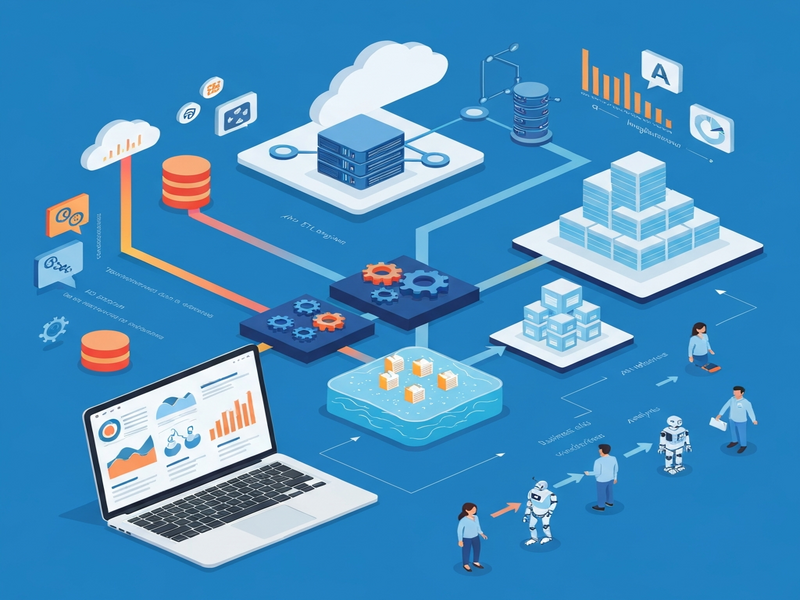
Key Features & Chapter Breakdown
The book is organized into six logical parts, each addressing a distinct phase of the data lifecycle. Below is a MECE‑styled snapshot of the structure:
Part 1 – Foundations & Infrastructure
- Chapter 1: Data Transformation in the LLM Era
- Chapter 2: Selecting the Right Data Infrastructure
Part 2 – Text Pre‑training Pipelines
- Chapter 3: Large‑Scale Data Acquisition
- Chapter 4: Cleaning & De‑noising
- Chapter 5: Tokenization & Serialization
Part 3 – Multimodal Data Engineering
- Chapter 6: Image‑Text Pair Processing
- Chapter 7: Data Re‑description Techniques
- Chapter 8: Video & Audio Data Workflows
Part 4 – Alignment & Synthetic Data
- Chapter 9: Instruction‑tuning Datasets
- Chapter 10: Synthetic Data Generation
- Chapter 11: Human Preference (RLHF) Data
Part 5 – Application‑Level Pipelines
- Chapter 12: Enterprise‑grade RAG Pipelines
- Chapter 13: Multimodal RAG Strategies
Part 6 – Real‑World Projects
- Mini‑C4 Pre‑training Set Builder
- Legal‑Domain SFT Expert System
- LLaVA Multimodal Instruction Set
- Synthetic Math/Code Textbook Generator
- Multimodal RAG Financial Report Assistant
Each chapter blends theory with actionable code snippets, and the project section provides end‑to‑end, runnable examples that can be deployed on any cloud data platform.
What Readers Gain From This Resource
- Holistic Understanding: Grasp the full data lifecycle—from raw crawl data to production RAG services—without hopping between disparate blogs.
- Data‑Centric AI Mindset: Adopt best‑practice metrics for data quality, scaling laws, and versioning, aligning with modern UBOS platform overview.
- Tool‑agnostic Skillset: Learn to work with Ray Data, Spark, Parquet, DVC, and vector stores such as Chroma DB integration, making you adaptable to any stack.
- Accelerated Delivery: Leverage pre‑built UBOS templates for quick start to spin up pipelines in minutes.
- Career Edge: Demonstrable project artifacts (e.g., Mini‑C4 dataset) that you can showcase to employers or clients.
Technical Stack & Hands‑On Projects
The repository embraces a modern, cloud‑native stack that mirrors the Enterprise AI platform by UBOS. Below is a concise table of the primary technologies used across the chapters:
| Category | Tools / Libraries |
|---|---|
| Distributed Computing | Ray Data, Apache Spark |
| Storage Formats | Parquet, WebDataset, Vector DBs |
| Text Processing | Trafilatura, KenLM, MinHash LSH |
| Multimodal Models | CLIP, ColPali, img2dataset |
| Versioning & Lineage | DVC, LakeFS |
Each of the five projects demonstrates a distinct use‑case:
- Mini‑C4 Builder: Scrapes Common Crawl, de‑duplicates with MinHash, and stores clean text in Parquet.
- Legal‑Domain SFT: Generates instruction‑tuned data for a law‑focused LLM using Self‑Instruct and Chain‑of‑Thought prompting.
- LLaVA Multimodal Set: Aligns image‑text pairs with bounding‑box annotations for vision‑language instruction tuning.
- Synthetic Math/Code Textbook: Produces high‑quality problem‑solution pairs via Evol‑Instruct and sandbox verification.
- Financial Report RAG Assistant: Combines ElevenLabs AI voice integration with multimodal retrieval to answer earnings‑call queries.
All projects are runnable locally or on any cloud data platform, making the transition from learning to production seamless.
Getting Started: Quick Installation Guide
Follow these three steps to explore the book on your machine:
# 1️⃣ Clone the repository
git clone https://github.com/datascale-ai/data_engineering_book.git
cd data_engineering_book

# 2️⃣ Install Python dependencies
pip install mkdocs-material mkdocs-glightbox pymdown-extensions "mkdocs-static-i18n[material]"

# 3️⃣ Serve the site locally
mkdocs serve
# Open http://127.0.0.1:8000 in your browser
For a production build, run mkdocs build and deploy the generated site/ folder to any static‑hosting service (e.g., Web app editor on UBOS or your preferred CDN).
Take the Next Step – Dive In Today
Ready to transform your data pipelines? Grab the repository, explore the chapters, and start building the projects that will power the next generation of LLM‑driven products.
While you’re on UBOS, you might also find these resources valuable for extending your AI workflows:
- AI marketing agents – automate campaign creation with generative AI.
- UBOS partner program – collaborate on joint AI solutions.
- Workflow automation studio – orchestrate data pipelines without code.
- AI SEO Analyzer – boost the discoverability of your AI‑powered products.
- AI Article Copywriter – generate documentation for your data pipelines.
- AI Video Generator – create tutorial videos for your projects.
- AI Chatbot template – embed a help‑desk bot into your data platform.
Conclusion
The Data Engineering Book is more than a static reference; it is a living, executable curriculum that equips data professionals with the skills to design, build, and scale LLM‑ready pipelines. By leveraging the modern stack outlined above and the hands‑on projects, you can accelerate time‑to‑value, reduce data‑related risk, and stay ahead in the competitive AI landscape. Pair this knowledge with UBOS’s UBOS platform and its extensive ecosystem of integrations—such as OpenAI ChatGPT integration and ChatGPT and Telegram integration—to turn theory into production‑grade solutions faster than ever before.
Start exploring today, contribute back to the community, and watch your data pipelines evolve from experimental code to enterprise‑grade assets.