

- Updated: February 5, 2026
- 6 min read
Changan Automobile Partners with CATL to Deploy Sodium‑Ion Battery Cars in 2026
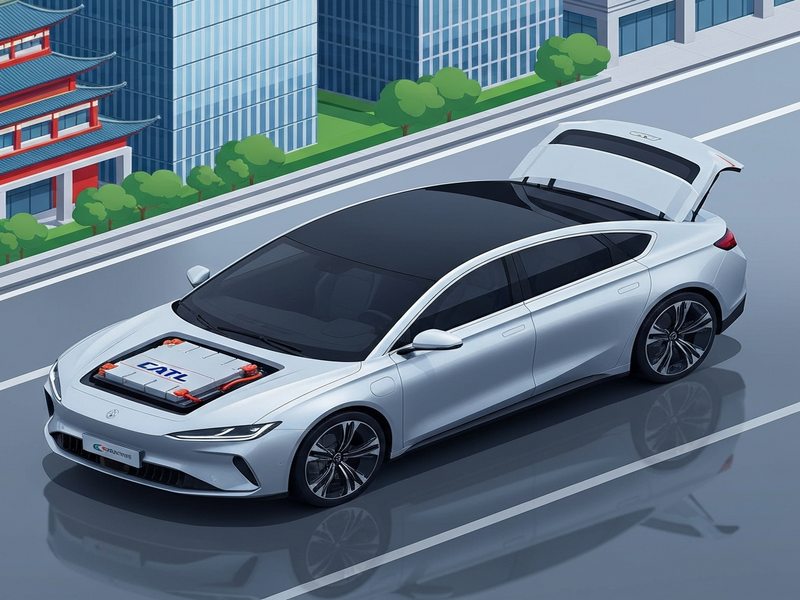
Changan Automobile and CATL will launch a series of sodium‑ion battery electric vehicles in 2026, marking the first large‑scale deployment of this technology in China’s passenger‑car market.
Partnership Overview: Changan Meets CATL
In a strategic move announced in early February 2026, Changan Automobile confirmed a multi‑year collaboration with battery‑technology leader CATL. The alliance targets the development, production, and market introduction of passenger vehicles powered by sodium‑ion batteries. Both companies aim to leverage the lower raw‑material cost and improved safety profile of sodium‑ion chemistry to accelerate affordable, long‑range electric mobility across China.
The partnership aligns with China’s national push for sustainable mobility and complements Changan’s existing electric‑vehicle (EV) portfolio, which already includes lithium‑ion models. By 2026, the joint venture plans to roll out at least three distinct vehicle platforms, each equipped with CATL’s next‑generation sodium‑ion cells.
What Is Sodium‑Ion Battery Technology?
Sodium‑ion batteries (SIBs) operate on the same fundamental principle as lithium‑ion batteries—intercalating ions between a cathode and an anode—but replace lithium with abundant sodium. This substitution brings several notable advantages:
- Cost Efficiency: Sodium is roughly 30‑40% cheaper than lithium, reducing overall cell cost.
- Thermal Stability: SIBs exhibit a lower risk of thermal runaway, enhancing vehicle safety.
- Resource Availability: Sodium reserves are globally abundant, mitigating supply‑chain constraints.
CATL reports an energy density of 175 Wh/kg for its latest SIB cells, delivering a real‑world driving range of over 400 km on a single charge, with potential upgrades to 600 km as the chemistry matures. While still modest compared with the highest‑performing lithium‑ion packs, the range is sufficient for most urban and suburban commutes.
Production Timeline & 2026 Rollout Plan
Both partners have outlined a clear, MECE‑structured timeline that separates development, validation, and mass production phases:
| Phase | Key Milestones | Target Completion |
|---|---|---|
| R&D & Prototype Validation | Cell chemistry optimization, vehicle integration testing, safety certification. | Q4 2024 |
| Pilot Production | Limited‑run manufacturing at CATL’s Jiangsu facility, first‑batch vehicle assembly at Changan’s Wuhan plant. | Q2 2025 |
| Mass Production Launch | Full‑scale battery cell output, integration into three Changan models (compact sedan, crossover, and MPV). | Q1 2026 |
| Market Deployment | Vehicle deliveries to dealerships in 140+ Chinese cities, rollout of 3,000 battery‑swap stations. | Q3 2026 |
The rollout plan also includes a nationwide network of 3,000 battery‑swap stations, enabling rapid “swap‑and‑go” services for drivers who prefer minimal downtime. This infrastructure will be co‑managed by CATL and local partners, reinforcing the dual‑technology ecosystem of sodium‑ and lithium‑ion batteries.
Market Impact & Competitive Landscape
China’s EV market, already the world’s largest, is projected to surpass 10 million units annually by 2027. The introduction of sodium‑ion technology could reshape pricing dynamics and broaden consumer adoption in several ways:
- Price Compression: Lower battery costs translate into more affordable EVs, narrowing the price gap with internal‑combustion vehicles.
- Supply‑Chain Resilience: Diversifying away from lithium reduces exposure to geopolitical risks and raw‑material price spikes.
- Urban Fleet Adoption: The safety profile of SIBs makes them attractive for ride‑hailing and municipal fleets that prioritize durability.
Competitors such as BYD, Nio, and Tesla are closely monitoring the development. While BYD continues to dominate with its Blade lithium‑iron‑phosphate (LFP) cells, the cost advantage of sodium‑ion could force a strategic pivot. Tesla’s announced “4680” cells focus on energy density, but the company has not publicly disclosed any sodium‑ion roadmap, leaving a potential market gap that Changan and CATL aim to fill.
Executive Perspectives
“Sodium‑ion batteries represent a breakthrough for mass‑market EVs. By partnering with CATL, we can deliver safe, affordable electric mobility to millions of Chinese families by 2026,” said Mr. Zhou Jianping, President of Changan Automobile.
“Our next‑generation SIB technology is ready for large‑scale automotive integration. Working with Changan allows us to accelerate the commercialization of a battery that is both cost‑effective and environmentally friendly,” remarked Dr. Wang Wei, CEO of CATL.
Future Outlook: EVs, AI, and the Chinese Mobility Ecosystem
Beyond the battery chemistry, the partnership is expected to embed advanced AI capabilities into the vehicle experience. Changan plans to integrate OpenAI ChatGPT integration for in‑car voice assistants, while leveraging Chroma DB integration to manage contextual data for navigation and driver‑behavior analytics.
These AI layers will be orchestrated through the Workflow automation studio, enabling real‑time updates to battery‑swap station availability, predictive range calculations, and personalized energy‑saving recommendations.
Moreover, the Enterprise AI platform by UBOS offers a scalable backend for processing the massive telemetry data generated by the fleet, ensuring that manufacturers can continuously refine algorithms for efficiency and safety.
Conclusion: A New Chapter for Sustainable Mobility
The Changan‑CATL sodium‑ion alliance signals a pivotal shift toward cost‑effective, safe, and widely accessible electric vehicles in China. By 2026, consumers can expect a new generation of EVs that combine a 400‑km+ range with a price point that challenges traditional gasoline cars.
For businesses looking to capitalize on this emerging market, the UBOS homepage offers a suite of AI‑driven tools that can accelerate product development, from the Web app editor on UBOS to the UBOS templates for quick start. Companies can also explore the UBOS partner program to co‑create solutions that integrate battery‑swap logistics, AI‑powered driver assistance, and real‑time analytics.
Startups aiming to innovate in the EV space may find the UBOS for startups resources especially valuable, while SMBs can leverage UBOS solutions for SMBs to streamline operations and reduce time‑to‑market.
To see how AI can further enhance EV marketing, check out the AI marketing agents that automate campaign creation, or explore the UBOS portfolio examples for real‑world case studies.
For developers interested in building AI‑enhanced services around the new sodium‑ion fleet, the AI SEO Analyzer template can help optimize online visibility, while the AI Article Copywriter assists in generating high‑quality content at scale. Visual storytelling can be powered by the AI Image Generator and AI Video Generator, creating compelling demos of the new vehicles.
Finally, for a deeper dive into how AI can streamline your workflow, the AI Survey Generator helps gather market feedback, while the AI LinkedIn Post Optimization ensures your professional updates reach the right audience.
As the sodium‑ion era unfolds, the synergy between cutting‑edge battery chemistry and intelligent software platforms will define the next wave of sustainable mobility. Stay tuned to the Electric Vehicle Technology insights for ongoing analysis, and read the original Technode story for the official announcement.