

- Updated: March 12, 2026
- 6 min read
Indian Neobank FI Winds Down Banking Services – What It Means for Fintech
FI Shutdown: What the Indian Neobank’s Exit Means for Customers and the Fintech Landscape
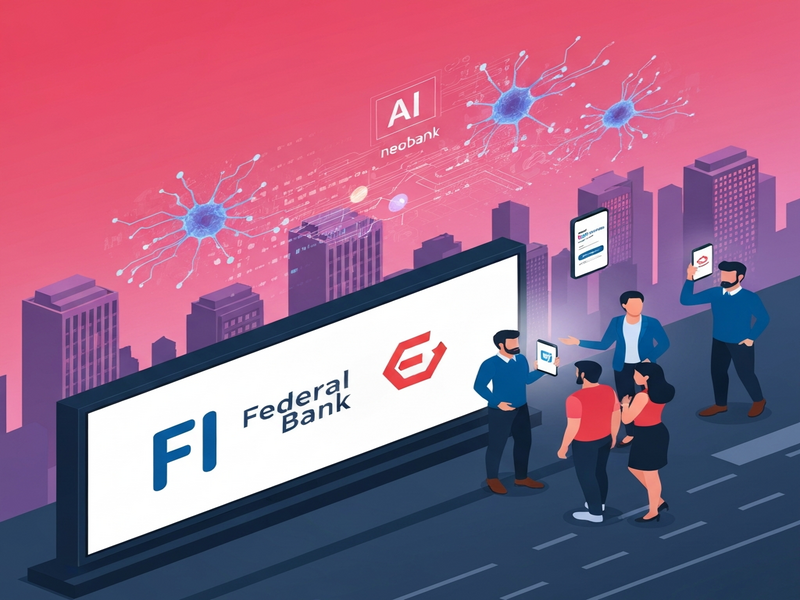
FI, the Bengaluru‑based Indian neobank, is winding down its banking services and directing all existing users to access their savings accounts through Federal Bank’s mobile app.
The announcement, first reported by TechCrunch, marks the end of a four‑year partnership that allowed FI to offer app‑based savings accounts, budgeting tools, and AI‑driven financial insights to more than 3.5 million customers. While the FI brand will disappear from the consumer‑facing app, the underlying accounts remain active under Federal Bank’s “FedMobile” platform. This shift has ripple effects across India’s fast‑growing neobank sector and highlights a broader trend toward deep‑tech and AI‑centric business models.
Background: FI’s Rise in the Indian Neobank Market
Founded in 2019 by former Google Pay India executives Sujith Narayanan and Sumit Gwalani, FI entered the market with a clear mission: democratize digital banking for India’s younger, mobile‑first generation. By partnering with Federal Bank in 2021, FI could issue fully regulated savings accounts without owning a banking licence, leveraging the bank’s infrastructure while focusing on user experience and AI‑powered money‑management features.
Within three years, FI amassed over 3.5 million users and processed more than a billion transactions. Its rapid growth attracted heavyweight investors such as Ribbit Capital, B Capital, Alpha Wave Global, and Sequoia Capital India (now Peak XV Partners). The startup’s product suite included:
- Zero‑fee digital savings accounts with real‑time interest calculations.
- AI‑driven expense categorisation and budgeting dashboards.
- Instant peer‑to‑peer transfers powered by UPI.
- Personalised financial recommendations built on proprietary machine‑learning models.
Winding Down: How the FI‑Federal Bank Partnership Is Ending
In early March 2026, FI sent an email to all active users stating that “banking services on the Fi app will soon be discontinued.” The message reassured customers that their savings accounts with Federal Bank remain fully operational and can be accessed via the bank’s own mobile app, FedMobile. Federal Bank echoed the sentiment, describing the change as a “business re‑alignment” and confirming that account balances, transaction histories, and interest accruals would continue unchanged.
The transition timeline is as follows:
- March 10 2026: FI notifies users of the upcoming service discontinuation.
- March 15 2026: The Fi app removes the “Open Savings Account” button and displays a static banner directing users to FedMobile.
- April 1 2026: All new account openings through Fi are blocked; existing accounts are fully migrated to Federal Bank’s backend.
- April 30 2026: Final de‑activation of the Fi banking interface; the app remains available for non‑banking features (e.g., expense tracking) for a limited period.
Implications for Customers and the Wider Fintech Ecosystem
For the 3.5 million FI users, the immediate impact is a change in the digital channel through which they manage their money. While the underlying accounts stay with Federal Bank, customers must now:
- Download and log into the FedMobile app.
- Re‑authenticate using their Federal Bank credentials.
- Re‑configure any recurring payments or UPI links that were previously tied to the Fi app.
The transition is technically seamless—funds remain safe, and interest continues to accrue—but the user experience will feel less “neobanking‑centric.” Many customers chose FI for its sleek UI and AI‑driven insights; those features will no longer be available unless Federal Bank decides to integrate similar capabilities.
On a macro level, FI’s exit underscores several emerging trends in Indian fintech:
- Consolidation of banking licences: Startups increasingly rely on legacy banks for regulatory compliance, but the partnership model may be reaching its limits as banks demand tighter control.
- Shift toward deep‑tech AI platforms: FI’s co‑founder Sujith Narayanan hinted at a strategic pivot toward “deep technology, AI, and building complex systems for startups & large enterprises.” This mirrors a broader industry move from pure consumer‑facing products to B2B AI infrastructure.
- Competitive pressure from new entrants: Players like Jupiter, Open, and Slice continue to innovate on the neobanking stack, forcing incumbents to double‑down on differentiation—often through AI‑enhanced services.
Expert Insight: Why AI Is the Next Frontier for Indian Fintech
“The real value in fintech today isn’t just about offering a digital account; it’s about turning that data into actionable intelligence. Companies that can embed AI‑driven recommendation engines, fraud detection, and automated compliance will dominate the next wave,” says Dr. Ananya Rao, Head of AI Strategy at the Enterprise AI platform by UBOS.
Dr. Rao’s observation aligns with FI’s announced pivot. By moving away from a consumer‑only model and focusing on AI infrastructure, FI hopes to leverage its existing data assets to serve other startups and large enterprises—potentially through UBOS’s Workflow automation studio or the Web app editor on UBOS.
How UBOS Enables Fintechs to Future‑Proof Their Business
Fintechs facing regulatory, partnership, or strategic shifts can accelerate their transformation with UBOS’s low‑code AI ecosystem. Key capabilities include:
- AI marketing agents that personalize outreach based on real‑time transaction data.
- UBOS templates for quick start, such as the AI SEO Analyzer and AI Article Copywriter, to boost content visibility.
- Integrations like OpenAI ChatGPT integration and ChatGPT and Telegram integration for conversational banking assistants.
- Voice‑enabled experiences via the ElevenLabs AI voice integration, turning text‑based alerts into natural‑language prompts.
By leveraging these tools, fintechs can shift from a pure product‑centric approach to a platform‑centric, AI‑driven model—mirroring the strategic direction FI is now pursuing.
What Should Investors and Fintech Leaders Do Next?
1. Re‑evaluate partnership structures. Ensure that any reliance on legacy banks includes clear exit clauses and data‑migration pathways.
2. Invest in AI infrastructure. Platforms like UBOS provide modular, low‑code AI components that can be deployed without rebuilding the entire stack.
3. Monitor regulatory signals. The Reserve Bank of India (RBI) is tightening guidelines around digital‑only banking; staying compliant early reduces disruption risk.
4. Engage with the UBOS partner program. The UBOS partner program offers co‑marketing, technical support, and revenue‑share models for fintechs ready to scale.
For a deeper dive into how AI can future‑proof your fintech, explore the UBOS portfolio examples and consider a free trial of the UBOS pricing plans that match your growth stage.
Conclusion
The FI shutdown is a pivotal moment for India’s neobank ecosystem. While customers will continue to enjoy their Federal Bank savings, the broader lesson is clear: fintechs must build resilient, AI‑centric platforms that can survive partnership changes and regulatory shifts. UBOS’s suite of low‑code AI tools, from the AI marketing agents to the Workflow automation studio, offers a pragmatic path forward for startups and SMBs alike.
Stay informed with the latest AI in fintech insights and subscribe to our newsletter for real‑time updates on neobank trends 2026.
Read more about the About UBOS and explore the UBOS platform overview for a complete AI‑first solution.
Andrii Bidochko
CTO UBOS
Andrii Bidochko is an AI entrepreneur and researcher focused on AI agents, reinforcement learning, and autonomous systems. He writes about the technologies shaping the future of machine intelligence, from frontier models and agent architectures to real-world AI applications.