

- Updated: January 7, 2026
- 8 min read
CES 2026 Weird Tech: Innovative Gadgets That Stunned the World
The weirdest tech announcements at CES 2026 range from a taint‑zapping stick‑on patch and a lamp‑hair dryer to roll‑up headphones, a holographic avatar pod, and a solar‑powered gazebo, showcasing how far consumer electronics have ventured into the bizarre.
CES 2026’s Most Unconventional Gadgets Unveiled
The CES 2026 highlights promised sleek OLED panels and AI‑driven smart homes, but the real buzz came from the out‑of‑the‑box inventions that made attendees stop, stare, and sometimes cringe. From a perineum‑targeting “taint‑zapping” patch to a hair‑dryer‑lamp hybrid, the show proved that innovation isn’t just about performance—it’s also about daring to be weird.
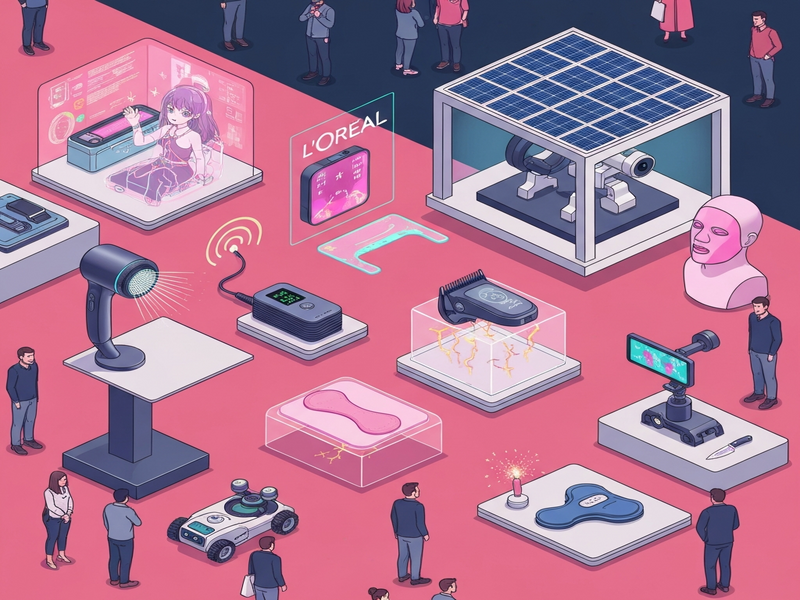
Image: A visual mash‑up of the most eye‑catching CES 2026 gadgets.
Why Weirdness Became the Main Theme at CES 2026
This year’s UBOS tech trends indicate a shift toward hyper‑personalization and experiential products. Manufacturers are no longer satisfied with incremental upgrades; they aim to create conversation‑starter devices that blend utility with novelty. The underlying driver? A saturated market where differentiation now means daring to cross the line between functional tech and playful art.
For startups, this environment offers a fertile testing ground. As UBOS for startups notes, rapid prototyping platforms enable creators to iterate on wild ideas without massive upfront capital, turning “what‑if” concepts into showroom‑ready prototypes within weeks.
1. Lamp‑Hair Dryer: The Crescent‑Shaped Comfort Zone
Dreame’s lamp‑hair dryer reimagines the traditional blow‑dryer as a sleek, crescent‑shaped lamp that hangs over a couch or desk. While you binge‑watch your favorite series, the device simultaneously dries your hair and provides ambient lighting—an all‑in‑one solution for multitaskers.
The product’s price tag of $700 raised eyebrows, but its design philosophy aligns with the Enterprise AI platform by UBOS, which encourages enterprises to embed AI‑driven ergonomics into everyday objects.
- LED lighting with adjustable color temperature.
- Smart heat sensors that prevent hair damage.
- Wi‑Fi connectivity for remote control via a mobile app.
Developers can prototype similar IoT‑enabled appliances using the Web app editor on UBOS, dramatically cutting time‑to‑market.
2. Taint‑Zapping Stick‑On: A Bold Take on Personal Wellness
Dubbed “Mor,” the taint‑zapping stick‑on is a discreet adhesive patch that delivers low‑level electrical stimulation to the perineum, aiming to help men manage premature ejaculation. Priced at $300, it sparked both curiosity and controversy.
Naming such a product can be tricky; the Product Name Generator AI was reportedly used by the startup to brainstorm a name that balances medical seriousness with marketability.
From an SEO perspective, the device benefits from niche keyword targeting. Tools like the AI SEO Analyzer help ensure that product pages rank for long‑tail queries such as “taint‑zapping wellness patch.”
3. AI‑Powered Hair Clippers: Mistake‑Proof Cuts at Home
Glyde’s AI hair clippers combine a fade‑band sensor with machine‑learning algorithms to automatically adjust blade angles, promising salon‑grade results without the risk of a DIY disaster.
The clippers integrate with AI marketing agents to suggest personalized styling tips based on user hair type and past cuts, turning a simple grooming tool into a smart beauty assistant.
For developers interested in replicating the sensor‑fusion approach, the ChatGPT and Telegram integration offers a low‑code way to push real‑time feedback to a user’s phone.
4. Holographic Avatar Pod: Your Personal Digital Twin
Razer’s Project Ava pod projects a 5.5‑inch holographic avatar that mirrors your facial expressions and reacts to voice commands. The pod’s AI engine draws from a library of anime‑style characters, making it a hit among gamers and streamers.
The visual fidelity owes a lot to the Your Speaking Avatar template, which provides pre‑built 3‑D models and lip‑sync pipelines.
Audio interaction is powered by ElevenLabs AI voice integration, delivering natural‑sounding speech that can answer questions, read notifications, or even narrate gameplay highlights.
5. L’Oréal’s LED Face Mask: Light Therapy Meets Fashion
L’Oréal unveiled a flexible silicone mask embedded with red and near‑infrared LEDs that claim to tighten skin and reduce fine lines. The mask’s design resembles a second skin, making it comfortable for extended wear.
To showcase the mask’s benefits, the brand used the AI Video Generator to produce short, data‑driven clips that illustrate before‑and‑after results.
Developers can integrate the mask’s sensor data with the OpenAI ChatGPT integration to deliver personalized skincare recommendations via a companion app.
6. Roll‑Up Headphones: From Over‑Ear to Portable Speaker
Tomorrow Doesn’t Matter’s Neo headphones fold their headband into a compact speaker, allowing users to switch between private listening and room‑filling audio on the fly. The Kickstarter campaign promises 40 mm drivers in both modes.
User sentiment analysis was performed with the AI YouTube Comment Analysis tool, helping the team prioritize feature tweaks before mass production.
The product’s launch page leveraged the AI SEO Analyzer to dominate niche search terms like “rollable headphones” and “foldable speaker headphones.”
7. Solar‑Powered Gazebo: Luxury Meets Off‑Grid Energy
Jackery’s solar gazebo packs 2,000 W of photovoltaic panels, built‑in lighting, a pull‑down projector screen, and dual AC outlets. Priced between $12,000 and $15,000, it targets high‑end outdoor entertainment.
The gazebo’s energy‑management algorithms run on the Enterprise AI platform by UBOS, optimizing solar capture based on weather forecasts.
Installation workflows are streamlined through the Workflow automation studio, allowing installers to generate step‑by‑step guides automatically.
8. Honor’s Robot Phone: A Camera That Moves On Its Own
Honor showcased a prototype where a tiny gimbal‑mounted camera autonomously tracks subjects, promising shake‑free selfies and dynamic video capture. Though still in development, the concept hints at a future where phones become self‑directing cinematographers.
The tracking AI leverages the OpenAI ChatGPT integration for real‑time object recognition and motion prediction.
Developers can extend the robot phone’s capabilities using the ChatGPT and Telegram integration, enabling remote control via a simple chat interface.
9. Vex: The Pet‑Following Bot That Films Your Furry Friends
FrontierX’s Vex roams your home, following cats or dogs while capturing video. Its onboard AI stitches together “story‑like” clips, ready for instant sharing on social platforms.
The bot’s messaging backbone uses the GPT‑Powered Telegram Bot, delivering daily highlight reels directly to your phone.
For quick deployment, developers can start with the AI Chatbot template, customizing conversation flows for pet‑owner interactions.
10. Vivoo’s Hormone‑Detecting Menstrual Pad
Vivoo introduced a smart pad that measures follicle‑stimulating hormone (FSH) levels, alerting users to potential fertility concerns. The data appears on a small LCD and syncs with a companion app for deeper analysis.
To generate user surveys that refine the product’s UX, the team employed the AI Survey Generator, gathering feedback in multiple languages.
The multilingual interface relies on the Multi‑language AI Translator, ensuring accurate hormone data interpretation worldwide.
11. Seattle Ultrasonics’ Vibrating Chef’s Knife
The $399 vibrating chef’s knife uses piezoelectric crystals to vibrate at 30,000 Hz, cutting through ingredients with half the effort. It charges via USB‑C or a stylish mahogany wireless pad.
Recipe creators are already pairing the knife with the AI Recipe Creator, automatically adjusting ingredient quantities based on the knife’s cutting speed.
Voice‑activated cooking tips are delivered through the ElevenLabs AI voice integration, turning the kitchen into an interactive learning space.
Why the Weirdness Matters: Market, Technology, and Culture
Each of these gadgets illustrates three converging forces shaping the latest technology landscape:
- Hyper‑personalization: Devices like the taint‑zapping patch and hormone‑detecting pad target intimate health metrics, reflecting a consumer appetite for data‑driven self‑care.
- AI‑first design: From AI hair clippers to holographic avatars, artificial intelligence is no longer a backend service—it’s the core user experience.
- Form‑factor experimentation: Roll‑up headphones, lamp‑hair dryers, and solar gazebos push the envelope of how we physically interact with tech.
For businesses, these trends signal new revenue streams. Leveraging the UBOS pricing plans, companies can adopt a subscription model for firmware updates, AI model improvements, and data analytics services.
From a developer’s perspective, the UBOS portfolio examples showcase how similar oddball concepts have been turned into market‑ready products using low‑code pipelines, rapid AI integration, and modular templates.
Looking Ahead: Will Weird Become the New Normal?
As consumer expectations evolve, the line between novelty and necessity blurs. The Innovative Gadgets page predicts a surge in “experience‑first” products that prioritize emotional resonance over pure performance.
If you’re an early adopter or a tech‑savvy entrepreneur, now is the perfect time to explore UBOS’s ecosystem. From the UBOS templates for quick start to the UBOS partner program, the tools you need to bring the next weird gadget to market are just a click away.
For a deeper dive into the original reporting, read the full story on The Verge. Stay tuned as we continue to track how these eccentric inventions reshape the consumer electronics landscape.