

- Updated: March 26, 2026
- 5 min read
Brinc Unveils Guardian Drone – A Domestic Alternative to Police Helicopters
The Guardian drone, unveiled by Brinc, is a high‑performance public‑safety UAV that combines 60 mph speed, a 62‑minute endurance, Starlink satellite connectivity, and an automated charging‑nest to act as a viable replacement for traditional police helicopters.
Brinc’s Guardian Drone Launch: A Game‑Changer for First Responders
On March 24, 2026 Brinc announced the Guardian drone, positioning it as the most capable 911‑response UAV on the market. The launch, covered by TechCrunch, highlights a shift toward domestically produced, satellite‑linked drones that can operate in any weather condition and provide rapid aerial support for police, fire, and emergency medical services.
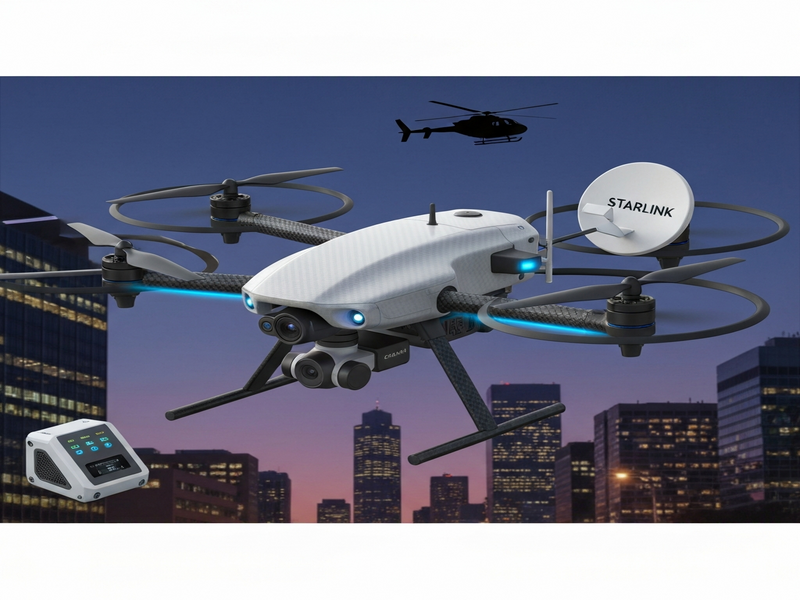
Guardian Drone Specifications
Speed and Endurance
The Guardian can cruise at up to 60 mph (≈96 km/h), allowing it to reach incident sites faster than many ground‑based units. Its 62‑minute flight time—unmatched in the public‑safety segment—means a single sortie can cover a 30‑mile radius without needing to return for a recharge.
Advanced Sensor Suite
- Dual 4K optical cameras with 30× optical zoom for license‑plate recognition from altitude.
- Thermal imaging sensor capable of detecting heat signatures in total darkness.
- High‑intensity spotlight and a directional loudspeaker louder than a standard police siren.
Starlink Satellite Connectivity
Embedded directly into the airframe, a Starlink panel provides low‑latency, global internet access. This makes the Guardian the first public‑safety drone with truly unlimited range, enabling real‑time video streaming and command‑and‑control even in remote or disaster‑struck areas.
Automated Charging Nest
Brinc’s proprietary “charging nest” automates battery swaps in under 30 seconds. The nest can also store critical emergency supplies—defibrillators, flotation devices, Narcan—ready for immediate deployment without human intervention.
Market Opportunity & Target Audience
The United States alone hosts roughly 20,000 police departments and 30,000 fire departments. Brinc estimates that the top half of these agencies will adopt a 911‑response drone within the next decade, translating to a $6‑$8 billion market opportunity.
- City planners seeking cost‑effective aerial coverage.
- Public‑safety officials needing rapid situational awareness.
- Technology journalists covering AI‑driven emergency response.
- Drone‑industry enthusiasts looking for next‑gen UAV capabilities.
Strategic Partnerships & Competitive Positioning
National League of Cities Collaboration
Brinc has partnered with the National League of Cities to pilot “drone‑as‑first‑responder” programs across multiple municipalities. This alliance accelerates adoption by providing policy frameworks, training resources, and shared data platforms.
A Domestic Alternative to DJI
Following recent U.S. restrictions on foreign‑made drones, Brinc positions the Guardian as the “DJI of the West.” By manufacturing in the United States and integrating U.S.‑based satellite services, the company offers a secure, compliant solution for federal, state, and local agencies.
Regulatory, Logistical, and Operational Considerations
Deploying UAVs in public‑safety contexts requires navigating FAA Part 107 waivers, data‑privacy statutes, and inter‑agency coordination protocols. Below is a concise overview:
| Aspect | Key Requirement | Brinc’s Solution |
|---|---|---|
| Airspace Authorization | FAA Part 107 waiver for beyond‑visual‑line‑of‑sight (BVLOS) | Automated flight‑plan submission via the Guardian’s cloud portal |
| Data Security | End‑to‑end encryption of video streams | Built‑in AES‑256 encryption, compliant with CJIS standards |
| Maintenance | Routine battery health checks and firmware updates | Self‑diagnosing charging nest with OTA updates |
Executive Insight
“There are about 20,000 police departments and 30,000 fire departments in the U.S. We believe the top half will have a 911‑response drone on a rooftop charging nest within the next five years. That translates to a $6‑$8 billion market,” said Blake Resnick, founder and CEO of Brinc.
How UBOS Enhances Guardian Deployments
UBOS offers a suite of AI‑driven tools that can extend the Guardian’s capabilities from data capture to actionable intelligence:
- Enterprise AI platform by UBOS – integrates real‑time video analytics, automatically flagging heat signatures or suspicious movement.
- AI marketing agents – can be repurposed for public outreach, sending automated alerts to residents during emergencies.
- Workflow automation studio – builds custom incident‑response pipelines that trigger the charging nest, dispatch medical kits, or log evidence.
- Web app editor on UBOS – lets agencies design dashboards that visualize live drone feeds alongside GIS layers.
- UBOS pricing plans – flexible subscription tiers make advanced AI accessible to small municipalities.
For startups exploring similar UAV solutions, the UBOS for startups page outlines accelerator programs and technical mentorship that can accelerate time‑to‑market.
Take the Next Step
If your agency is evaluating aerial assets, explore the broader drone ecosystem on UBOS and the dedicated public‑safety solutions. To stay updated on Brinc’s rollout and related policy developments, visit the UBOS newsroom.
Source
The original announcement and technical details were reported by TechCrunch on March 24, 2026.
Conclusion: A New Era for Aerial First Response
The Guardian drone embodies a convergence of high‑speed flight, satellite connectivity, and autonomous logistics that could redefine how cities respond to emergencies. By pairing Brinc’s hardware with UBOS’s AI platform, public‑safety agencies gain a scalable, secure, and cost‑effective alternative to legacy helicopters. As regulatory frameworks evolve and the $6‑$8 billion market matures, the Guardian is poised to become a cornerstone of next‑generation emergency services.
Andrii Bidochko
CTO UBOS
Andrii Bidochko is an AI entrepreneur and researcher focused on AI agents, reinforcement learning, and autonomous systems. He writes about the technologies shaping the future of machine intelligence, from frontier models and agent architectures to real-world AI applications.