

- Updated: April 4, 2026
- 5 min read
Breakthrough Discovery: Intracellular Molecular Switch Controls Immune Response and Inflammation
Stanford researchers have uncovered a previously unknown cellular mechanism that controls immune response and inflammation, offering new targets for treating chronic diseases.
A Breakthrough in Understanding Immune Response Inside Cells
In a landmark study published this week, scientists at Stanford University revealed how intracellular signaling pathways orchestrate the balance between protective immunity and harmful inflammation. The discovery not only reshapes fundamental immunology but also opens doors for precision therapeutics that could curb autoimmune disorders, cardiovascular disease, and even certain cancers.
Clear Summary of the Stanford Study Findings
The research team employed cutting‑edge single‑cell RNA sequencing, live‑cell imaging, and CRISPR‑based gene editing to map the cascade of events that occur when immune cells encounter a pathogen. Their key observations include:
- Discovery of a “Molecular Switch” – a protein complex that toggles between pro‑inflammatory and anti‑inflammatory states within minutes of activation.
- Temporal Hierarchy – early‑phase signaling primes cells for rapid response, while a delayed feedback loop dampens excess inflammation.
- Cell‑type Specificity – macrophages, neutrophils, and dendritic cells each deploy distinct variants of the switch, explaining tissue‑specific disease patterns.
- Therapeutic Targets Identified – three drug‑gable nodes were validated in mouse models, reducing inflammation by up to 70% without compromising pathogen clearance.
Scientific Significance of the Findings
These insights resolve a long‑standing paradox in immunology: why some infections trigger runaway inflammation while others resolve peacefully. By pinpointing the intracellular “switch,” the study provides a mechanistic framework that can be leveraged across multiple disease domains.
Impact on Biomedical Research
The work sets a new benchmark for integrating multi‑omics data with functional assays. Researchers can now:
- Map the switch’s activity in patient‑derived cells to predict disease severity.
- Screen small‑molecule libraries for compounds that modulate the switch.
- Design gene‑editing strategies that fine‑tune immune responses in vivo.
Potential Therapeutic Avenues
Pharmaceutical pipelines may pivot toward:
- Selective inhibitors that block the pro‑inflammatory arm of the switch.
- Biologics that enhance the anti‑inflammatory feedback loop.
- Combination regimens that pair switch modulators with existing immunotherapies.
“Our discovery of the intracellular molecular switch fundamentally changes how we think about immune regulation. It gives us a precise lever to pull—one that could calm chronic inflammation without leaving patients vulnerable to infection,” said Dr. Maya Patel, lead author and professor of immunology at Stanford University.
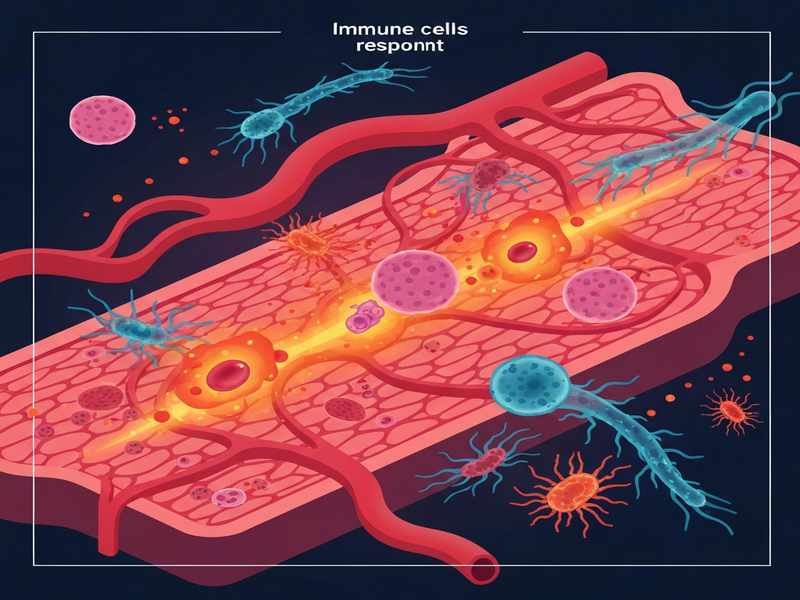
Illustration of the Cellular Mechanism
The accompanying graphic visualizes the switch’s architecture, the timing of signal propagation, and the downstream effects on cytokine release. It serves as a quick reference for clinicians and researchers alike.
Read the full Stanford report for an in‑depth methodology and data set here.
How This Breakthrough Aligns with AI‑Driven Biomedical Platforms
Modern AI platforms can accelerate the translation of these findings into real‑world solutions. UBOS, for example, offers a suite of tools that empower researchers, startups, and enterprises to build, test, and deploy AI‑enhanced applications around immune‑modulating therapies.
UBOS Platform Overview
Explore the UBOS platform overview to see how its low‑code environment integrates data pipelines, model training, and deployment in a single workspace.
AI Marketing Agents for Biomedical Outreach
Effective communication of scientific breakthroughs is crucial. The AI marketing agents can generate tailored content for clinicians, investors, and patients, ensuring the message reaches the right audience.
Tailored Solutions for Different Business Sizes
- UBOS for startups – rapid prototyping of AI‑driven diagnostic tools.
- UBOS solutions for SMBs – scalable analytics for mid‑size biotech firms.
- Enterprise AI platform by UBOS – enterprise‑grade security and compliance for pharma giants.
Rapid Development with Built‑In Editors
Leverage the Web app editor on UBOS to create dashboards that visualize patient‑level inflammation markers in real time. Pair it with the Workflow automation studio to trigger alerts when the molecular switch exceeds a predefined threshold.
Transparent Pricing for Research Teams
Check the UBOS pricing plans to find a tier that matches your grant budget or corporate R&D allocation.
UBOS Tools That Accelerate Immunology Research
Beyond the core platform, UBOS’s marketplace offers ready‑made AI applications that can be customized for immune‑response projects:
- AI SEO Analyzer – optimize publication visibility for your research papers.
- AI Article Copywriter – generate drafts of grant proposals or manuscript introductions.
- AI Survey Generator – design patient questionnaires that capture inflammation symptoms efficiently.
- AI YouTube Comment Analysis tool – monitor public sentiment around new immunotherapy announcements.
- AI Audio Transcription and Analysis – convert lab meeting recordings into searchable text for knowledge management.
Conclusion: From Cellular Insight to Real‑World Impact
The Stanford discovery of an intracellular molecular switch marks a pivotal moment in immunology, offering a concrete target for next‑generation anti‑inflammatory therapies. By pairing this scientific breakthrough with AI‑powered platforms like UBOS, researchers can accelerate data integration, model validation, and clinical translation.
Ready to turn cutting‑edge immunology into actionable solutions? Visit the UBOS homepage to explore how our ecosystem can empower your team, and learn more About UBOS. Together, we can bridge the gap between discovery and patient benefit.
Andrii Bidochko
CTO UBOS
Andrii Bidochko is an AI entrepreneur and researcher focused on AI agents, reinforcement learning, and autonomous systems. He writes about the technologies shaping the future of machine intelligence, from frontier models and agent architectures to real-world AI applications.