

- Updated: March 11, 2026
- 5 min read
Autonomous Translation Technology Advances
Autonomous translation technology uses advanced generative AI models to convert text, code, and multimedia content from one language to another without human intervention, delivering near‑real‑time multilingual output at scale.
Why Autonomous Translation Is the Next Big Disruption
In early 2026, the AI community witnessed a surge of autonomous translation demos that promised to rewrite entire software stacks, web pages, and marketing copy in seconds. While many early prototypes stumbled on edge cases, the underlying AI‑driven translation engines have matured enough to become commercially viable. For a deeper dive into the original breakthroughs, see the original analysis of autonomous translations.
Tech‑savvy professionals and decision‑makers now ask: Can we trust AI to handle multilingual content reliably, and what ROI can we expect? This article answers those questions, explores the economics, and outlines how Enterprise AI platform by UBOS is positioning itself to lead the market.
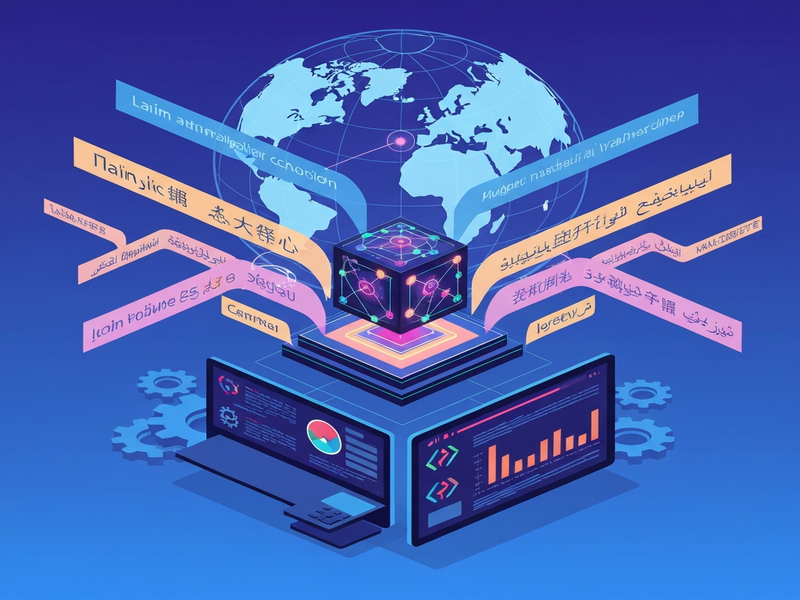
Breakthroughs Powering Autonomous Translation
Three core innovations have accelerated the field:
- Large‑scale multilingual models: Models such as GPT‑4‑Turbo and Claude 3 now support over 200 languages with native‑level fluency.
- Self‑supervised testing harnesses: Differential testing loops automatically generate edge‑case inputs, compare source and target outputs, and feed failures back to the model for rapid improvement.
- Domain‑specific fine‑tuning: By training on industry corpora (legal, medical, software documentation), AI achieves higher precision without manual post‑editing.
These advances are not isolated. The UBOS platform overview integrates multilingual LLMs with a Workflow automation studio that orchestrates translation, validation, and deployment in a single pipeline.
Economic Realities & Testing Strategies
Cost‑per‑iteration Model
Running a high‑throughput translation job on a state‑of‑the‑art model costs roughly $0.0008 per token. For a 1,000‑word article (≈1,500 tokens), the raw compute expense is $1.20. However, the total cost includes:
- Prompt engineering and context injection.
- Iterative validation cycles (average 3–5 passes per document).
- Human‑in‑the‑loop review for compliance‑sensitive domains.
When these factors are aggregated, the effective cost per translated page settles around $3–$5, a price point that undercuts traditional localization agencies for high‑volume content.
Testing Harnesses: From Differential Tests to Property‑Based Validation
Modern autonomous translation pipelines rely on property‑based testing. Instead of checking a single reference translation, the system generates random inputs (e.g., Unicode edge cases, code snippets) and verifies that the source and translated outputs remain semantically equivalent. This approach mirrors the testing methodology described in the original research but adds AI‑driven feedback loops.
UBOS’s Workflow automation studio provides a visual editor for building these harnesses without writing code, enabling product teams to launch robust translation pipelines in days rather than weeks.
Business Value & Future Outlook
Immediate ROI for Enterprises
Companies that adopt autonomous translation can expect:
- Faster market entry: Product pages become available in new locales within hours.
- Reduced localization spend: Up to 60 % savings compared to agency contracts.
- Consistent brand voice: Centralized LLM prompts enforce tone across languages.
For SMBs, the UBOS solutions for SMBs bundle translation, AI marketing agents, and analytics into a single subscription, making AI‑driven multilingual growth accessible.
Long‑Term Roadmap: From Translation to Global AI Assistants
Looking ahead, autonomous translation will evolve into contextual AI assistants that not only translate but also adapt content to cultural nuances, SEO best practices, and regulatory requirements. UBOS is already piloting such capabilities through its AI marketing agents, which combine translation with localized campaign generation.
Future milestones include:
- Real‑time voice translation powered by ElevenLabs AI voice integration.
- Semantic search across multilingual corpora using Chroma DB integration.
- Zero‑code deployment of multilingual chatbots via OpenAI ChatGPT integration.
These innovations will turn translation from a static pipeline into a dynamic, revenue‑generating engine.
How UBOS Accelerates Your Autonomous Translation Strategy
UBOS offers a suite of tools that align perfectly with the autonomous translation workflow:
- Web app editor on UBOS lets developers prototype multilingual interfaces instantly.
- UBOS templates for quick start include pre‑built translation modules for e‑commerce, SaaS, and education.
- UBOS pricing plans are transparent, with a pay‑as‑you‑grow tier for high‑volume translation.
- UBOS partner program enables system integrators to embed translation services into their own offerings.
- About UBOS highlights the company’s AI expertise and commitment to open standards.
Template Marketplace: Plug‑and‑Play Translation Apps
UBOS’s marketplace hosts ready‑made AI applications that can be combined with autonomous translation:
- AI SEO Analyzer – automatically optimizes translated pages for local search.
- AI Video Generator – creates multilingual video assets with synced subtitles.
- AI Image Generator – produces culturally relevant visuals for each language.
- AI Email Marketing – drafts localized email campaigns in seconds.
By chaining these templates with the ChatGPT and Telegram integration, teams can deliver multilingual support bots directly to messaging platforms.
Conclusion: Embrace Autonomous Translation Today
Autonomous translation is no longer a futuristic concept—it is a practical, cost‑effective tool that can unlock new markets, accelerate product launches, and enhance brand consistency across languages. By leveraging UBOS’s end‑to‑end AI platform, businesses of any size can adopt this technology with minimal friction.
Ready to future‑proof your multilingual strategy? Contact UBOS for a personalized demo and discover how autonomous translation can power your global growth.
Andrii Bidochko
CTO UBOS
Andrii Bidochko is an AI entrepreneur and researcher focused on AI agents, reinforcement learning, and autonomous systems. He writes about the technologies shaping the future of machine intelligence, from frontier models and agent architectures to real-world AI applications.