

- Updated: February 16, 2026
- 5 min read
Apple Podcasts Introduces Seamless Video‑Swap with HLS Live Streaming
Apple Podcasts now lets users instantly switch between audio‑only and full‑screen video streams using HTTP Live Streaming (HLS) video‑swap technology.
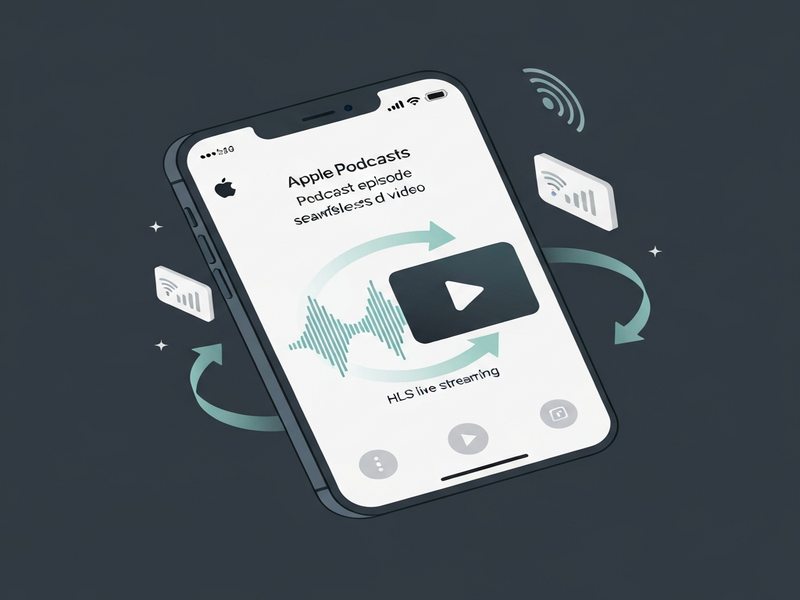
Apple announced a major upgrade to its Podcasts app that enables a video‑swap feature, allowing listeners to toggle between the traditional audio feed and a horizontal video version of the same episode without leaving the app. The rollout begins with iOS 26.4, iPadOS 26.4, and visionOS 26.4 betas and will expand to the web client in the spring. This move positions Apple against rivals like Spotify, YouTube, and emerging video‑first podcast platforms.
What is Apple Podcasts’ Video‑Swap HLS Feature?
The new capability leverages HTTP Live Streaming (HLS) to deliver synchronized audio and video tracks. While listening, a simple video toggle button appears, letting users switch to a video stream that aligns perfectly with the current timestamp. The video is delivered in a horizontal format optimized for mobile screens, and users can also download the video for offline viewing.
- Seamless transition: No buffering delays when swapping.
- Offline support: Video episodes can be saved for later playback.
- Monetization options: Creators can embed dynamic ads within the video stream.
- Cross‑platform consistency: The same experience rolls out to iOS, iPadOS, visionOS, and the web.
Benefits for Podcasters and Listeners
For Creators
Podcasters gain a new distribution channel without needing a separate YouTube channel. By embedding video directly in Apple Podcasts, creators can:
- Retain audience attention within the Apple ecosystem.
- Monetize through AI marketing agents that insert context‑aware video ads.
- Leverage analytics from the UBOS platform overview to track video engagement alongside audio metrics.
For Listeners
The ability to flip between audio and video on the fly satisfies diverse consumption preferences:
- Visual learners can watch while listening, enhancing comprehension.
- Commuters can switch to audio‑only to save data and battery.
- Fans can enjoy behind‑the‑scenes footage, slides, or live‑action that enriches the narrative.
Technical Deep‑Dive: How HLS Live‑Streaming Powers Video‑Swap
Apple’s implementation follows the standard HLS playlist structure, but with a twist: two parallel media playlists (audio‑only and video‑only) share a common timeline. When the user taps the toggle, the client swaps the active rendition without resetting the playback position.
| Component | Role |
|---|---|
| Master Playlist (.m3u8) | References both audio and video variant playlists. |
| Audio Variant | Provides AAC/Opus streams for low‑bandwidth consumption. |
| Video Variant | Delivers H.264/H.265 video tracks synchronized to the audio timeline. |
| Encryption | AES‑128 encryption ensures DRM‑compatible delivery. |
Apple also integrates Chroma DB integration for fast metadata indexing, enabling instant search across both audio transcripts and video captions.
Apple vs. Competitors: Who Leads the Podcast Video Race?
While Spotify has rolled out Spotify Video and YouTube continues to dominate with its massive video library, Apple’s approach is distinct:
- Native integration: No need to open a separate app; the toggle lives inside Podcasts.
- Unified analytics: Creators see combined audio‑video metrics, unlike fragmented data on YouTube.
- Privacy‑first design: Apple’s on‑device processing aligns with its broader privacy stance.
- Cross‑device continuity: VisionOS support brings the experience to mixed‑reality headsets.
In contrast, Spotify’s video is still in beta and requires a separate UI, while YouTube’s podcast videos are often repurposed content lacking native podcast metadata.
Industry Insight
“The video‑swap feature is a logical next step for Apple. It keeps listeners inside the ecosystem while giving creators a richer canvas for storytelling and monetization,” says Laura Chen, senior analyst at Podcast Insights.
How to Leverage This Feature with UBOS
If you’re a podcaster looking to maximize the new video‑swap, UBOS offers a suite of tools that simplify production, distribution, and monetization:
- Use the Web app editor on UBOS to create synchronized audio‑video assets.
- Automate episode publishing with the Workflow automation studio, ensuring both streams are uploaded together.
- Monetize video slots via AI marketing agents that insert dynamic ads based on viewer context.
- Explore ready‑made templates like the AI Video Generator or the AI SEO Analyzer to boost discoverability on Apple Podcasts.
- Scale your operation with the Enterprise AI platform by UBOS for large‑scale analytics.
- Start small with the UBOS solutions for SMBs or the UBOS for startups plans.
- Check the UBOS pricing plans to find a tier that matches your podcast budget.
Ready to future‑proof your podcast? Visit the UBOS homepage and explore how the platform can integrate directly with Apple’s HLS video‑swap.
Read the Full Announcement
The original story detailing Apple’s rollout can be found on The Verge. The article provides additional context on Apple’s strategic positioning and early beta feedback.