

- Updated: November 27, 2025
- 6 min read
Apple Mac Mini Transformed into High‑Performance Dedicated Servers – UBOS News
Scaleway converts Apple Mac Mini devices into high‑performance dedicated servers by placing each unit in a custom‑engineered rack, adding a Raspberry Pi control layer for remote management, and integrating the machines into its energy‑efficient, sovereign datacenters.
Scaleway Turns Apple Mac Mini Into Cloud‑Ready Dedicated Servers
In a bold move that reshapes the landscape of macOS‑based cloud infrastructure, Scaleway has unveiled a fully automated pipeline that transforms the compact Apple Mac Mini into a reliable, on‑demand server offering. The initiative targets iOS and macOS developers, enterprises, and any organization that needs native Apple silicon performance without the overhead of managing physical hardware.
Why This Matters for IT Decision‑Makers
The original announcement can be read in detail on Scaleway’s blog: Scaleway’s Mac Mini server launch. For cloud architects and developers, the news signals a new class of Apple Mac Mini server that blends the low‑power footprint of consumer hardware with the reliability of enterprise‑grade datacenters.
From Consumer Device to Dedicated Cloud Instance
Scaleway’s process begins with brand‑new Mac Mini units sourced directly from Apple. Each machine undergoes a three‑step transformation:
- Physical Integration: The Mac Mini is mounted in a purpose‑built sliding tray that fits into a high‑density rack.
- Control Layer Installation: A Raspberry Pi is paired with the Mac Mini, acting as a surrogate Baseboard Management Controller (BMC) to enable remote power cycling, firmware updates, and OS reinstallations.
- Software Provisioning: A custom Mobile Device Management (MDM) profile and a suite of server‑grade tools are automatically applied, turning the device into a fully managed, network‑ready server.
Technical Implementation Details
Custom‑Built Rack Architecture
The Mac Mini was never designed for rackmount use, so Scaleway engineered a proprietary chassis that holds up to 96 units per rack. Each tray slides out independently, allowing hot‑swap maintenance without affecting neighboring servers. The design maximises floor space while preserving airflow.
Raspberry Pi Control Layer
Because the Mac Mini lacks a native BMC, Scaleway embeds a ChatGPT and Telegram integration‑enabled Raspberry Pi that provides:
- Power on/off and hard‑reset commands via secure API.
- Remote OS re‑installation using pre‑configured macOS images.
- Health monitoring (temperature, power draw) reported to Scaleway’s central dashboard.
Datacenter Infrastructure & Power Management
All racks reside in Scaleway’s flagship Opcore DC2 facility in Vitry‑sur‑Seine, France. The datacenter delivers:
- 3N power redundancy with three backup generators and an 8 MW capacity.
- Cold‑aisle containment and under‑floor air distribution to keep the compact Apple silicon cool.
- Biometric access controls and water‑vapor fire suppression for maximum security.
Network Fabric & Connectivity
Each Mac Mini connects to a 10 GbE uplink, aggregated through high‑speed switches that feed into Scaleway’s private backbone. Customers can attach the servers to a Enterprise AI platform by UBOS for seamless integration with AI workloads, or expose them via a virtual private cloud for isolated environments.
Performance Benefits & Real‑World Use Cases
The Apple M‑series silicon delivers industry‑leading performance per watt, making the Mac Mini an attractive option for compute‑intensive, low‑latency workloads. Below are the key advantages and typical scenarios:
| Benefit | Why It Matters | Typical Use Case |
|---|---|---|
| High‑Performance CPU/GPU | Apple M‑series delivers up to 3× faster single‑core performance than comparable x86 CPUs. | iOS app CI/CD pipelines, Xcode Cloud alternatives. |
| Energy Efficiency | Low power draw (< 30 W) reduces operational cost and cooling requirements. | Batch video transcoding, AI inference at the edge. |
| Native macOS Environment | Runs macOS‑only tools without emulation. | Automated UI testing for macOS apps. |
| Scalable Density | 96 units per rack enables massive parallelism in a small footprint. | Large‑scale simulation farms, distributed rendering. |
Enterprises have already begun leveraging these servers for:
- Continuous integration and delivery (CI/CD) pipelines for iOS/macOS apps.
- Real‑time audio/video processing using Apple’s Neural Engine.
- Secure, on‑prem‑like macOS environments for regulated industries.
- AI model training that benefits from the M‑series GPU cores.
How UBOS Supports Deployment of Mac Mini Servers
While Scaleway provides the hardware backbone, UBOS homepage offers a complete software stack to orchestrate, monitor, and extend these servers. UBOS’s low‑code platform overview includes:
- Web app editor on UBOS – build custom dashboards for server health.
- Workflow automation studio – automate provisioning, scaling, and backup tasks.
- AI marketing agents – integrate marketing automation directly with your Mac Mini‑hosted services.
- Enterprise AI platform by UBOS – run AI workloads on the same hardware without leaving the ecosystem.
UBOS also provides a rich UBOS templates for quick start. For Mac Mini deployments, the following templates are especially relevant:
- AI Video Generator – harness the Mac Mini’s GPU for on‑the‑fly video creation.
- AI Chatbot template – deploy a conversational agent that runs natively on macOS.
- AI SEO Analyzer – run SEO audits directly from your dedicated Mac Mini server.
- AI Image Generator – leverage the M‑series Neural Engine for high‑quality image synthesis.
For startups looking for a fast‑track, the UBOS for startups program bundles these templates with dedicated support, while SMBs can explore the UBOS solutions for SMBs to keep costs predictable.
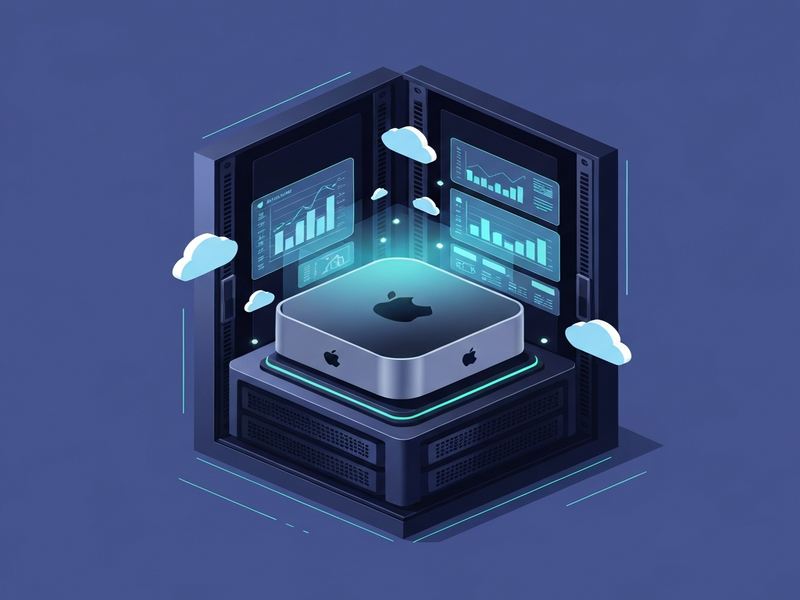
Deploy Your Own Mac Mini Server with UBOS
Ready to spin up a dedicated Apple silicon instance? Follow UBOS’s step‑by‑step guide: How to Deploy Mac Mini Servers. The guide walks you through:
- Ordering Mac Mini hardware through Scaleway.
- Connecting the device to UBOS’s Workflow automation studio for zero‑touch provisioning.
- Applying a pre‑built AI Chat App with ChatGPT API template to enable instant remote management.
- Monitoring performance via the Web app editor on UBOS.
Pricing is transparent; see the UBOS pricing plans for monthly or annual options that include support for Mac Mini workloads.
Why Choose UBOS & Scaleway Together?
Combining Scaleway’s hardware expertise with UBOS’s low‑code automation creates a unique value proposition:
- End‑to‑end lifecycle management – from physical rack to application deployment.
- Compliance‑ready infrastructure – hosted in a sovereign French datacenter.
- Scalable AI services – plug‑and‑play templates like AI‑Powered Essay Outline Generator or AI‑Powered VR Fitness Idea Generator run directly on Apple silicon.
- Partner ecosystem – explore the UBOS partner program for co‑selling opportunities.
Conclusion
Scaleway’s innovative conversion of Apple Mac Mini devices into dedicated cloud servers opens a new frontier for macOS‑centric workloads. By pairing this hardware with UBOS’s comprehensive automation platform, organizations can achieve rapid time‑to‑value, maintain strict data‑sovereignty, and leverage the unmatched performance of Apple silicon—all without the traditional complexities of managing physical servers.
Whether you are a cloud architect evaluating new compute options, an IT leader seeking cost‑effective high‑performance nodes, or a developer needing native macOS environments, the Scaleway‑UBOS combination offers a compelling, future‑proof solution. Explore the UBOS portfolio examples for real‑world deployments and start building your own Mac Mini‑powered services today.