

- Updated: March 17, 2026
- 8 min read
Antfly: Open‑Source Distributed Multimodal Search Engine in Go
Antfly: Open‑Source Distributed Search Engine Powered by Go, Multimodal AI, and Graph Databases
Direct answer: Antfly is an open‑source, Go‑based distributed search engine that combines multimodal AI search, graph traversal, and Raft‑driven horizontal scaling to deliver a single‑query experience across text, images, audio, and video.
The project, freshly released on GitHub, targets developers, data engineers, and AI researchers who need a high‑performance, extensible search layer without the licensing constraints of commercial solutions. Built on top of etcd’s Raft library, Antfly offers hybrid search (BM25 + dense + sparse vectors), automatic embedding pipelines, and built‑in Retrieval‑Augmented Generation (RAG) agents—all orchestrated from a Go binary.
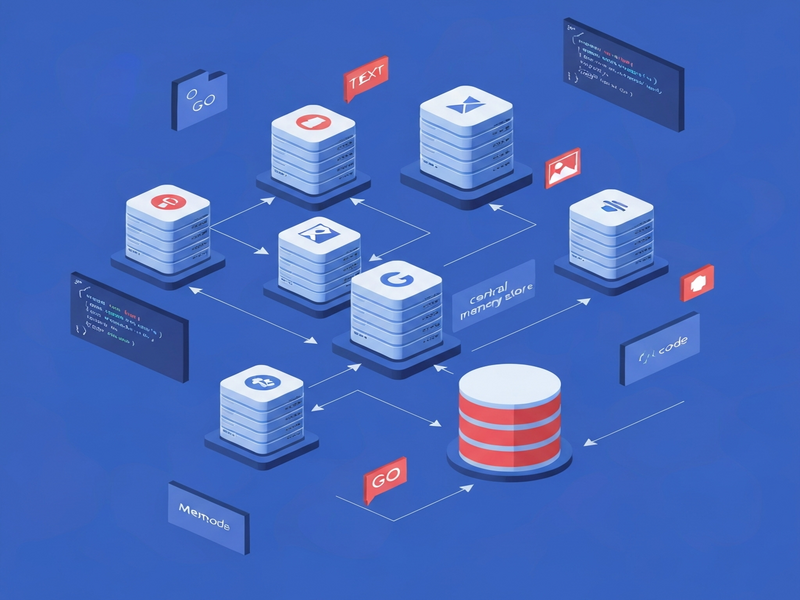
Why Antfly Matters in the AI Search Landscape
Traditional search engines excel at either keyword matching or vector similarity, but they rarely support both in a single request. Antfly bridges that gap by offering a hybrid search model that lets you query with BM25, dense embeddings, or SPLADE‑style sparse vectors—all in one API call. Moreover, its multimodal pipelines automatically generate embeddings for images, audio, and video using CLIP, CLAP, and other vision‑language models, turning raw media into searchable vectors without extra glue code.
Beyond pure retrieval, Antfly embeds a graph engine that extracts relationships on‑the‑fly and stores them as edges. This enables developers to run graph traversals (e.g., “find all documents linked to a given entity”) directly against the same index that powers full‑text search. The result is a unified data surface that reduces latency, simplifies architecture, and cuts operational overhead.
All of this runs on Go, a language prized for its concurrency model, low‑footprint binaries, and native support for SIMD via the go‑highway library. For teams already invested in Go microservices, Antfly can be dropped in as a library or run as a standalone cluster with zero‑dependency Docker images.
Core Features at a Glance
- Hybrid Search: BM25, dense vectors, and SPLADE sparse vectors in a single query.
- RAG Agents: Built‑in Retrieval‑Augmented Generation with streaming, multi‑turn chat, and tool‑calling (web search, graph traversal).
- Graph Indexes: Automatic relationship extraction and graph traversal queries.
- Multimodal Indexing: Images, audio, and video indexed via CLIP, CLAP, and other vision‑language models.
- Reranking: Cross‑encoder reranking with score‑based pruning for noise reduction.
- Aggregations & Facets: Stats, term facets, and histogram support for analytics.
- ACID Transactions: Shard‑level two‑phase commit for strong consistency.
- Document TTL: Automatic expiration to keep storage lean.
- S3‑Backed Storage: Seamless integration with S3, MinIO, or Cloudflare R2.
- Hardware Acceleration: SIMD/SME vector ops via
go‑highwayon x86 and ARM. - Distributed Raft Consensus: Automatic sharding, replication, and horizontal scaling.
- Enrichment Pipelines: Configurable per‑index pipelines for embeddings, summaries, and custom fields.
- Bring‑Your‑Own‑Model: Plug in Ollama, OpenAI, Bedrock, Google, or local models via Termite.
- Auth & API Keys: Built‑in user management, bearer tokens, and basic auth.
- Backup & Restore: Local disk or S3 snapshots.
- Kubernetes Operator: Deploy and manage clusters with a native operator.
- Model Context Protocol (MCP): Enables LLMs to treat Antfly as a tool.
- Agent‑to‑Agent (A2A) Support: Conforms to Google’s A2A standard for inter‑agent communication.
Technical Deep‑Dive: Architecture & Multimodal Capabilities
Multi‑Raft Design
Antfly separates consensus concerns into two distinct Raft groups:
- Metadata Raft: Stores schema definitions, shard assignments, and cluster topology.
- Storage Rafts: One per shard, handling actual document storage, inverted indexes, and vector tables.
This split reduces write amplification and allows independent scaling of metadata versus data planes. The system also runs end‑to‑end chaos tests inspired by Jepsen, injecting node crashes and leader failures to verify that two‑phase commit (2PC) and snapshot transfers remain consistent.
Multimodal Pipelines
When a document is ingested, Antfly’s Termite submodule automatically triggers a configurable pipeline:
- Chunking of raw text into overlapping windows.
- Embedding generation via the selected model (e.g., OpenAI’s
text‑embedding‑ada‑002or a local CLIP model for images). - Optional OCR for scanned PDFs and video frame extraction.
- Graph edge creation based on named‑entity recognition (NER) and relationship extraction.
- Custom field computation (e.g., sentiment scores, language detection).
All steps run in parallel thanks to Go’s goroutine model, keeping ingestion latency under 200 ms for typical workloads.
RAG Agent Integration
Antfly ships with a built‑in RAG agent that can be invoked via a REST endpoint. The agent performs the following loop:
- Receive a user query.
- Execute a hybrid search to retrieve top‑k documents.
- Optionally traverse the graph to enrich context.
- Pass the combined context to the LLM (OpenAI, Anthropic, or a local model).
- Stream the generated answer back to the client.
This workflow enables “search‑augmented chat” experiences without writing custom glue code. The agent also supports tool‑calling, allowing it to fetch live web results or invoke external APIs directly from the conversation.
Visualization – Antfarm Dashboard
The Antfarm dashboard (available at http://localhost:8080) provides interactive playgrounds for:
- Hybrid query composition.
- RAG chat sessions.
- Knowledge‑graph exploration.
- Embedding visualizations.
- Reranking performance metrics.
Because the UI is built with React and TypeScript, developers can embed it into existing portals or extend it with custom components from the AI Article Copywriter template.
Community & Industry Reaction
Since its GitHub launch, Antfly has attracted over 80 stars and a growing Discord community. Early adopters praise its “single‑binary, all‑in‑one” approach, especially when compared to stitching together Elasticsearch, Milvus, and Neo4j. Notable comments include:
“Antfly feels like the missing glue that lets Go teams build AI‑first products without vendor lock‑in.”
Industry analysts see Antfly as a strategic contender for “AI‑enhanced search” markets, where enterprises demand low‑latency retrieval across heterogeneous data. The open‑source license (Elastic License 2.0 for the core server, Apache 2.0 for SDKs) balances commercial protection with community freedom, a model that resonates with both startups and large enterprises.
Several Enterprise AI platform by UBOS partners have already prototyped use‑cases such as:
- Customer‑support ticket triage using multimodal embeddings.
- Product recommendation engines that combine textual reviews with product images.
- Compliance monitoring where audio transcripts are searchable alongside policy documents.
Getting Started with Antfly
Quick‑Start in One Command
For developers who want to spin up a single‑node cluster instantly, Antfly provides two one‑liners:
go run ./cmd/antfly swarmor, using Docker:
docker run -p 8080:8080 ghcr.io/antflydb/antfly:omniBoth commands launch the Antfarm dashboard at http://localhost:8080, where you can upload documents, explore the graph, and test RAG queries.
Cloning the Repository
The full source lives on GitHub. Clone it, explore the examples/ folder, and run the integration tests to verify your environment:
git clone https://github.com/antflydb/antfly.git
cd antfly
make test
Deploying at Scale
When you’re ready for production, the Workflow automation studio can orchestrate multi‑node deployments via Helm charts. Combine it with the Web app editor on UBOS to build a custom UI that talks to Antfly’s REST API.
For cost‑effective storage, configure Antfly to use an S3‑compatible bucket (MinIO, Cloudflare R2, or AWS S3). The UBOS templates for quick start include a pre‑filled antfly‑s3.yaml manifest that you can drop into your CI pipeline.
How Antfly Complements the UBOS Ecosystem
UBOS offers a suite of AI‑centric tools that pair naturally with Antfly:
- Use the AI marketing agents to generate SEO‑friendly copy, then index the output in Antfly for instant retrieval.
- Leverage the AI SEO Analyzer to audit your site, store the findings, and query them with Antfly’s graph capabilities.
- Integrate the AI Article Copywriter template to auto‑generate blog drafts, which Antfly can instantly search across versions.
- Deploy the AI Video Generator to create video assets, then feed the resulting embeddings into Antfly for multimodal search.
- For enterprises, the Enterprise AI platform by UBOS provides governance, RBAC, and audit trails that sit on top of Antfly’s distributed core.
These integrations illustrate a broader trend: modern AI applications need a single source of truth for both structured and unstructured data. Antfly fills that gap, while UBOS supplies the low‑code, no‑ops environment to bring ideas to market quickly.
Pricing, Support, and Community Resources
Antfly itself is free under the Elastic License 2.0, but you may need managed hosting or professional support. UBOS offers flexible pricing plans that include dedicated clusters, SLA‑backed uptime, and priority access to the UBOS partner program. For startups, the UBOS for startups tier provides generous free credits to experiment with Antfly at scale.
Additional learning resources:
- Official GitHub repository with detailed README and contribution guide.
- Live Discord channel for real‑time troubleshooting.
- UBOS portfolio examples showcasing production deployments.
- Documentation on About UBOS for background on the team behind the ecosystem.
Conclusion & Call‑to‑Action
Antfly represents a bold step toward unifying search, AI, and graph analytics under a single, Go‑native, open‑source roof. Its distributed Raft architecture guarantees resilience, while multimodal pipelines and built‑in RAG agents deliver the kind of “search‑augmented intelligence” that modern applications demand.
If you’re a developer looking to embed powerful AI search without vendor lock‑in, start a local instance today, explore the Antfarm dashboard, and then scale out with UBOS’s Workflow automation studio. Join the community, contribute a plugin, or partner through the UBOS partner program to accelerate your AI product roadmap.
Ready to try Antfly? Clone the repo, run the one‑liner, and let your data speak in text, images, audio, and video—all searchable with a single query.
Andrii Bidochko
CTO UBOS
Andrii Bidochko is an AI entrepreneur and researcher focused on AI agents, reinforcement learning, and autonomous systems. He writes about the technologies shaping the future of machine intelligence, from frontier models and agent architectures to real-world AI applications.