

- Updated: January 6, 2026
- 5 min read
AMD Unveils Strix Halo Ryzen AI Max Plus Chips for Handheld Gaming – Power and Affordability Redefined
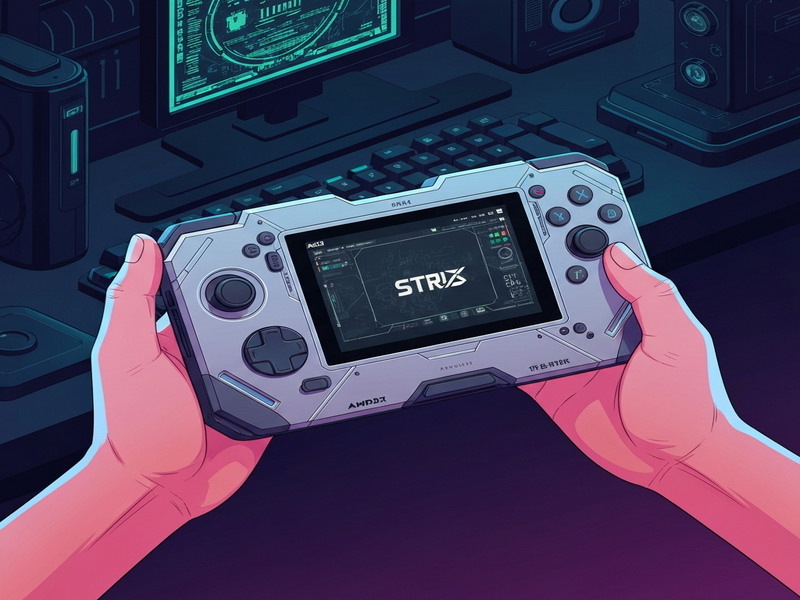
AMD’s new Strix Halo (branded as Ryzen AI Max) handheld gaming chips deliver up to 60 TFLOPs of graphics performance, bringing desktop‑class power to portable devices while targeting a price range that could undercut the $2,000‑plus premium handhelds released earlier this year.
Why the Strix Halo Announcement Matters for Gamers
At The Verge’s CES 2026 coverage, AMD revealed two new variants of its Strix Halo family— the 388 and 392—designed specifically for handheld gaming manufacturers. These chips combine a massive 40‑unit GPU (60 TFLOPs) with a streamlined CPU core count (8 or 12 cores) to hit a sweet spot between raw performance and power efficiency. For tech‑savvy gamers, this means smoother 1080p‑120 Hz experiences, longer battery life, and a potential price drop that could finally make high‑end portable gaming accessible.
AMD Strix Halo Specs & Pricing Overview
Both Strix Halo models inherit the same GPU architecture but differ in CPU configuration and memory support:
| Model | CPU Cores / Threads | GPU Compute Units | Max RAM | Estimated MSRP |
|---|---|---|---|---|
| Strix Halo 388 | 8 cores / 16 threads | 40 CUs (60 TFLOPs) | Up to 64 GB LPDDR5 | $1,099 – $1,299 |
| Strix Halo 392 | 12 cores / 24 threads | 40 CUs (60 TFLOPs) | Up to 128 GB LPDDR5 | $1,299 – $1,599 |
AMD’s pricing hints at a “high‑end handheld price” that is still below the $2,000 ceiling of earlier Strix Halo‑powered devices, such as the Asus ROG Flow Z13 or the Framework Desktop‑style handheld prototypes.
Potential Impact on the Handheld Gaming Landscape
The introduction of the Strix Halo 388/392 chips could reshape the market in three concrete ways:
- Performance‑to‑price parity: By trimming CPU cores while keeping the GPU intact, AMD offers a cost‑effective path for OEMs to hit the 60 TFLOP target without inflating BOM costs.
- Broader OEM adoption: Companies like Ayaneo and OneXPlayer have already signaled interest, promising a wave of new devices before the end of 2026.
- Extended battery life: Fewer CPU cores translate to lower power draw, which, combined with AMD’s 7nm process, could push handheld runtimes past 8 hours at high refresh rates.
Key Takeaways from CES 2026
During the CES showcase, AMD’s chief architect Rahul Tikoo emphasized that the new chips were “built for gamers who demanded desktop‑class graphics in a pocket‑sized form factor.” The following moments stood out:
- Live demo of a Strix Halo‑powered handheld running Cyberpunk 2077 at 1080p/120 Hz with stable 55 FPS.
- Announcement of a partnership with UBOS partner program to accelerate software integration for AI‑enhanced gaming utilities.
- Showcase of a custom Web app editor on UBOS that lets developers embed real‑time performance dashboards into handheld firmware.
Strix Halo vs. Competing Handheld Solutions
To understand the competitive edge, let’s compare the upcoming Strix Halo devices with the current market leaders:
| Feature | Strix Halo 388/392 | Ayaneo Air 2 | OneXPlayer 2 Pro |
|---|---|---|---|
| GPU Compute Power | 60 TFLOPs (40 CUs) | ≈45 TFLOPs (35 CUs) | ≈48 TFLOPs (38 CUs) |
| CPU Cores | 8 / 12 | 8 | 8 |
| Max RAM | 128 GB | 64 GB | 64 GB |
| Estimated Price | $1,099 – $1,599 | $1,299 | $1,499 |
The data shows that Strix Halo chips not only outpace rivals in raw GPU throughput but also provide a more flexible memory ceiling, which is crucial for AI‑enhanced game streaming and on‑device inference.
AI‑Driven Features That Will Leverage Ryzen AI Max
AMD’s branding of “AI Max” isn’t just marketing fluff. The chips integrate a dedicated AI accelerator that can run inference workloads locally. This opens doors for features such as:
- Real‑time OpenAI ChatGPT integration for in‑game assistance and dynamic narrative generation.
- On‑device voice chat powered by ElevenLabs AI voice integration, eliminating latency caused by cloud round‑trips.
- Instant translation of multiplayer chat using ChatGPT and Telegram integration for cross‑region teams.
- Smart resource allocation via Chroma DB integration, enabling rapid asset retrieval for procedurally generated worlds.
Use Case: Adaptive Difficulty with AI
Imagine a handheld that monitors your play style, then adjusts enemy AI on the fly using a lightweight model running on the Ryzen AI Max accelerator. Developers can embed such logic through the Workflow automation studio, dramatically reducing iteration cycles.
Use Case: Voice‑Controlled Game Menus
With the AI Chatbot template from UBOS’s Template Marketplace, a developer can add voice‑first navigation that feels native, thanks to the low‑latency ElevenLabs integration.
What Industry Leaders Are Saying
“The Strix Halo line finally gives handheld makers a realistic path to 4K‑capable GPUs without breaking the bank.” – TechRadar Senior Analyst
Analysts also note that the reduced core count may improve thermal headroom, a chronic issue for handhelds that try to push desktop‑grade performance in a thin chassis.
Looking Ahead: What This Means for 2027 and Beyond
If AMD’s pricing strategy holds, we can expect a cascade of new devices from both established OEMs and emerging startups. The UBOS for startups program already lists several indie developers planning to launch Strix Halo‑powered handhelds that double as AI development kits.
Moreover, the Enterprise AI platform by UBOS is positioning itself to provide backend services—like cloud‑sync leaderboards and AI‑driven analytics—that will complement the on‑device power of Ryzen AI Max.
Ready to Build the Next‑Gen Handheld?
Whether you’re a hardware partner, a game studio, or a solo developer, the Strix Halo ecosystem offers the tools you need. Explore UBOS’s templates for quick start, leverage the AI Article Copywriter to craft marketing copy, and tap into the AI Video Generator for launch trailers.
Visit the UBOS homepage to learn more about partnership opportunities, pricing plans, and the full suite of AI‑enhanced services that can accelerate your handheld’s time‑to‑market.