

- Updated: November 27, 2025
- 5 min read
Amazon Employees Petition for Ethical AI Amid Rapid Expansion
Amazon employees have signed an open letter demanding responsible AI development, stricter ethical safeguards, and protection against job‑displacing AI tools amid a wave of layoffs.
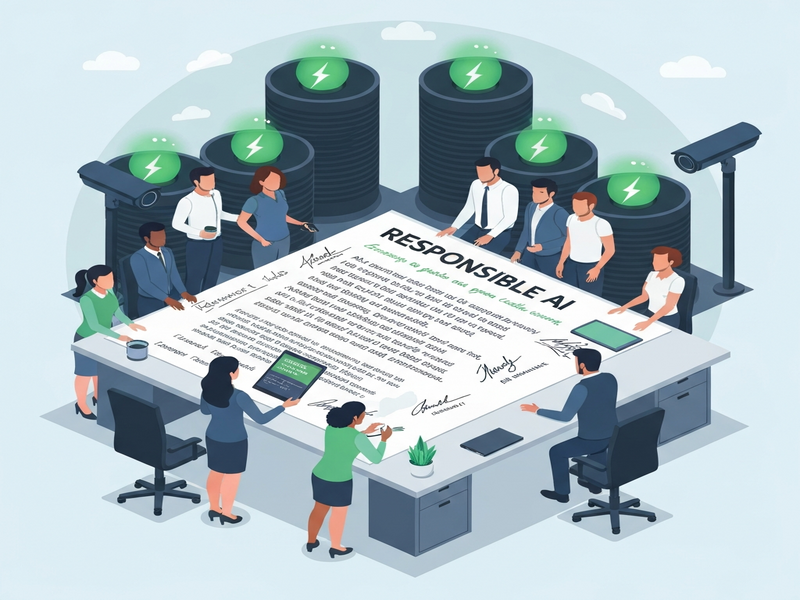
Why Amazon’s AI Letter Matters
In early November 2024, more than 1,200 Amazon staff members anonymously signed an open letter warning that the company’s rapid AI rollout could jeopardize democracy, jobs, and the planet. The petition, organized by a cross‑functional employee group, highlights growing tension between AI innovation and ethical responsibility in one of the world’s largest tech employers.
This article unpacks the background, the specific demands, Amazon’s response, and the broader implications for AI ethics and employee activism. It also points you to practical resources on the UBOS homepage for building responsible AI solutions.
Amazon’s AI Expansion and Recent Layoffs
Amazon has poured billions into generative AI, data‑center construction, and internal AI‑assisted tools. Highlights include:
- Launch of Amazon AI services such as the shopping chatbot “Rufus,” projected to add $10 billion in annual revenue.
- Partnerships with OpenAI, enabling Amazon Web Services (AWS) customers to run ChatGPT‑style models at scale.
- Expansion of AI‑driven code‑generation tools for developers across AWS and internal product teams.
Simultaneously, Amazon announced a 14,000‑person workforce reduction in November 2024, citing the need to “realign resources for the AI era.” The layoffs spanned corporate, fulfillment, and technical roles, intensifying employee concerns about AI‑enabled automation replacing human labor.
The Employee Petition: Numbers and Core Demands
Who Signed?
According to the petition organizers, the signatories include:
- Senior engineers and product managers from Amazon Web Services.
- Marketing and operations leaders across the retail division.
- Warehouse staff and logistics coordinators.
- Over 2,400 allies from other tech firms (Google, Apple, Microsoft).
Key Concerns
The letter outlines six non‑negotiable demands, each framed as a safeguard for people and the planet:
- Carbon‑Free Data Centers: Phase out coal‑derived electricity for AI training clusters and commit to 100 % renewable power by 2027.
- No Surveillance‑Oriented AI: Prohibit the use of Amazon AI tools for mass monitoring, deportation, or employee surveillance.
- Voluntary AI Adoption: Employees must not be forced to use AI tools that could jeopardize job security or performance evaluations.
- Transparent Impact Audits: Publish regular, independent assessments of AI’s environmental and social impact.
- Worker‑Led Ethics Boards: Establish cross‑functional committees—including rank‑and‑file staff—to guide AI product decisions.
- Reskilling Guarantees: Offer paid, company‑wide training for workers whose roles are at risk of automation.
Amazon’s Official Response
Amazon’s spokesperson, Brad Glasser, reiterated the company’s commitment to reaching net‑zero carbon emissions by 2040 and emphasized that “progress is not always linear.” The statement highlighted ongoing investments in renewable energy projects and noted that AI tools are designed to “enhance, not replace, human talent.”
However, the response did not directly address the petition’s demand to halt mandatory AI usage or to create employee‑led ethics boards. Critics argue that the reply is a classic “green‑wash” move—acknowledging climate goals while sidestepping deeper governance reforms.
Implications for AI Ethics and the Workforce
The Amazon petition underscores a broader shift: workers are no longer passive recipients of technology; they are active stakeholders demanding accountability.
AI Ethics in Practice
Real‑world AI ethics requires concrete mechanisms, not just high‑level statements. Companies can learn from frameworks such as the AI ethics guidelines offered by UBOS, which include:
- Pre‑deployment risk assessments.
- Continuous monitoring of model bias and carbon footprint.
- Stakeholder participation, especially from those directly impacted.
The Rise of Employee Activism
Employee‑driven movements are gaining traction across the tech sector. The Amazon case adds to a growing list of internal petitions at Google, Microsoft, and Meta. By leveraging internal communication channels and external media, workers are shaping corporate policy from the inside out. For a deeper dive into how organizations can support such initiatives, see UBOS’s resources on employee activism.
Strategic Takeaways for Leaders
Leaders who ignore these signals risk reputational damage, talent attrition, and regulatory scrutiny. Effective strategies include:
- Integrate ethical AI checkpoints into product roadmaps.
- Allocate budget for renewable‑energy‑powered AI infrastructure.
- Offer transparent career pathways for workers transitioning from AI‑augmented roles.
- Partner with third‑party auditors to validate compliance.
Read the Full Story
The original investigative piece detailing the petition and its context was published by Wired. It provides additional quotes from signatories and a timeline of Amazon’s AI investments.
How UBOS Helps Companies Build Ethical AI
UBOS offers a suite of tools that align with the petition’s demands, enabling businesses to adopt AI responsibly:
- UBOS platform overview – a low‑code environment for creating AI‑driven apps with built‑in compliance checks.
- AI marketing agents – automate campaigns while respecting user privacy.
- Workflow automation studio – design human‑in‑the‑loop processes that prevent forced AI usage.
- Web app editor on UBOS – quickly prototype ethical AI solutions with version control.
- UBOS templates for quick start – pre‑built templates like the AI SEO Analyzer and AI Article Copywriter that embed responsible data handling.
- UBOS pricing plans – transparent, subscription‑based pricing that avoids hidden AI usage fees.
- UBOS partner program – collaborate with ethical AI consultants and auditors.
Conclusion: A Call for Collective Responsibility
The Amazon employee petition is a watershed moment that forces the tech industry to confront the trade‑offs between rapid AI deployment and societal stewardship. By listening to workers, investing in renewable AI infrastructure, and embedding transparent governance, companies can turn “AI‑driven growth” into “AI‑driven good.”
If you’re a tech leader, product manager, or developer seeking to align your AI initiatives with ethical standards, explore UBOS’s platform and start building responsibly today.
Stay informed, stay ethical, and let’s shape a future where AI amplifies human potential—not replaces it.