

- Updated: April 5, 2026
- 6 min read
Amazon Echo & Alexa: A Decade of Voice AI Innovation and Technology History
Amazon Echo and Alexa have evolved from a secret prototype in 2014 to the dominant voice‑AI platform that powers millions of smart‑home devices worldwide.
Evolution of Amazon Echo and Alexa: From Concept to Smart‑Home Staple
When Jeff Bezos first whispered about a “voice computer” in the early 2000s, few imagined that a cylindrical speaker would become a household name. The journey from a hidden lab project to the Amazon Echo that greets us every morning is a story of relentless engineering, bold product decisions, and a market that was both ready and skeptical. For a deep dive into the original reporting, see the original Verge article that chronicled the saga.
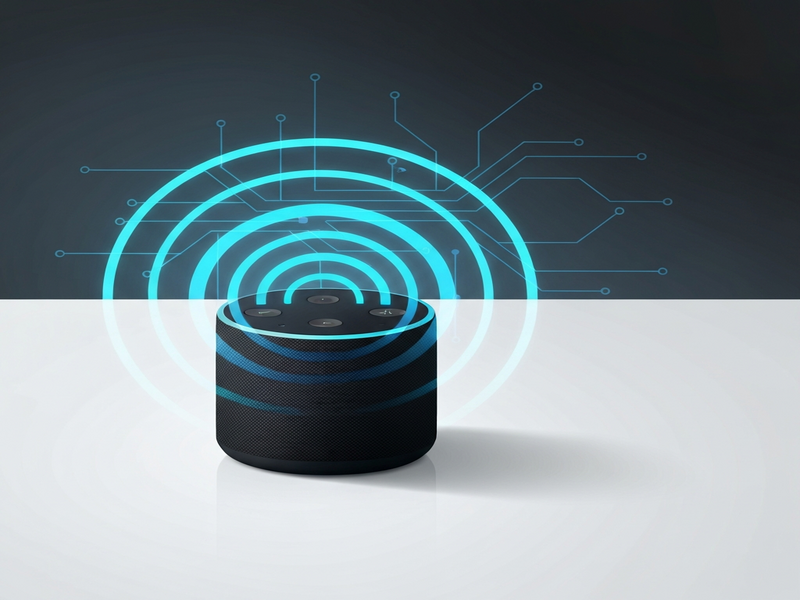
A Chronological Timeline of Echo & Alexa Development
- 2014 – The Secret Prototype: A small team in Seattle built a voice‑activated speaker for internal testing, codenamed “Project D.”
- November 2014 – First Public Demo: Amazon showcased the Echo at a private event, surprising attendees with a speaker that could answer questions, set timers, and play music.
- March 2015 – Alexa Unveiled: The voice assistant was named “Alexa,” after the Library of Alexandria, emphasizing knowledge and discovery.
- June 2015 – Soft Launch: Echo was released to a limited audience in the United States, with a price of $99. Early adopters praised the sound quality but noted occasional misinterpretations.
- October 2016 – Super Bowl Spot: Amazon aired its first major commercial, catapulting Echo into mainstream awareness.
- 2017–2019 – Ecosystem Expansion: Third‑party “Skills” were introduced, allowing developers to add capabilities ranging from ride‑hailing to home security.
- 2020 – Multi‑room Audio & Smart‑Home Hub: Echo devices gained built‑in Zigbee and later Matter support, turning them into central hubs for lights, locks, and thermostats.
- 2022 – Generative AI Integration: Amazon began experimenting with large language models to improve conversational depth, a move mirrored by competitors.
- 2024 – Whisper Mode & Local Processing: New hardware enabled on‑device speech recognition, reducing latency and enhancing privacy.
- 2026 – Voice‑First AI Agents: Echo now supports custom AI agents that can execute complex workflows, a capability that aligns with the rise of AI assistants across the industry.
Jeff Bezos’ Vision and the Team’s Technical Hurdles
Bezos publicly championed voice interaction as the “most natural way to talk to computers.” His conviction drove Amazon to allocate a dedicated budget, yet the engineering team faced a cascade of challenges:
- Speech Recognition Accuracy: Early models struggled with accents and background noise. The team iterated on acoustic models, eventually leveraging OpenAI ChatGPT integration for language understanding experiments.
- Scalable Cloud Infrastructure: Handling billions of voice requests required a robust, low‑latency pipeline. Amazon built a custom “Alexa Voice Service” (AVS) that runs on AWS Lambda and DynamoDB.
- Privacy Concerns: Critics feared constant listening. In response, Amazon introduced a physical mute button and later ChatGPT and Telegram integration demos that showcased secure, opt‑in voice processing.
- Developer Ecosystem: Convincing third‑party developers to build “Skills” required comprehensive SDKs and a marketplace, a strategy reminiscent of the UBOS partner program that nurtures app creators.
These obstacles forced Amazon to adopt a “fail fast, learn fast” mindset, ultimately delivering a product that could understand context, remember preferences, and integrate with a growing smart‑home ecosystem.
Impact on the Smart‑Home Market
The Echo’s success reshaped the entire smart‑home landscape:
- Standardization of Voice Control: Competing brands (Google Nest, Apple HomePod) adopted voice assistants as core features, creating a de‑facto industry standard.
- Growth of IoT Devices: Manufacturers designed products with Alexa compatibility from day one, accelerating the adoption of Zigbee, Z‑Wave, and now Matter protocols.
- Data‑Driven Personalization: Amazon leveraged purchase history to suggest products via voice, blurring the line between convenience and commerce.
- Enterprise Adoption: Large organizations began deploying Echo devices for conference rooms and internal knowledge bases, a trend echoed by the Enterprise AI platform by UBOS that offers similar voice‑first capabilities for business workflows.
For startups looking to ride the wave, the UBOS for startups program provides a sandbox to prototype voice‑enabled services without building a full stack from scratch.
Future Outlook: Voice AI Beyond the Echo
Voice AI is poised for a new era of generative intelligence. Here’s what experts anticipate for the next five years:
| Trend | Implication |
|---|---|
| On‑Device LLMs | Reduced latency, enhanced privacy, and offline capabilities for critical commands. |
| Multimodal Interaction | Combining voice with vision (e.g., camera‑enabled Echo Show) to understand context like gestures and facial expressions. |
| Custom AI Agents | Businesses will deploy domain‑specific agents that can schedule meetings, generate reports, or even code, similar to the AI assistants offered by UBOS. |
| Voice‑First Commerce | Seamless checkout via voice, leveraging biometric verification and encrypted tokens. |
Developers can prototype these capabilities using the Web app editor on UBOS or automate complex flows with the Workflow automation studio. For marketers, the AI marketing agents can generate personalized voice scripts that align with brand tone.
How You Can Leverage Echo‑Style Voice AI Today
Whether you’re a tech‑savvy consumer or a product leader, the following steps can help you integrate voice AI into your workflow:
- Identify a high‑frequency task (e.g., daily stand‑up notes) that could be voice‑captured.
- Prototype a voice skill using the AI Chatbot template or the AI Article Copywriter for content generation.
- Test with a small user group, iterating on natural language understanding via Telegram integration on UBOS for rapid feedback loops.
- Scale using the UBOS pricing plans that match your usage patterns.
- Monitor performance with analytics dashboards similar to the UBOS portfolio examples to showcase ROI.
Conclusion
The evolution of Amazon Echo and Alexa illustrates how a bold vision, relentless engineering, and an open ecosystem can turn a niche prototype into a global platform that defines how we interact with our homes. As voice AI continues to merge with generative models, the next wave will empower individuals and enterprises to create custom agents that understand intent, act autonomously, and respect privacy.
Ready to build your own voice‑first experiences? Explore the UBOS templates for quick start, dive into the AI SEO Analyzer to optimize your content, or experiment with the Video AI Chat Bot to add visual context to voice interactions.
For a broader view of how AI is reshaping business workflows, visit the UBOS homepage and discover tools that bring the power of Alexa‑style voice AI to any application.
Andrii Bidochko
CTO UBOS
Andrii Bidochko is an AI entrepreneur and researcher focused on AI agents, reinforcement learning, and autonomous systems. He writes about the technologies shaping the future of machine intelligence, from frontier models and agent architectures to real-world AI applications.