

- Updated: March 22, 2026
- 7 min read
AI Takes Center Stage at GDC 2026: Generative Tools, NPC Innovations, and Industry Skepticism
AI Dominated GDC 2026, Yet Most Developers Still Shy Away From Using It in Their Games
Answer: At the Game Developers Conference 2026, AI was everywhere—from vendor booths flaunting AI‑driven NPC creators to keynote sessions on generative worlds—while a majority of attending developers publicly rejected AI‑generated content for their own projects.
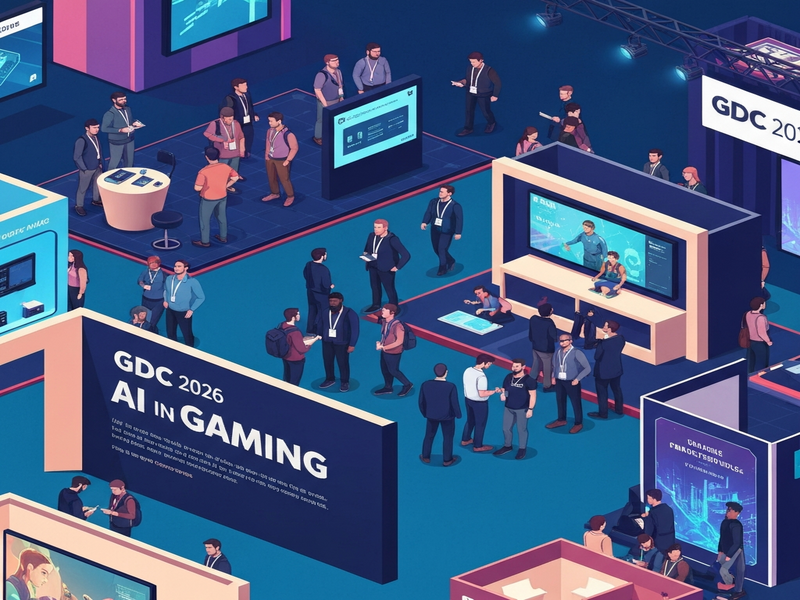
The original Verge report captured the paradox: AI tools were the hottest exhibit, yet the games on display remained unmistakably human‑crafted. Below we break down the key moments, the most talked‑about demos, and why the industry remains divided.
1. A Bird’s‑Eye View of AI at GDC 2026
GDC 2026 attracted over 30,000 attendees, and AI was a featured theme on the main stage, in the expo hall, and across dozens of breakout sessions. The conference’s official tagline, “Play the Future,” was interpreted by many vendors as a call to embed AI into every layer of game creation.
- More than 50 AI‑focused booths, ranging from cloud providers to indie toolkits.
- Three dedicated tracks: AI‑Powered Design, AI‑Assisted Production, and Ethics & Regulation of Generative Content.
- A record‑high 52 % of surveyed developers said generative AI is having a negative impact on the industry, up from 30 % in 2025.
The buzz was palpable, but the underlying sentiment among creators was cautious. While many praised AI’s potential to accelerate QA and asset generation, a sizable contingent warned that over‑reliance could erode the craft that defines memorable games.
2. Vendor Demos That Stole the Spotlight
The expo floor turned into a living lab for AI experiments. Below are the most eye‑catching demonstrations that sparked conversation.
2.1. Tencent’s Pixel‑Art Fantasy World Generator
Tencent unveiled a generative engine that creates entire pixel‑art realms from a single text prompt. Attendees could type “a misty forest with floating lanterns,” and the AI instantly rendered a playable level, complete with procedurally placed enemies and loot.
2.2. Razer’s AI‑Assisted QA Assistant
Razer demonstrated an AI that watches gameplay footage, detects anomalies, and automatically logs bug tickets. In a live demo, the assistant identified a collision glitch in a first‑person shooter within seconds, showcasing how AI can reduce manual QA hours by up to 40 %.
2.3. Google DeepMind’s Playable AI‑Generated Spaces
DeepMind’s research team presented a prototype where AI agents design entire 3‑D environments that remain fully navigable. The session was standing‑room only, underscoring the excitement around AI‑crafted worlds that adapt to player behavior in real time.
2.4. ElevenLabs AI Voice Integration for NPC Dialogue
ElevenLabs showcased a voice synthesis tool that gives NPCs lifelike speech patterns, complete with emotional intonation. Developers can feed dialogue scripts, and the AI produces region‑specific accents on the fly, dramatically cutting down on voice‑over recording costs.
3. Generative AI Tools: Promise vs. Reality
Beyond the flashy demos, a deeper discussion emerged around the practicalities of integrating generative AI into production pipelines.
3.1. Speed and Cost Savings
Proponents argue that AI can:
- Generate concept art in seconds, reducing concept‑phase costs by up to 70 %.
- Automate level layout, freeing designers to focus on narrative and pacing.
- Provide real‑time localization of dialogue, expanding global reach without hiring dozens of translators.
3.2. Quality and Authenticity Concerns
Many developers, especially indie studios, voiced strong reservations:
“AI‑generated assets feel generic and lack the soul that a human artist pours into each brushstroke.” – Gabriel Paquette, The Melty Way
Finji co‑founders Adam and Rebekah Saltsman echoed this sentiment, emphasizing that their games’ “fingerprints” are deliberately human. They argued that AI tools risk homogenizing visual styles, making it harder for titles to stand out in a saturated market.
3.3. Legal and Ethical Hurdles
The legal landscape for AI‑generated content remains murky. Key issues include:
- Copyrightability: AI‑created art cannot be owned under current U.S. law, complicating monetization.
- Data provenance: Training datasets often contain copyrighted material, raising infringement risks.
- Environmental impact: Large‑scale model training consumes significant energy, prompting sustainability concerns.
These challenges have led publishers like Panic and BigMode to require developers to certify that their games are “human‑made” and free of generative AI.
4. The Developer Pulse: Why Many Still Say “No” to AI
Interviews conducted on the conference floor revealed recurring themes:
- Craftsmanship Over Convenience: Developers view the iterative process of hand‑crafting code and art as essential to learning and innovation.
- Player Connection: Games that feel “hand‑made” foster stronger emotional bonds, according to indie creator Abby Howard of Black Tabby Games.
- Job Security: Concerns that AI could replace entry‑level positions, reducing pathways for new talent.
- Unpredictable Quality: AI often produces “average” results that require extensive post‑processing, negating time savings.
Nevertheless, a minority of studios expressed cautious optimism. Some see AI as a “co‑pilot” that can handle repetitive tasks while humans focus on high‑level design.
5. How UBOS Is Positioning Itself in the AI‑Gaming Landscape
While the gaming community debates AI’s role, UBOS homepage is quietly building an ecosystem that bridges AI capabilities with developer workflows.
- AI news hub keeps developers updated on the latest breakthroughs and compliance guidelines.
- Gaming technology page showcases how UBOS integrates AI tools—like OpenAI ChatGPT integration and Chroma DB integration—into existing pipelines without sacrificing creative control.
- For studios seeking rapid prototyping, the UBOS templates for quick start include pre‑built AI SEO Analyzer and AI Article Copywriter, demonstrating how AI can augment, not replace, human effort.
UBOS also offers a Workflow automation studio that lets developers create custom AI‑driven bots—such as a GPT‑Powered Telegram Bot—to streamline QA, asset tagging, and community management.
5.1. Tailored Solutions for Different Business Sizes
UBOS recognizes that AI adoption looks different for startups versus enterprises:
- UBOS for startups provides low‑cost, modular AI services that can be scaled as the product matures.
- UBOS solutions for SMBs focus on integrating AI into existing tools like CRM and support desks.
- Enterprise AI platform by UBOS delivers robust governance, data lineage, and compliance features for large studios.
Pricing transparency is also a priority, with clear tiers outlined on the UBOS pricing plans page, allowing developers to budget AI experiments without surprise costs.
6. Real‑World Use Cases: From Concept to Launch
Below are three illustrative scenarios where AI, when applied judiciously, can enhance game development without compromising artistic integrity.
6.1. AI‑Assisted Narrative Drafting
A narrative team uses ChatGPT and Telegram integration to brainstorm branching dialogue. The AI suggests variations, which writers then refine, cutting iteration time by 50 % while preserving voice.
6.2. Procedural Asset Generation for Open Worlds
An open‑world studio leverages ElevenLabs AI voice integration to generate ambient NPC chatter, creating a richer soundscape without hiring dozens of voice actors.
6.3. Automated QA Reporting
Using the Workflow automation studio, a QA lead configures an AI bot that watches playtest streams, flags frame‑rate drops, and logs tickets directly into JIRA, reducing manual review effort by 35 %.
7. Looking Ahead: Will AI Become a Standard Tool or Remain a Niche Experiment?
The trajectory of AI in gaming hinges on three pivotal factors:
- Regulatory Clarity: Clear copyright and data‑use policies will either unlock or lock down AI‑generated assets.
- Tool Maturity: As models become more controllable and produce higher‑fidelity outputs, developer trust will grow.
- Community Acceptance: If players begin to value AI‑personalized experiences, market demand could shift the balance.
For now, the consensus at GDC 2026 is that AI is a powerful assistant, not a replacement for human creativity. Studios that treat AI as a collaborative partner—leveraging platforms like UBOS to maintain control—are likely to reap the efficiency benefits while preserving the artistic soul that gamers cherish.
Conclusion
AI’s omnipresence at GDC 2026 proved that the technology is ready for mainstream exposure, yet the industry’s heart still beats for handcrafted experiences. The future will probably see a hybrid model: AI handling repetitive, data‑heavy tasks, while designers, writers, and artists focus on the moments that make games unforgettable.
Stay informed on the evolving AI landscape by following UBOS’s AI news hub and exploring the gaming technology page for practical integrations that respect both innovation and craftsmanship.
Ready to experiment with AI without sacrificing your studio’s unique voice? Contact UBOS today and discover a tailored AI workflow that fits your creative process.
Andrii Bidochko
CTO UBOS
Andrii Bidochko is an AI entrepreneur and researcher focused on AI agents, reinforcement learning, and autonomous systems. He writes about the technologies shaping the future of machine intelligence, from frontier models and agent architectures to real-world AI applications.